
Think of CFO services for startups as the person who helps you plan a long road trip. You’re the driver, focused on the road ahead. The CFO service is your navigator, watching the map, checking your gas (your cash), and making sure you don’t take a wrong turn. It’s about planning for the future, not just looking at where you’ve been. And you get all this help without hiring a full-time, expensive executive.
Why Startups Need a Financial Navigator
As a founder, you’re juggling a million things. You’re building the product, talking to customers, and leading your team. It’s easy to get so busy that you lose track of the money side of things.
This is where a CFO service comes in. They act as your financial navigator. Their job is to watch your company’s “fuel gauge” (your cash) and help you steer around financial storms. They make sure you have enough gas to get where you want to go.
From Counting Daily Cash to Making a Growth Plan
Imagine you run a food truck. At the end of the day, you count your cash. You know if you had a good day or a bad one. This is basic accounting—it tells you what just happened.
But what if you want to buy a second food truck or open a real restaurant? The questions get much harder:
- How much money do we need to save?
- Should we get a loan or find an investor to help us?
- How will hiring more people affect our profits?
- What if the new spot is slow for the first few months?
Just counting the day’s cash won’t answer these questions. You need a plan for the future. This is when a startup needs more than a bookkeeper; it needs a CFO. A CFO service helps you answer these tough questions and build a smart financial plan.
A CFO helps turn your numbers into a story. It’s a story that shows investors where you’ve been, where you’re going, and why they should come along for the ride.
More Than Just Bookkeeping
Clean books are important, but CFO services for startups do much more. They’re less about recording the past and more about helping you build the future. They turn confusing financial numbers into simple advice you can actually use.
For example, instead of just telling you how much you spent on ads, a CFO service helps you figure out if those ads are actually bringing in customers who make you money. This change from just keeping records to getting real advice is a huge deal for a growing business.
They give you the financial confidence to lead. They handle the complex spreadsheets and forecasts so you can focus on building a great company, knowing you have a solid money plan.
The Hidden Costs of Waiting to Hire a CFO
Most founders think hiring a CFO is something you do after you’re successful. It seems to make sense—why spend money you don’t have? But this thinking is backward.
Waiting to get expert financial help is like building a house without a blueprint. You might get a few walls up, but the foundation will be shaky. Waiting doesn’t save you money; it creates bigger, more expensive problems later.
Without a financial pro, you’re just guessing. You might run out of cash when you least expect it, spend money on the wrong things, or miss a big problem until it’s too late. These are the common, avoidable mistakes that cause good startups to fail.
The Real Price of Guessing with Your Money
When you don’t have a clear financial picture, every decision is a guess. You might be excited about a big new customer, but you have no idea if you’re actually making a profit from them. This kind of guesswork leads to huge mistakes.
Here are a few common slip-ups I see all the time:
- Running Out of Cash by Surprise: You think you have enough money to last six months, but surprise expenses or customers paying late mean you really only have three. This is a top reason why startups fail.
- Growing Without Making Money: You’re celebrating more sales, but it costs you more to get a new customer than you’ll ever make from them. You’re basically losing money on purpose.
- Pricing Your Product Wrong: You pick a price based on a gut feeling, leaving a ton of money on the table without even realizing it.
These aren’t small mistakes. They can bring your whole company down. Getting CFO services for startups early helps you avoid these surprises and makes sure your growth is healthy.
The biggest hidden cost of waiting is a missed opportunity. When the perfect investor is interested, you won’t have the clean, professional financial story ready to seal the deal. You’ll be scrambling instead of celebrating.
Being Ready for Investors from Day One
A great investor won’t wait for you to get your finances organized. They need to see a clear financial plan and a team that understands its own numbers. If your finances are a mess, it’s a huge red flag that you aren’t serious.
Here’s a real-world example. A software startup was burning through its cash way too fast. The founder was so focused on the product that he didn’t realize their ads were attracting customers who would cancel after just one month.
A fractional CFO came in and saw the problem immediately. By stopping the wasteful ad spending and talking to a few vendors to get better prices, the CFO gave them six more months of life. That extra time was exactly what they needed to find new funding and stay in business.
This isn’t a rare story. The demand for this kind of expert help is growing fast. The need for contract or fractional CFOs grew by 103% in one year as founders realized they could get this guidance without the huge cost of a full-time hire. You can learn more about why fractional CFOs are essential for startups to understand this trend.
Getting help early means you’re always ready for investors, so you won’t miss your big chance when it comes.
Choosing Your Financial Co-Pilot
Finding the right financial partner is a big decision, but it’s simpler than you think. It’s about matching the right type of help to where your startup is right now. You wouldn’t use a giant moving truck to pick up a bag of groceries, and the same idea applies here.
Think of it like this: a full-time CFO is like buying a car. It’s yours all the time, but it comes with a big price tag—salary, benefits, and a long-term commitment.
A fractional CFO is like using a high-end car service. You get an expert driver and a great car exactly when you need it for an important trip, like meeting investors, without the high cost of owning it.
Then there’s an outsourced CFO service, which is like hiring a company to manage your entire delivery fleet. They handle all the day-to-day financial stuff so you can focus on your main job: building your business.
Matching The Help to Your Stage
Each of these options is for a different stage. A new company just starting out has different needs than a fast-growing business getting ready to raise millions of dollars.
A brand-new startup might only need a few hours of advice a month to create a budget and track the right numbers. In that case, a flexible fractional or outsourced service makes perfect sense. You get expert advice without the heavy cost of a full-time salary.
This flexible approach is becoming the standard for a reason.
A Deloitte report found that 68% of startups with venture capital funding plan to outsource their finance work. Founders are realizing they can get the leadership they need to grow without the huge expense.
The picture below helps you see when it’s time to think about getting financial leadership.
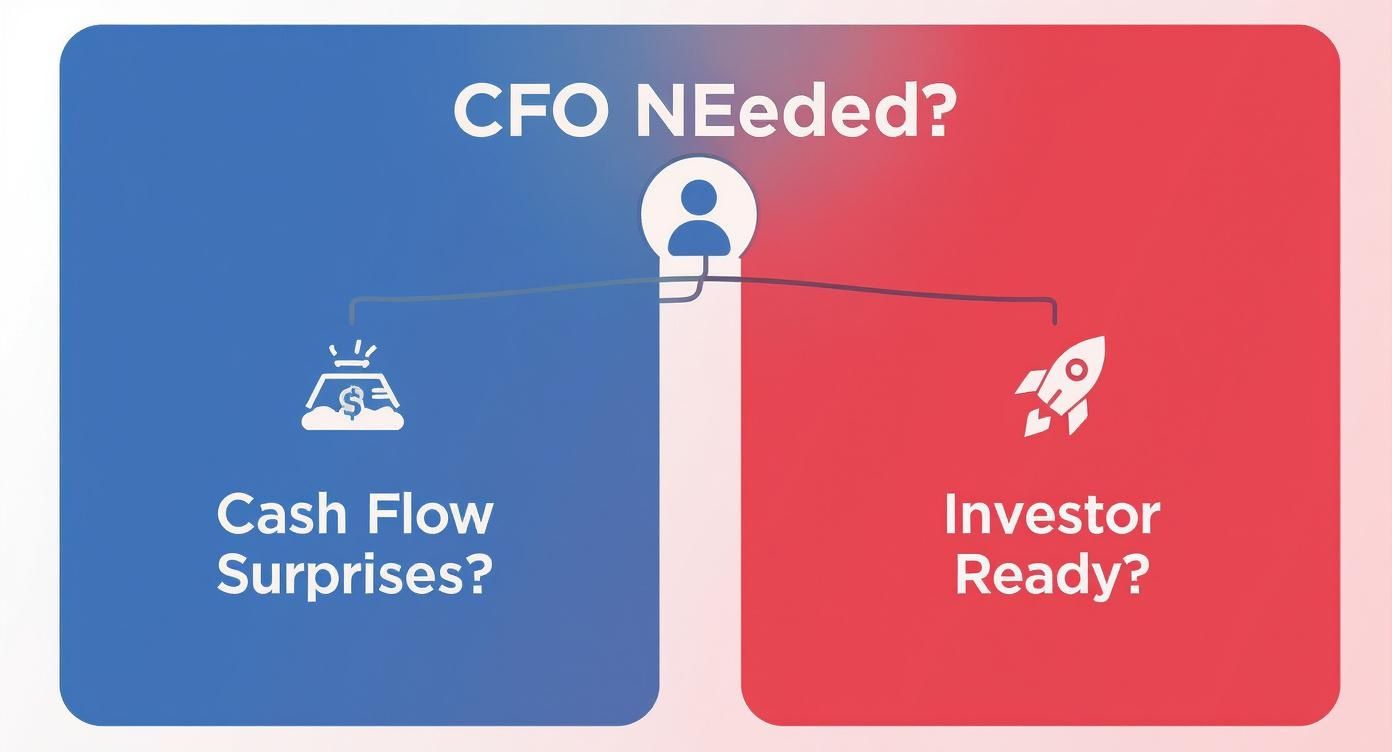
It usually comes down to two things: Are you constantly surprised by how much cash you have, or are you getting ready to talk to investors? If you say yes to either, it’s time to get help.
Comparing Your CFO Options
To make it even clearer, let’s break down the three main choices. This should help you see which one fits your business best today.
| Feature | Full-Time CFO | Fractional CFO | Outsourced CFO Service |
|---|---|---|---|
| Typical Cost | $200k+ salary, plus equity and benefits | $5k – $15k per month | $3k – $10k per month |
| Time Commitment | Full-time, 40+ hours per week | Part-time, 5-20 hours per week | Varies, focused on getting things done |
| Main Focus | Involved in every part of the business | Focused on big projects (like fundraising) | Handles both strategy and daily tasks |
| Best For | Larger startups with complex finances | Startups needing expert guidance | Early-stage startups needing a full finance team |
The goal isn’t just to hire someone; it’s to get the right answers to your most important money questions. Whether that takes a full-time person or just a few hours a month depends on the questions you’re asking.
For many growing startups, a fractional model is the perfect fit. It gives you the high-level partner you need to handle fundraising and fast growth. To learn more, check out our guide on why fractional CFO services are a great fit for small businesses. This approach lets you get more or less help as your needs change, which is a huge plus in the startup world.
What a CFO Actually Does for You

So, what does a CFO service actually do? It’s not about getting a pile of confusing spreadsheets. The real value is getting clear, simple answers to your biggest business questions. A good CFO service turns messy financial data into simple tools you can use to run your company better.
A Financial Model to Play “What If”
One of the first things a good CFO service will build is a financial model. Think of it as a flight simulator for your business. It’s a tool that lets you ask “what if?”
What happens to our cash if we hire three new people? What if our big product launch is three months late? What if sales are 20% lower than we expect?
Instead of guessing, you can plug these questions into the model and see the answers. This one tool can be the difference between making a smart change and running out of money. It turns worry into a clear plan.
A Simple Dashboard That Shows the Score
You can’t win a game if you don’t know the score. A CFO service will build you a simple dashboard with your Key Performance Indicators (KPIs). This isn’t a list of a hundred numbers; it’s just the few numbers that show if your business is healthy.
For a software company, this might include:
- Monthly Recurring Revenue (MRR): Is our income growing each month?
- Customer Acquisition Cost (CAC): How much does it cost to get one new customer?
- Cash Runway: How many months can we operate before we run out of money?
- Customer Churn: How many customers are leaving us each month?
Seeing these key numbers every week means you’re never in the dark. You can spot problems early and fix them before they get big.
Managing Cash Flow So You Can Sleep at Night
For a startup, cash is like oxygen. If you run out, it’s game over. A big part of what CFO services for startups do is manage your cash flow. They don’t just track where money went; they plan for where it needs to go.
A bookkeeper tells you what you spent last month. A CFO tells you if you’ll have enough cash to pay your team in three months. Looking ahead is everything.
They create cash forecasts that show you if you might run low on money weeks or months from now. This gives you time to make smart moves, like slowing down hiring or collecting money from customers faster. It takes away the constant stress of worrying about cash.
Reports That Make Investors Confident
Finally, a CFO service creates professional financial reports for your board and investors. When you’re asking for money, a messy spreadsheet you made yourself just doesn’t look good.
A CFO service prepares clean, clear reports that tell a good story with your numbers. They show your progress and prove that you have a strong handle on the business. This builds a lot of trust and makes those tough talks with investors much easier.
To see how all this comes together, you can learn more about our virtual CFO services and how they help founders focus on growth. It’s all about showing people you know what you’re doing.
How to Find the Right CFO for Your Startup

Choosing a financial partner is a big deal. You’re not just hiring someone to do math. You’re looking for a co-pilot who can help you fly your startup through good times and bad.
The key is to look for someone who really understands your business. You need a partner who can give you honest advice and support your goals.
Here’s a simple guide for finding and hiring a great CFO service.
Asking Questions That Show How They Think
Anyone can list skills on a website. Your job is to find out how they actually think and solve problems. Don’t just ask about their experience.
Try these questions instead:
- “Explain our business back to me in your own words.” This is a great test. If they can’t explain what you do simply, they won’t be able to explain it to investors either.
- “Tell me about a time you convinced a founder not to chase a bad idea.” This shows if they have courage. A good CFO isn’t afraid to have tough conversations to protect the business.
- “What’s the biggest financial risk you see for us in the next six months?” This shows if they can think ahead and spot trouble before it happens.
- “If you were to build our first dashboard, what are the top 3 numbers you would put on it?” You’re looking for someone who focuses on what’s truly important, not someone who wants to track everything.
These questions help you understand how they think, which is more important than what’s on their resume.
Why Experience in Your Industry Matters
A great CFO for a software company isn’t always a great CFO for an e-commerce store. The basics of finance are the same, but the business models and what makes them successful are totally different.
For example, a CFO for a software-as-a-service (SaaS) business knows all about numbers like churn and customer lifetime value. They understand how subscription businesses work.
An e-commerce CFO is an expert in things like managing inventory, shipping costs, and return on ad spend. They know how to handle physical products and tight profit margins.
Hiring a CFO with experience in your industry is a huge shortcut. They can start helping you on day one because they already speak your language.
A Simple Checklist for a Good Start
Once you find the right fit, it’s important to set them up for success. A good start makes sure they can begin making a difference right away.
Here’s a quick checklist:
- Get Your Papers Ready: Before your first meeting, gather your past financial reports, your current budget, and give them access to your accounting software.
- Set Clear Goals for the First 90 Days: What are the top one or two things you need help with right now? Building a financial plan for investors? Cleaning up your books? Getting a handle on cash flow? Be specific.
- Decide How You’ll Communicate: How often will you meet? A weekly 30-minute chat is a good start. Also, decide how you’ll talk between meetings—like on Slack or by email.
- Introduce Them to Your Team: Make sure your new financial partner meets key people on your team. This helps them understand your company culture and build good relationships.
This isn’t just a to-do list; it’s about building a strong partnership. By following these steps, you’re not just hiring CFO services for startups; you’re adding an important partner to your team.
Your Top CFO Questions, Answered
Deciding to get financial help is a big step. It’s normal to have questions about cost, timing, and what it all means for your company.
Let’s get you some straight, simple answers.
How Much Do CFO Services for Startups Cost?
This is usually the first question. The cost varies, but it’s almost always cheaper than you think. The idea is to pay only for the help you need right now, not for a full-time person you can’t afford.
Here’s a general idea:
- Early-Stage Startups: For a few hours of big-picture advice each month, you can expect to pay a few thousand dollars per month.
- Growing Startups: If you need more help with preparing for investors, building complex financial plans, and board reports, the cost might be between $5,000 and $15,000 per month.
Those numbers might seem big, but compare it to a full-time CFO, who can cost $200,000 to $400,000 a year, plus benefits and company ownership. A fractional or outsourced CFO service gives you the same level of expertise for a fraction of the cost.
When Should My Startup Hire a CFO Service?
There isn’t a magic number that tells you it’s time. Instead, look for signs that things are getting more complicated.
You should think about it when:
- You plan to raise money from investors. The moment you want to raise a Seed or Series A round, you need professional finances. Investors demand it.
- You’re spending too much time on spreadsheets. If you, the founder, are doing financial work instead of building your product or talking to customers, it’s time to hand it off.
- You feel like you’re guessing. Can you quickly answer “How much money are we spending each month?” or “How many months of cash do we have left?” If not, you need better visibility.
- Your business is getting more complex. Adding new products, hiring more people, or selling in new places all add financial complexity that needs an expert.
The best time to get financial help is before you have a problem, not during one. It’s better to build a strong foundation now than to do damage control later.
What Is the Difference Between a CFO and an Accountant?
This is a really important question. An accountant looks backward, while a CFO looks forward.
An accountant records and organizes what has already happened. They make sure your books are clean and your taxes are filed. They tell you where your money went.
A CFO uses that information to plan for the future. They create financial models and budgets to help you grow. A CFO tells you where your money should go next.
You need both. The accountant handles the facts and rules, while the CFO helps with strategy and growth.
Does Industry Experience Really Matter for a CFO?
Yes, it matters a lot. While finance basics are the same everywhere, what makes a business successful is very different from one industry to another.
For example, a great CFO for a software company understands things like churn and customer lifetime value. They know the recurring revenue business model inside and out.
Now, think about an e-commerce brand. Their CFO needs to be an expert in inventory, shipping costs, and online advertising. The problems they solve are completely different.
Hiring a CFO service with deep experience in your industry is a huge plus. They won’t waste your time and money learning the basics of your world. They can start adding value from day one because they already speak your language and know what success looks like.
Navigating your startup’s financial future requires a clear vision and an expert partner. If you’re ready to move from guesswork to a confident growth strategy, the team at MyOfficeOps is here to help. We provide the CFO-level guidance that Greater Philadelphia and West Chester business owners need to build a stronger, more profitable company.