
You’re running a business in West Chester. You’ve got payroll due, vendor bills waiting, and a bookkeeper or office manager texting you because the bank feed broke again. That’s usually when owners realize a bank isn’t just a place to store money.
A bad bank creates little problems every week. The login is clunky. Mobile deposits take too long. Your banker disappears when you ask about a credit line. ACH setup feels harder than it should. Fees show up in places you didn’t expect. None of that sounds dramatic on its own, but it adds up fast.
The right west chester bank does the opposite. It helps you move money cleanly, keeps your records easier to reconcile, and gives you a real person to call when cash gets tight or growth creates pressure. For a small business, that matters as much as the rate on an account.
At MyOfficeOps, we see this from the accounting side every day. A clean banking setup makes bookkeeping smoother, month-end reporting faster, and cash flow planning a lot less messy. The wrong setup turns simple work into detective work.
This guide keeps the focus where it should be: Practical fit, not marketing fluff. If you’re also looking at funding options, this SBA Loan Guide for Small Businesses is a useful companion.
One quick note before the list. West Chester has deep banking roots. The Bank of Chester County began operations in West Chester as early as 1814 and is recognized as the first bank chartered in Chester County, according to the Bank of Chester County history. That history matters because local business owners here have always needed the same thing: A bank that supports daily operations, not just deposits.
1. First Resource Bank
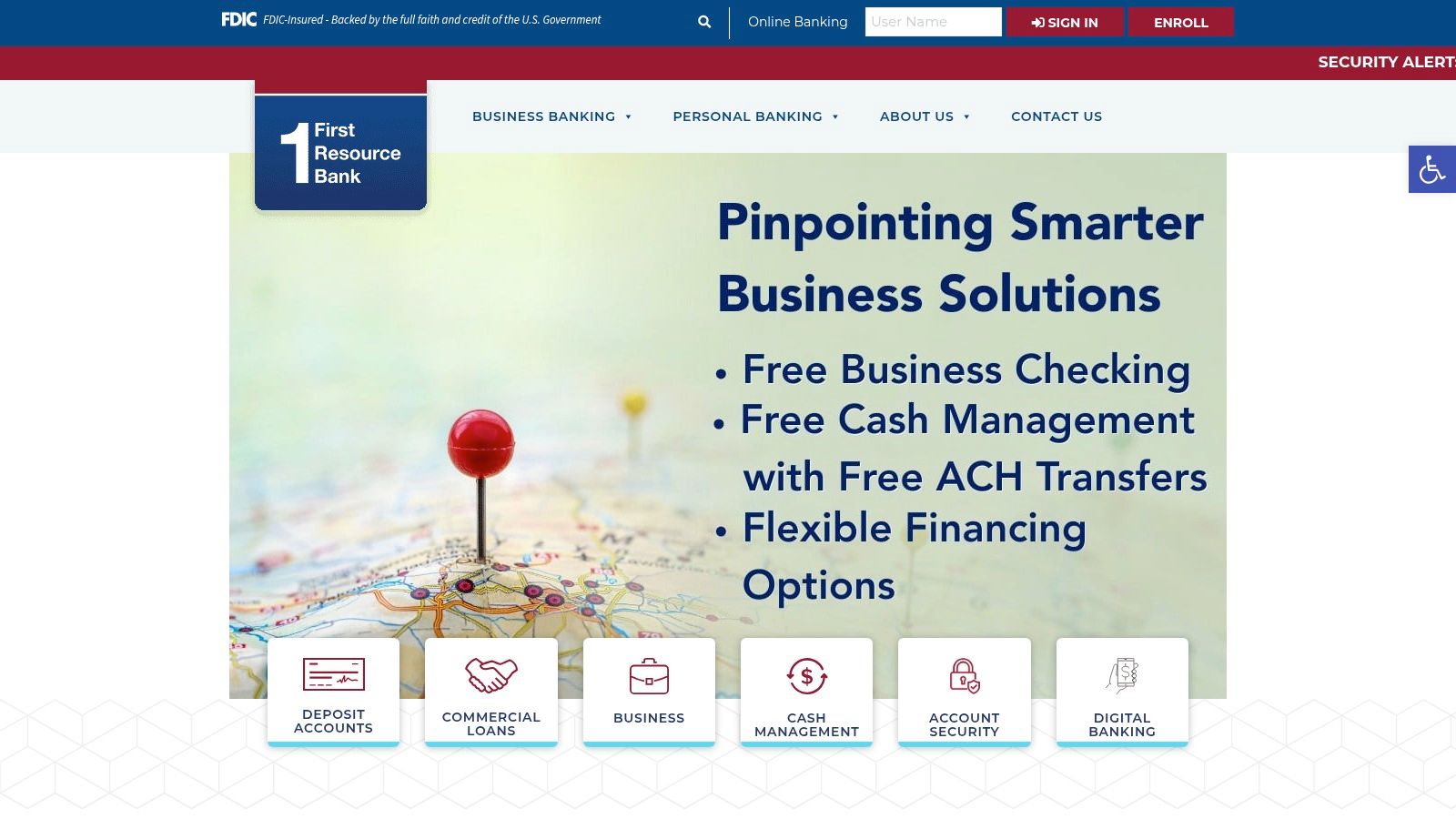
First Resource Bank is the kind of bank I’d point an owner-led company toward when speed and access matter more than branch count.
If you run a law firm, agency, medical practice, contractor, or family business and you want a banker who knows your name, this is a strong option. It feels built for businesses that need small-business basics done well, not a giant menu of niche products they’ll never use.
Where it fits best
The big appeal here is low-friction treasury management. First Resource Bank offers business checking, commercial loans, SBA lending options, Remote Deposit Capture, ACH origination, Positive Pay, and local business bankers. That combination covers what most West Chester companies use every week.
For a lot of owners, ACH and remote deposit are key features. If your office is still driving checks to the branch too often, or payroll files require too many workarounds, your banking setup is wasting time.
Practical rule: If your business sends payroll, owner draws, rent, or vendor payments every month, ask the bank to show you the ACH workflow before you open the account. If the demo feels slow, the experience will feel worse.
What works and what doesn’t
What works:
- Responsive local service: Smaller community banks often handle credit decisions closer to the market. That usually helps when an owner needs a real conversation, rather than a call-center answer.
- Useful cash tools: RDC and ACH matter more than fancy dashboards for many firms.
- Good fit for hands-on owners: If you want one banker who can help with deposits and financing, this model makes sense.
Trade-offs:
- Smaller footprint: If your team travels often or deposits cash in multiple states, you may outgrow a community-bank branch network.
- Less depth for specialty needs: If you need complex international services or very layered treasury controls, a larger bank may give you more options.
The simplest way to think about First Resource is this: It’s like hiring a good local mechanic instead of taking every problem to a dealership. For many businesses, that’s faster, more practical, and easier to live with.
2. Meridian Bank
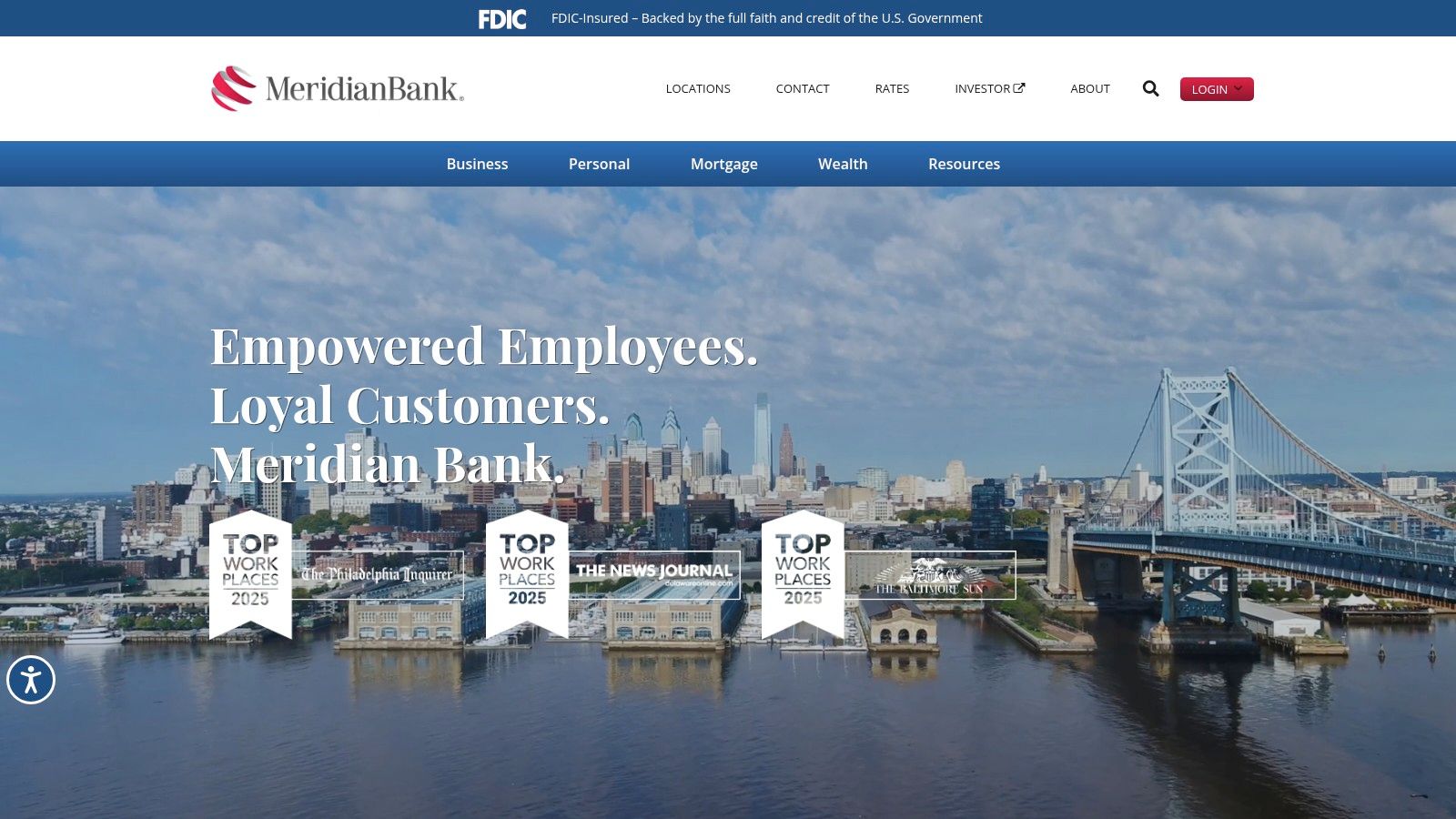
Meridian Bank tends to make sense for businesses that have gotten past the very small stage and need a bank that can handle both operations and growth.
I like Meridian for firms where the banking relationship touches more than checking. Think medical groups, real estate businesses, contractors, or professional service companies that want one team covering deposits, treasury needs, and credit.
Why growth firms look here
Meridian offers business checking, treasury management, commercial lending, commercial real estate lending, SBA options, and local relationship banking. That’s a useful mix if your business is growing and you don’t want to stitch together multiple providers.
A common example is a practice owner who needs operating accounts, ACH for payroll, remote deposit, and a credit conversation tied to an office purchase or build-out. In that situation, one connected relationship usually works better than collecting services from three different institutions.
If you’re comparing providers for your finance stack, it also helps to think beyond the bank itself. Your banker, bookkeeper, CPA, and payroll support all need to work from the same playbook. For owners evaluating outside finance support, this directory of Pennsylvania accounting firms can help frame that side of the decision.
The trade-off is pretty clear
Meridian’s strength is relationship banking with enough lending depth to support business activity. That’s especially useful in West Chester, where many firms aren’t huge, but they still need a bank that understands owner-operated growth.
A bank that understands your receivables cycle is often more useful than one with the flashiest mobile app.
That said, there’s a trade-off: Regional banks can be strong in service and lending, but they don’t always match the digital polish or product sprawl of the biggest national banks. If your company needs highly specialized treasury tools across many locations, or if you want a bank in nearly every city your team visits, that gap matters.
For many local companies, though, Meridian sits in a good middle lane. Bigger than a tiny community bank, more personal than a giant national one. If your business is growing and you want a west chester bank option that can grow with it, this is a serious contender.
3. Fulton Bank
Fulton Bank is often a practical choice for owners who want published account tiers and fewer surprises.
That sounds boring, but boring is good in banking. Clear transaction allowances, defined account options, and a visible path from basic checking to higher-volume services make life easier for whoever handles your books.
Good for businesses that are getting busier
Fulton has multiple small-business checking tiers, Remote Deposit Capture, treasury services, merchant services, commercial lending, and analyzed checking for companies with more activity.
That lineup helps if your account volume is starting to climb. Early on, many businesses pick the cheapest checking they can find. Then the company grows, deposits become more frequent, incoming payments stack up, and the account stops fitting. That’s when maintenance fees, excess transaction charges, or workflow pain show up.
Fulton is useful because the tier structure is easier to map against business activity. If your office manager processes a steady stream of checks, card payments, or vendor disbursements, you can usually see when it’s time to move up.
A lot of that matters directly to back-office work. If your banking activity is high enough that reconciliation, payroll timing, and bill-pay coordination are becoming a headache, outside support can close that gap. These accounting and payroll services are worth reviewing if your team is stretched.
What to verify before you sign
Here’s the caution with Fulton: After integrations and product changes, banks sometimes adjust what used to be included in older accounts. So don’t rely on what a friend had two years ago.
Ask very direct questions:
- Current transaction limits: Get the exact current allowance for the account you want.
- RDC and treasury pricing: Confirm whether those tools are included or added separately.
- Fee waiver rules: Make the banker show you the balance or analysis conditions in plain English.
Watch for this: “Free” often means free only if your activity stays inside a lane. Once you cross that lane, the account can become a poor fit fast.
Fulton works best for businesses that want structure. If you like knowing what account tier you’re in and when you should upgrade, this bank is easier to work with than providers that keep features and limits fuzzy.
4. WSFS Bank
WSFS Bank is a strong candidate when fraud controls and treasury tools matter almost as much as the checking account itself.
A lot of growing companies reach this point without much fanfare. One day they’re just depositing checks and paying bills. Then they’ve got outside bookkeepers, multiple approvers, recurring ACH activity, and enough cash movement that one bad payment mistake can hurt.
Strong choice for tighter controls
WSFS puts a lot of emphasis on treasury management. That includes receivables, payables, fraud tools, and business online and mobile banking. For owners who need more control over how money moves, that matters.
Here, regional banks can be a sweet spot. They often have more serious treasury tools than smaller community banks, but they still tend to know the Southeast Pennsylvania market better than a far-away underwriting team.
If your company has had any of these problems, WSFS deserves a look:
- Too many people touching money: You need approval layers.
- Check fraud concerns: You want tools like Positive Pay or related protections.
- Messy payables workflow: You need a cleaner process for outgoing payments.
- Cash visibility problems: You want better daily control over balances and activity.
The catch is convenience and fees
WSFS can be a smart west chester bank pick for a growing firm, but you should confirm branch convenience. Some local branches changed after the Bryn Mawr Trust combination, so don’t assume the closest branch is still where it used to be.
There’s also a published online banking platform fee on some setups unless it’s waived by account tier. That isn’t automatically a deal-breaker. Plenty of companies should gladly pay for stronger controls if those controls prevent errors or fraud. But it should be part of the conversation up front.
Think of WSFS like adding better locks and camera coverage to a building you already own. It may not feel exciting, but it can save a lot of pain later.
5. Citadel Credit Union
A lot of West Chester owners hit the same point. They are not looking for a flashy treasury platform or a national bank relationship manager. They want a bank that keeps fees reasonable, gives them local access, and does not create extra cleanup work for their bookkeeper. In that lane, Citadel Credit Union is a serious option.
Citadel tends to fit businesses that run a fairly straightforward operating model but still need the basics done well. Business checking, ACH origination, Remote Deposit Capture, merchant services, and lending cover a lot of what a small company needs day to day. If your finance team or outside support firm is reconciling accounts every month, a core question is simple. Does the account structure match how money moves through the business?
For some owners, Citadel is the right answer because it can keep banking simple without forcing an early jump into a higher-cost commercial setup. Its Elite Business Checking includes free monthly transactions, which matters if you have regular customer payments, routine vendor activity, and a steady bookkeeping cycle to maintain.
That makes Citadel a practical fit for a few specific models:
- Service businesses: Consistent deposits, payroll runs, and predictable payables.
- Smaller retail or medical and professional offices: Enough transaction volume to care about limits, but not enough complexity to need a heavy treasury package.
- Owner-led companies: A direct banking relationship and fewer layers to work through.
The trade-off is range.
Credit unions often feel more personal, but they can be thinner on advanced controls and specialized services. If your controller needs multiple approval levels, more complex cash management rules, or unusual credit structures, ask those questions before you open the account, not after your workflows are built around it.
Membership also matters. Citadel may be a strong operational fit, but eligibility is the first filter, so confirm that up front.
I usually tell owners to judge Citadel by bookkeeping friction, not just by monthly fees. If deposits, transfers, and card activity stay easy to categorize and your accountant can get clean records without extra manual work, the bank is doing its job. For landlords and property operators, that standard matters even more because reserves, tax payments, and property-level cash flow can get messy fast. This guide to West Chester real estate taxes for local property owners gives helpful context on that side of the decision.
One more point. Citadel works best when your business is stable, local, and process-driven. If that describes your company, it can be a better West Chester bank choice than a bigger institution with more features than you will use.
6. PNC Bank
If you want a bank with depth, PNC Bank is one of the safer bets.
PNC works well for businesses that expect to need more over time. Maybe today you need checking and mobile deposit. Next year you may want better reporting, merchant services, a credit card program, or more formal treasury management. PNC has that upgrade path.
Where PNC earns its keep
The product lineup is broad. Business checking options include Basic Business Checking, Business Checking Plus, and Treasury Enterprise Plan. PNC also offers Cash Flow Insight analytics, payables and receivables workflows, merchant services, lending, and credit products.
That matters if you don’t want to switch banks as the business grows. A lot of owners outgrow their first bank not because it was bad, but because it was too small for the next stage.
PNC is a good fit when you want:
- One bank for many functions: Deposits, cards, lending, and treasury under one roof.
- A clearer scale-up path: Entry-level today, more advanced tools later.
- More digital structure: Dashboards and workflows that go beyond plain checking.
For property owners and real estate operators in the area, banking decisions also affect tax planning and cash reserves. This overview of West Chester real estate taxes is useful if property-related cash flow is part of your decision.
Bigger bank, bigger trade-offs
The caution with PNC is service consistency. Large banks can be excellent when you get a strong branch team or relationship manager; they can also feel impersonal if you don’t.
Entry-level accounts can also have transaction and cash-deposit limits that active businesses outgrow. So if your company handles a lot of deposits or frequent transactions, don’t shop only by the first-tier monthly fee. Shop by the account you’ll need six months from now.
“Choose the account that fits your busiest month, not your quietest one.”
One useful benchmark from outside the immediate West Chester market helps explain what stable regional banking can look like. Westchester Bank Holding Corp., which Valley National Bancorp acquired in 2021, reported total assets of $1.3 billion, total loans exceeding $0.9 billion, and total deposits above $1.1 billion across a seven-branch network as of March 31, 2021. I wouldn’t use that as a direct ranking tool for local bank shopping; it shows the kind of balance-sheet profile many business owners look for when they want a bank that can still lend through different cycles.
7. TD Bank
A common West Chester scenario looks like this. The owner is in the field all day, invoices go out at night, deposits pile up over the weekend, and the bookkeeper needs clean account activity on Monday morning. In that setup, the bank is not just a place to park cash. It affects how fast deposits post, how easily transactions feed into bookkeeping, and how much cleanup your finance team has to do later.
TD Bank fits businesses that value access and routine over a highly customized relationship. The branch at 701 E. Market St. stands out for extended hours, including Sunday service, which matters if your banking tasks happen outside a standard workday.
Best for owners who bank on the fly
TD’s business checking lineup includes Business Simple, Convenience, and Premier. It also offers tools such as Remote Deposit Capture, Autobooks integration, merchant services, and treasury options through partners. For a retailer, contractor, restaurant, or home services company, that mix can reduce friction in day-to-day cash handling.
That matters more than many owners expect.
If your office manager or outsourced bookkeeping team has to sort through delayed deposits, vague transaction labels, or scattered payment activity, month-end closes take longer. A bank with solid digital access and predictable deposit workflows usually saves more time than a slightly lower monthly fee.
The trade-off is relationship depth
TD is often a better operating bank than a strategic bank. I recommend it most often for businesses that need convenient branch access, steady online banking, and a practical way to keep cash moving. I recommend it less often for companies expecting a banker to interpret a complicated story, package an unusual loan request, or work closely with a CPA and advisory team on financing structure.
That distinction matters when the business starts to grow.
Standardized processes can be efficient, but they can also leave less room for nuance. If your company has uneven seasonal cash flow, multiple entities, or borrowing needs that require context, a more relationship-driven local bank may be easier to work with.
Owners should also review transaction limits, cash deposit rules, and treasury add-ons before choosing the entry-level account. The cheapest account on paper can create more reconciliation work later if your actual activity outgrows it.
My practical take is simple. TD is a strong West Chester bank option for business owners who want easy access, long hours, and straightforward daily banking. If your top priority is cleaner operations and fewer banking bottlenecks for your bookkeeper or finance partner, TD deserves a look. If your top priority is complex lending and high-touch local judgment, it may not be the first call.
West Chester Banking: 7-Way Comparison
| Provider | 🔄 Implementation complexity | ⚡ Resource requirements / Speed | ⭐ Expected outcomes | 📊 Ideal use cases | 💡 Key advantages |
|---|---|---|---|---|---|
| First Resource Bank | Low, relationship-driven setup, local approvals | Low, minimal internal setup, fast credit decisions ⚡ | Reliable small-business banking with included RDC/ACH ⭐ | Owner-led SMBs needing quick decisions and basic treasury | Local decision-making, free RDC/ACH, dedicated bankers |
| Meridian Bank | Moderate, regional processes with a single relationship team 🔄 | Moderate, solid turnaround for CRE/SBA lending ⚡ | Balanced deposit and lending support for growing firms ⭐ | Professional services, healthcare, construction, real estate | Strong CRE/SBA capability and unified relationship coverage |
| Fulton Bank | Moderate, tiered accounts and analyzed checking require setup 🔄 | Moderate, clear published tiers simplify resource planning ⚡ | Predictable fees and scalable checking options ⭐ | SMBs with varying transaction volumes and growth plans | Published transaction allowances, analyzed checking, RDC |
| WSFS Bank | Moderate‑High, extensive treasury setup and integration 🔄 | Higher, treasury and fraud tools need configuration ⚡ | Strong cash controls and fraud-mitigation for growth ⭐ | Growing firms needing advanced treasury and fraud prevention | Powerful treasury suite, regional decision-makers familiar with market |
| Citadel Credit Union | Low‑Moderate, membership onboarding required 🔄 | Low, cost-effective pricing and included transactions ⚡ | Competitive fee savings and generous transaction allowances ⭐ | Price-sensitive owners and SMBs seeking value-packed accounts | Member-owned model, generous included transactions on upper tiers |
| PNC Bank | Moderate‑High, broad product suite with layered onboarding 🔄 | Higher, advanced analytics and treasury scale with resources ⚡ | Deep treasury, digital ecosystem and analytic insights ⭐ | Small to growing businesses planning to scale treasury/digital use | Cash Flow Insight analytics, wide range of treasury and lending products |
| TD Bank | Low‑Moderate, standardized onboarding and retail processes 🔄 | Low, fast digital onboarding and extended branch access ⚡ | Convenient in-branch access and clear account structures ⭐ | Businesses valuing branch convenience and extended hours | Extended lobby hours, Autobooks integration, clear account tiers |
Making the Right Choice Your Bank and Your Bottom Line
A West Chester owner usually feels the bank decision when something breaks. Payroll approval gets stuck. The bookkeeper cannot pull a clean feed into the ledger. A deposit-heavy week pushes the account over its transaction cap. The problem is rarely "banking" in the abstract. It is an operations problem that shows up in cash flow, reporting, and wasted staff time.
The right bank depends on how money moves through your business and who has to touch that money after it lands.
A service firm usually needs reliable ACH, clear online access, and user permissions that fit the workflow. Payroll, contractor payments, recurring client receipts, and owner draws all run through that system. If ACH setup is clumsy or approvals are hard to manage, the finance process slows down every week. It works like using the wrong tool on every job. You still get through it, but you lose time on every task.
Construction and trades firms often need something different. Checking features matter, but so does access to a lender who understands uneven cash flow, equipment timing, retainage, and draw schedules. The cheapest account can cost more later if the bank cannot respond when timing gets tight.
Retail, hospitality, and other cash or card-heavy businesses should weigh branch access, deposit handling, merchant services, and transaction limits. Healthcare and professional services usually get more value from stronger approvals, fraud controls, and easier reconciliation. Same town. Very different banking fit.
That is why I tell owners to treat a bank as part of the finance system, not as a place to park money. Your bank feeds your books, your reporting cadence, and your cash visibility. If transaction descriptions are messy, bank feeds break, or account access is too limited, the accounting team spends more time cleaning data and less time giving you answers.
At MyOfficeOps, we look closely at whether a bank works well with the rest of the finance stack. The practical checklist is simple:
- Clean transaction feeds: Faster reconciliation and fewer corrections.
- Stable online access: Easier statement retrieval, exports, and daily cash review.
- Clear user permissions: Better control when owners, office managers, and bookkeepers all need different access.
- ACH and payables tools: Smoother payroll runs and vendor payments.
- Fraud controls that fit the risk: Better protection once payment volume, staff count, or remote access grows.
Security belongs in this decision too. Bank logins, payment approvals, remote access, and digital payment tools all create exposure points. That’s why broader support like cybersecurity services often belongs in the same conversation, especially once you have multiple users, outside finance support, and money moving through several systems.
Choose based on your busiest month, not your quietest one.
An account that feels inexpensive in a slow period can become a bottleneck once payroll grows, deposits stack up, or dual approvals become necessary. The best choice reduces friction for bookkeeping, keeps cash flow visible, and gives your finance team clean data to work from. That is a key bottom-line issue. A bank that fits your business model makes reporting faster, decisions clearer, and growth a lot less chaotic.
If you want help choosing a bank that works with your bookkeeping, payroll, and reporting instead of fighting them, talk to MyOfficeOps. We help West Chester and Greater Philadelphia business owners build cleaner financial systems, better cash flow visibility, and a finance setup that supports growth.