
You open your banking app, then your credit card dashboard, then QuickBooks. The numbers don't match the picture in your head. Sales felt strong this month, but cash feels tight. A stack of receipts is sitting on the corner of your desk, payroll is coming up, and your CPA will want clean records later.
That's the moment a lot of owners realize they're running a real business with part-time bookkeeping habits.
I've seen this happen with agencies, contractors, medical practices, and solo founders who grew faster than their back office did. At first, doing the books yourself feels responsible. It saves money. It keeps you close to the numbers. Then one day it turns into guesswork. You stop asking, “Can I do this?” and start asking, “Why am I still doing this?”
A good bookkeeper doesn't just record history. They help you see what's happening so you can make better decisions now.
Are You Flying Blind with Your Business Finances
A common scene looks like this. It's late. You're finally catching up on receipts from three weeks ago. One charge goes under software, another under office expense, and one gets left uncategorized because you don't remember what it was for. You tell yourself you'll clean it up later.
Later usually becomes tax season.
That's when business owners start making decisions by feel instead of facts. Can you afford to hire? Maybe. Did last month make money? Probably. Is cash flow healthy? Hard to say. That's a rough way to run a company that people depend on.
The stress usually starts small
At first, messy books don't look dangerous. They look annoying.
You miss a vendor bill. You forget to send an invoice. You transfer money just to be safe. You avoid looking at reports because you're not sure they're right anyway. The business may still be growing, but the financial picture gets foggy.
Clean books don't just help at tax time. They help on a random Tuesday when you need to decide whether to spend, save, hire, or wait.
A lot of owners think bookkeeping means typing numbers into software. It's more useful than that. Good bookkeeping turns scattered transactions into a usable map. You can see where cash is going, what work is profitable, and where problems are starting before they turn into emergencies.
What clarity changes
When the books are current, simple questions get easier:
- Cash decisions: Can you cover payroll and still make that equipment purchase?
- Pricing decisions: Are you charging enough, or are certain jobs unprofitable?
- Growth decisions: Is this the right time to hire, or should you wait one more quarter?
If financial reports still feel hard to read, this guide to reading financial reports can help translate the numbers into plain English.
Most owners don't need to become accountants. They need reliable numbers they can trust. That's the main reason to think seriously about when to hire a bookkeeper.
7 Clear Signs It Is Time to Hire a Bookkeeper
You sit down on Sunday night to “catch up” on the books. Three hours later, the bank feed is still half-reviewed, two vendor charges look wrong, and you still cannot tell whether last month was profitable. That is usually the moment owners start asking the right question.
Not “Can I keep doing this a little longer?”
“Why am I still doing work someone else should own?”
Some businesses hire too late. By then, bookkeeping has turned into cleanup, guesswork, and expensive tax-season scrambling. It is better to watch for the signals while the problem is still manageable.
The practical checklist
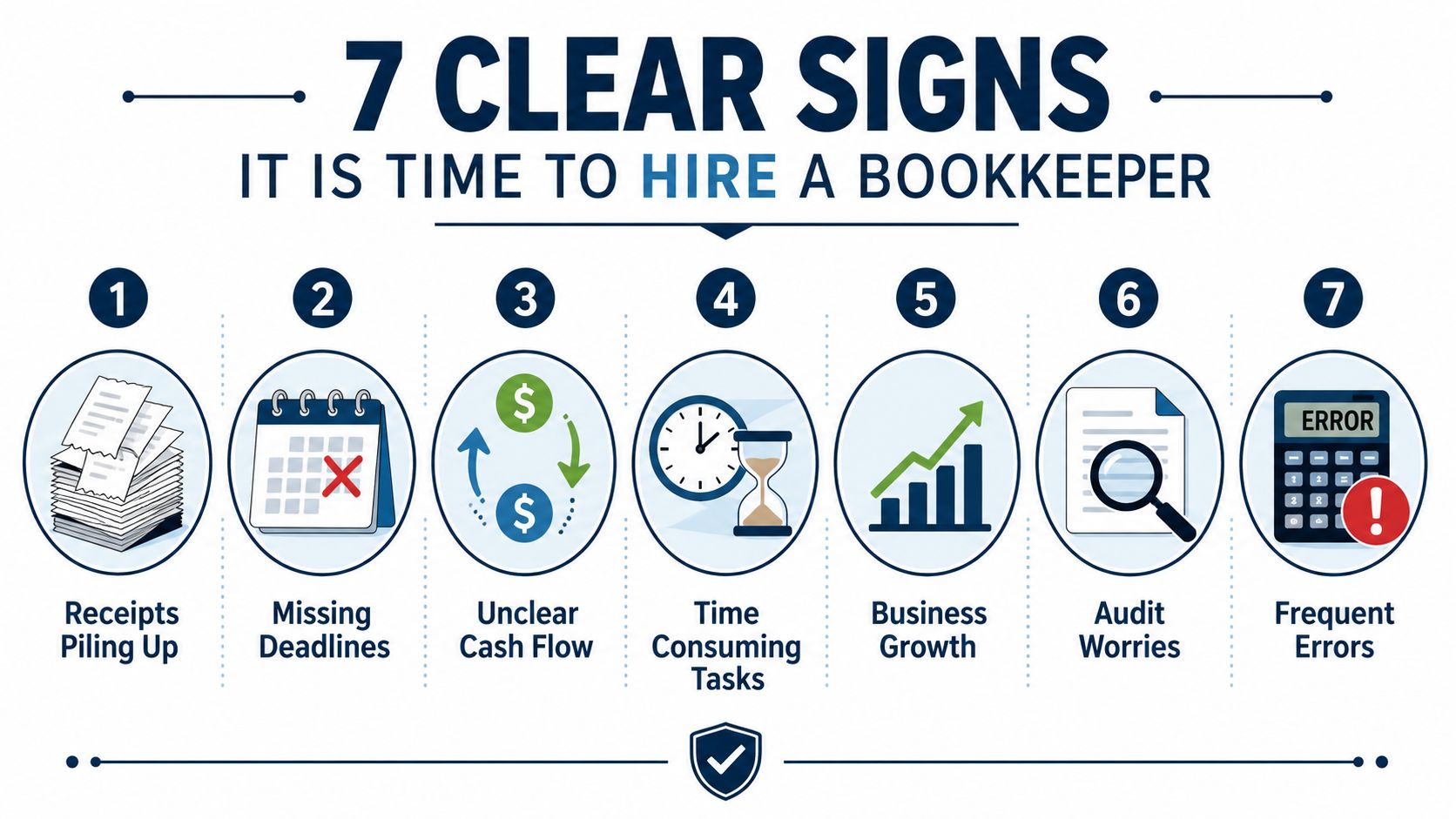
These seven signs usually mean bookkeeping has outgrown the DIY stage.
You're processing more than 50 transactions a month.
Volume changes the job. What used to be a quick weekly task becomes a system that needs consistent coding, reconciliation, and review. Xero points to this threshold, along with time pressure and operational complexity, in its guide on hiring a bookkeeper.You're spending over five hours a week on financial admin.
That is time you are not using to sell, manage people, serve clients, or fix operational issues. Owners often underestimate this cost because the work gets spread across evenings, weekends, and random gaps during the day.Your receipts, bills, and bank feed exceptions keep piling up.
Backlogs create more than clutter. They create bad reports. Once transactions sit too long, details get fuzzy, supporting documents go missing, and cleanup takes longer than doing it right the first time.You cannot explain your cash position with confidence.
Revenue alone does not answer the core question. Can you cover payroll, taxes, debt payments, and owner draws without guessing? If cash feels tighter than your sales numbers suggest, a bookkeeper can usually spot the disconnect faster than an owner working from memory and bank balances.
Simple test: If you need to open your banking app, accounting software, and old email threads just to answer “How much cash is actually available?”, the process is broken.
The sign many owners miss
Your CPA is doing bookkeeping work, or cleaning it up at year-end.
This is the accountant dependency trap. A CPA and a bookkeeper do different jobs. The CPA handles tax strategy, filings, and higher-level review. The bookkeeper keeps the day-to-day records accurate and current so the CPA is not sorting uncategorized transactions in March.I see this mistake all the time. Owners assume tax prep means the financial side is covered. What they really have is delayed visibility and a larger bill from a professional whose time costs more. If you want a practical checklist for what to look for in a hire, the HireAccountants bookkeeper guide is a useful resource.
Your business got more complicated.
Complexity is often the trigger. Hiring employees, carrying inventory, tracking projects, collecting through multiple payment platforms, managing sales tax, or adding loans all raise the odds of errors. A small business can still need professional bookkeeping if the moving parts are stacking up.You're missing deadlines, postponing reconciliations, or worrying about cleanup.
Late books create a chain reaction. Reports lose value. Tax prep gets harder. Questions from lenders, investors, or your CPA take longer to answer. If the books would need “a little work” before anyone else looked at them, you are already behind.
Revenue can be a useful reality check
There is no perfect revenue number that tells you to hire a bookkeeper. Still, once sales start rising, the volume, compliance, and reporting demands usually rise with them. That is why many owners start comparing small business bookkeeping costs against the time and mistakes involved in doing it themselves.
A good rule is simple. If the books are late, unclear, or eating up owner time, you do not have a software problem. You have an ownership problem.
If you recognized your business in three or four of these signs, it is probably time to hand bookkeeping to someone who can keep the numbers clean before your CPA ever touches them.
Calculating the Real Cost and ROI of a Bookkeeper
It usually starts the same way. The owner is doing “good enough” bookkeeping at night, the CPA handles taxes once a year, and nobody notices the strain until cash feels tighter than expected or tax prep turns into a cleanup project.
That is the Accountant Dependency Trap. A CPA is there to review, advise, and file. A bookkeeper keeps the numbers usable month by month, which makes your CPA faster, more accurate, and often less expensive.
The visible cost
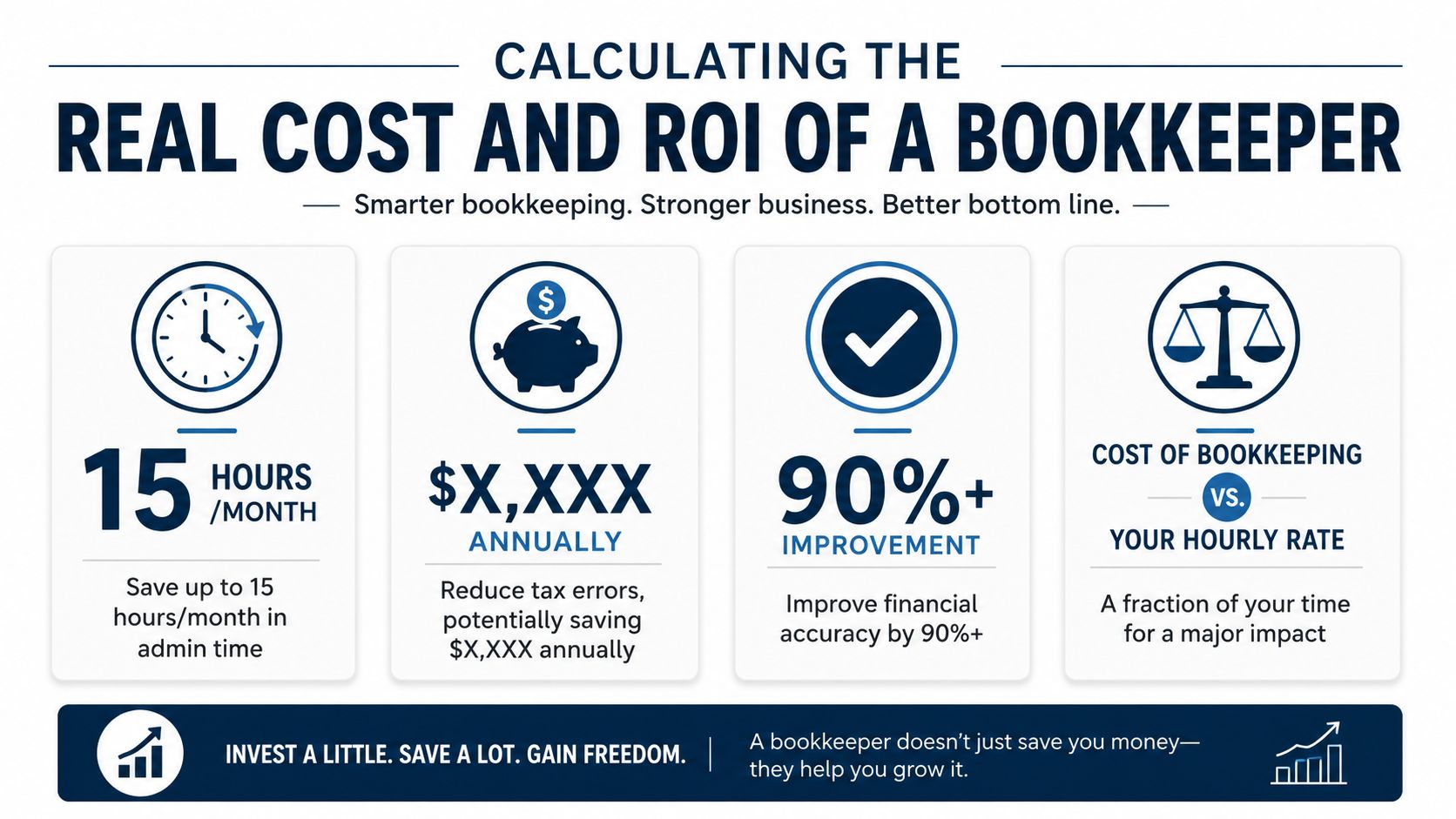
Bookkeeping fees are usually more manageable than owners expect. The U.S. Bureau of Labor Statistics reports wage data for bookkeeping, accounting, and auditing clerks, which gives a grounded starting point for understanding labor costs in this role: BLS occupational data for bookkeeping, accounting, and auditing clerks.
In practice, pricing depends on complexity more than headcount or ego. A solo consultant with clean books may pay a modest monthly fee. A product business with inventory, sales tax, and multiple payment platforms will pay more because the work is harder.
A rough budget check helps. If you want a practical breakdown of small business bookkeeping costs, compare the monthly fee against the hours you spend, the quality of your reports, and how much CPA cleanup you are buying every year without calling it cleanup.
Cleanup is where money leaks out. Routine monthly bookkeeping is usually cheaper than fixing six or twelve months of miscategorized transactions under deadline pressure.
The hidden cost
Owner time is the obvious part. Opportunity cost is the bigger part.
If bookkeeping takes you eight hours a month, what are those eight hours worth in your business? A sales call that never happened. Follow-up proposals that sat in drafts. Vendor issues you handled late because you were matching bank transactions on a Sunday afternoon.
There is also decision cost. Late or messy books make simple questions harder than they should be. Can you afford a hire? Is one service line profitable? Are distributions putting pressure on cash? If the numbers are a month behind, you are making current decisions with stale information.
Then your CPA gets the file. Instead of using their time for tax planning or strategy, they spend part of it sorting out basic accounting problems. That is one of the easiest ROI calculations to miss. A bookkeeper does not replace your CPA. A bookkeeper protects your CPA hours for work that actually requires a CPA.
Good bookkeeping does not just save time. It keeps expensive financial talent focused on the right job.
A simple way to think about ROI
Use a plain comparison:
| Cost area | DIY approach | Bookkeeper approach |
|---|---|---|
| Owner time | Pulled into admin work | Returned to sales, service, and operations |
| Monthly visibility | Reports are delayed or avoided | Numbers stay current enough to use |
| CPA relationship | Cleanup, questions, and rework | Cleaner handoff and better tax support |
| Error risk | Problems show up late | Issues are caught earlier and fixed faster |
If you want a plain-language way to frame that math, this comprehensive guide to calculating ROI is a useful starting point.
The practical test is simple. If a bookkeeper frees up owner time, reduces cleanup, improves cash visibility, and helps your CPA spend more time advising than repairing, the hire is paying for more than data entry.
A bookkeeper is a working part of your financial system. In many small businesses, that system starts producing a return long before the owner stops asking whether they can afford help.
What a Bookkeeper Actually Does and What They Do Not
A lot of confusion comes from one simple issue. Owners lump bookkeeping, accounting, and tax work into one big bucket called “finance stuff.”
That's how people end up paying a CPA to clean up bank transactions.

What the bookkeeper owns
A bookkeeper handles the daily financial maintenance that keeps the business organized and usable. That usually includes recording transactions, reconciling bank and credit card accounts, managing payables and receivables, keeping the chart of accounts clean, and preparing reports that are current enough to use.
Here's the simple version:
| Task Category | What It Includes |
|---|---|
| Transaction recording | Sales, expenses, transfers, deposits, and card activity entered correctly |
| Reconciliations | Matching bank and credit card activity to the books |
| Accounts payable | Tracking bills, due dates, and outgoing payments |
| Accounts receivable | Sending invoices, tracking collections, and following balances |
| Reporting support | Profit and loss, balance sheet, and cash visibility prepared from current records |
| Cleanup and maintenance | Fixing coding issues, organizing old entries, and keeping the file ready for review |
A CPA usually works further up the ladder. They use the financial records for tax filing, planning, compliance, and higher-level advice. They're not the ideal person for repetitive transaction work.
A clean monthly close makes your CPA faster and more useful.
What this looks like in real businesses
The value gets clearer when you look at actual operating problems.
- Construction contractors: A bookkeeper helps track costs by job, keeps subcontractor payments organized, and makes it easier to see whether a project is producing margin or just activity.
- Healthcare practices: They can support insurance-related reconciliation, payment posting review, payroll coordination, and cleaner reporting across providers or service lines.
- Law firms: The work often includes keeping records organized enough to support trust accounting processes and separating operating activity from client-related funds.
- Real estate investors: A bookkeeper can organize reporting by property, making it easier to see which buildings are performing and which ones are draining cash.
When startups need help sooner
Some businesses need bookkeeping earlier than others. For service-based startups and firms seeking investment or hiring employees, the trigger point often falls between $250,000 and $500,000 in annual revenue because growth, capital needs, and investor expectations require cleaner financial oversight according to Alicat Solutions.
That's especially true when leadership needs reports for hiring, pricing, or funding conversations instead of just tax filing.
For owners comparing options, local firms, freelancers, and outsourced teams can all work. MyOfficeOps is one example of a Philadelphia-area provider that handles bookkeeping, payroll integration, reporting, and advisory support for small and midsize businesses.
How to Find and Onboard Your Bookkeeping Partner
Hiring a bookkeeper shouldn't feel like handing your wallet to a stranger. If the process is done well, it feels more like putting a traffic system in place. Things move cleaner. Fewer bottlenecks. Fewer surprises.
What to look for first
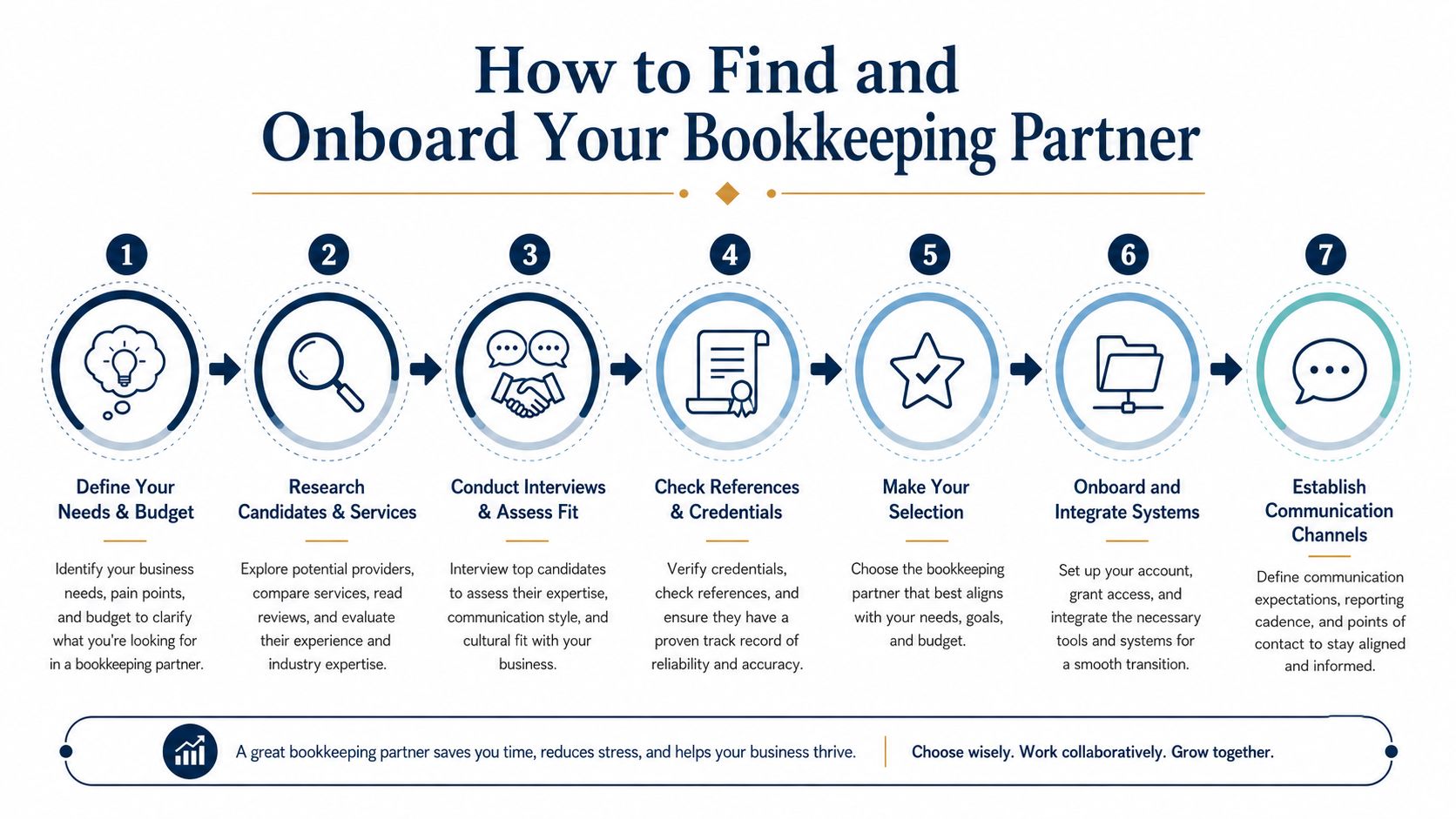
Start with fit, not just price.
Look for someone who understands your industry, works comfortably in tools like QuickBooks or Xero, and can explain their process in plain English. You want a person or team that closes books consistently, asks good questions, and notices problems early.
Ask direct questions in the interview:
- How do you handle monthly reconciliations?
- What do you need from me each month to keep the books current?
- How do you communicate issues that need owner input?
- Have you worked with businesses like mine before?
- How do you prepare the file for the CPA at year-end?
Don't skip the CPA question
This matters more than owners think. One of the best reasons to hire a bookkeeper is to clean the books for your CPA, which can reduce the CPA's time and cost by 20% to 30% during tax season as discussed by Brecken Business Solutions.
That's the practical fix for the accountant dependency trap. Your CPA should be reviewing, advising, and filing. Your bookkeeper should be keeping the records ready for that work.
The right handoff saves money twice. You pay less for cleanup, and you get tax answers faster.
What onboarding should include
A solid onboarding process is usually straightforward:
Access and accounts
Provide access to bookkeeping software, bank feeds, credit cards, payroll systems, and merchant processors.Core documents
Gather prior returns, recent statements, open invoices, unpaid bills, loan details, and any old bookkeeping files.Workflow decisions
Agree on who handles bills, who approves payments, how expenses are categorized, and when reports will be delivered.
If you want to compare service models before deciding, this resource on outsourced bookkeeping for small business gives a good overview of what outsourced support typically includes.
Good onboarding should lower your stress in the first week, not raise it.
Take Control of Your Financial Future Today
You sit down on Sunday night to “catch up on the books” and two hours later you still cannot answer a basic question. Did the business make money this month, or did cash just happen to be in the account? That is usually the moment owners realize they do not have a tax problem. They have a bookkeeping problem.
Waiting rarely makes this easier. As a business picks up more customers, payments, subscriptions, payroll items, and expense categories, a simple DIY system starts to break down. The result is familiar. Decisions get delayed, cash gets tighter than expected, and tax season turns into a cleanup project.
A lot of owners fall into the accountant dependency trap. They assume their CPA will cover the gap. In practice, a CPA is usually stepping in at the end of the process, not keeping the day-to-day records current. If the books are messy, you pay for cleanup first and advice second.
You do not need every warning sign to justify help. If you are spending too much time reconciling transactions, second-guessing your numbers, or handing a pile of uncategorized activity to your accountant, the business has already outgrown the current setup.
A bookkeeper helps you get timely records, cleaner reports, and fewer surprises. Just as important, your CPA can spend time on planning and tax strategy instead of sorting through avoidable mess.
That changes how you run the business.
If you want a clear next step, MyOfficeOps offers a simple path for business owners who need bookkeeping support without the usual confusion. It starts with a Discovery Call to understand what's happening in your business, moves into a Custom Plan based on your systems and goals, and then into Smooth Onboarding so the handoff doesn't disrupt your day-to-day work. If you're tired of messy books and expensive cleanup, that first conversation can give you clarity fast.