
When you hear "bookkeeping services for small businesses," what do you think of? For a lot of people, it’s just about passing off the annoying job of tracking money to someone else. And yeah, that’s a big part of it. It means another person takes care of recording every dollar you make and spend.
This helps keep your money stuff organized, correct, and ready for tax time. It frees you up to do what you do best: run your business. But it's really more than just that.
What a Bookkeeper Actually Does for Your Business

Let's think of it this way. Your business is a ship. You're the captain, trying to get to your destination. A bookkeeper is like your navigator, who maps out the waters so you don't crash into rocks you can't see.
They do more than just type numbers into a computer. A good bookkeeper creates a clear, easy-to-read map of your company's money. They take that messy pile of receipts, bills, and bank statements and turn it into a simple story about where your money is going. For example, my friend who runs a small coffee shop used to feel totally lost. Her bookkeeper showed her that she was spending way more on one type of coffee bean that wasn't selling well. That simple insight helped her change her orders and save hundreds of dollars a month.
Turning Mess into Meaning
Think about all the money moving in and out of your business every day. A customer pays you, you buy paper towels, you pay an employee, you pay your rent. A bookkeeper's main job is to carefully write down every single one of these things.
This is called recording transactions. It sounds simple, but doing it right is the foundation for everything else. If you don't, you’re just guessing about how your business is really doing.
A study found that almost half of small business failures happen because the owner didn't understand their finances or manage money well. Good bookkeeping fixes this by giving you the clear picture you need to make good choices.
By keeping all this information organized, a bookkeeper makes sure your financial records are always correct and up to date. This isn't just for you; it’s super important when you need a loan from a bank or if the IRS has questions.
Why This Money Map Matters
With a clear money map, you can start making smarter decisions based on facts, not feelings. Instead of just wondering if you can afford that new laptop, you can look at the numbers and know for sure.
Here’s what that clarity helps you do:
- Know Your Real Profit: See exactly how much money you’re making after all the bills are paid. No more guessing.
- Handle Your Cash: Understand when money comes in and when it goes out, so you can always pay your bills on time.
- Plan for the Future: Feel confident when you decide it’s the right time to hire a new person or add a new service.
- Be Ready for Taxes: No more last-minute panic attacks trying to find receipts when tax season comes.
In the end, bookkeeping services for small businesses are about giving you back your time and providing peace of mind. You can find more helpful advice in our other guides, like these basic bookkeeping tips for business owners. Getting this stuff right is key to building a strong company.
Figuring Out What Bookkeeping Services Include

So, you’ve decided to get help with your books. What do you actually get? It’s a great question, because bookkeeping isn’t the same for everyone.
Think of it like ordering a pizza. You can get a plain cheese pizza, or you can get one with all the toppings. How big and complicated your business is will decide which "toppings" you need. Let's look at the menu.
The Four Main Bookkeeping Jobs
Every bookkeeping service is built around four main jobs that keep your business running. These are the things every single business needs, whether you sell cupcakes or build websites.
Recording Transactions: This is the most basic job. A bookkeeper tracks every dollar that comes in and goes out and puts it in the right category. A lunch with a client isn't just a charge—it's a "meals" expense. A new computer is an "asset." Getting this right is step one.
Bank Reconciliation: Have you ever looked at your bank statement and seen a charge you didn't recognize? A bookkeeper does this for your business every month. They compare your records to the bank's records to find mistakes, catch weird charges, and make sure everything matches up.
Accounts Receivable (A/R): This is just a fancy way of saying "the money people owe you." A bookkeeper tracks the invoices you've sent out, sends reminders to clients who are late, and makes sure you get paid for your work.
Accounts Payable (A/P): This is the opposite—it's the money you owe other people, like your suppliers. A bookkeeper makes sure your bills are paid on time so you can stay on good terms with everyone and avoid late fees.
Without these four jobs getting done right, it's almost impossible to know where you stand financially. Everything else is built on this.
Going Beyond the Basics
As your business grows, your money situation gets more complicated. This is where the extra "toppings" come in. Some bookkeeping services offer more help that can save you a lot of time and give you a better understanding of your business.
A common extra is payroll. Paying your employees is more than just writing checks. It involves figuring out taxes, handling deductions, and following labor laws that always seem to be changing. Bookkeepers can often help with or connect you to comprehensive payroll and HR solutions to keep everything on track.
Another important extra is creating financial reports. Your bookkeeper can put together key documents like the Profit & Loss statement and the Balance Sheet, which give you a quick, clear look at how your business is doing.
The bottom line: A basic service keeps you organized and legal. A more advanced service turns your financial numbers into a tool that helps you grow, making it easier to decide on things like pricing and hiring.
How Services Grow With Your Business
A brand-new business has very different needs than one with ten employees. A good bookkeeper will offer different plans that can grow with you.
Comparing Bookkeeping Service Plans
Here's a simple look at how service plans are often set up. This helps you see the difference between a starter plan and one for a growing company.
| Service Task | Starter Plan (What's usually included) | Growth Plan (What's usually included) |
|---|---|---|
| Recording Transactions | Included (up to a certain number) | Included (for more transactions) |
| Bank Reconciliation | Included (1-2 accounts) | Included (multiple accounts) |
| Money In/Money Out | Basic tracking and reports | Full management, including chasing late payments |
| Financial Reports | Monthly Profit & Loss, Balance Sheet | Custom reports, cash flow predictions |
| Payroll | Usually an optional extra | Included for a set number of employees |
| Advice Meetings | Not usually included | Monthly or quarterly review calls |
This table shows how bookkeeping services for small businesses can change as you grow. You start with just what you need and add more help as you get bigger, so you're never paying for more than you use.
How Much Should You Expect to Pay for Bookkeeping
Let’s get to the question every business owner asks: how much does this cost? The honest answer is, “it depends,” but that’s not very helpful. The good news is we can break down the common ways bookkeepers charge so you know what to expect and can plan for it.
The price of bookkeeping services for small businesses isn't random. It's usually based on how many sales and purchases you have each month, how many bank and credit card accounts you have, and—let's be real—how messy your current records are. A freelance writer with 50 transactions a month will pay less than a busy restaurant with hundreds.
Common Ways Bookkeepers Charge
When you start looking for a bookkeeper, you'll see a few different ways they charge for their work. Each has its good and bad sides, and knowing the difference helps you find the right fit.
- Flat Monthly Fee: This is the most common option, and for good reason. You pay one set price every month for an agreed-upon list of services. It's predictable, makes budgeting easy, and you know exactly what you’re getting. It’s like a subscription for your financial health.
- Hourly Rate: This is great for one-time projects. Maybe you need someone to clean up a few years of messy books or help you get set up on new software. You just pay for the time it takes to do the job.
- Custom Package: Some bookkeepers will create a price just for you, based on what you need. This might be a mix—a flat fee for the regular monthly stuff, with an hourly rate for any extra projects that come up.
The goal is to find a price that feels fair and is easy to understand. You should never be surprised by a bill. A good bookkeeper will be clear about their costs and what's included from the start.
Outsourcing vs. Hiring: What’s the Better Deal?
A lot of business owners struggle with this: should I just hire someone to work in my office? For most small businesses, outsourcing your bookkeeping is the smarter money move.
When you hire an employee, you're not just paying a salary. You also have to pay for benefits, payroll taxes, vacation time, sick days, and training. It adds up quickly. When you outsource, you get an expert's help without all the costs of a full-time employee.
In fact, this is becoming the new normal. By 2025, about 78% of small businesses worldwide will have outsourced their bookkeeping to save time and money. An in-house bookkeeper can cost $45,000 to $60,000 a year in salary alone, but outsourced services usually cost between $250 and $2,500 per month. The final price depends on your business's size and how much work is involved. You can find more details in these small business bookkeeping statistics on outbooks.com.
What Changes the Final Price?
So, what really makes the price go up or down? It almost always comes down to these three things.
- Number of Transactions: This one’s simple. The more sales, purchases, and payments you have each month, the more work it is to record and check everything.
- Complexity: A business with several bank accounts, a few credit cards, a couple of loans, and payroll for ten employees is just more complicated than a solo freelancer with one checking account. More complexity means more time.
- Catch-Up Work: If your books haven't been touched in a year (it happens!), there will be a one-time "cleanup" project. This is a one-time fee to get everything organized before the regular monthly work can start.
When you understand these points, you can have a smart conversation with a potential bookkeeper and find a service that helps a lot without costing a fortune.
How to Choose the Right Bookkeeping Partner
Finding the right bookkeeper is less like hiring a service and more like picking a key member of your team. You're letting someone into the private side of your business, trusting them with your money details, and counting on them to help you make good choices. It's a big deal.
This decision is too important to just guess. A great partner will make things clear and help you grow, while the wrong one can cause expensive problems and confusion. The key is knowing what to look for and asking the right questions from the start.
Start With the Right Questions
Before you even look at a price, you need to figure out if a bookkeeper is a good fit for your business. Think of it like a job interview—you're trying to find the perfect person for an important role.
Here are a few key questions to start with:
- What types of businesses do you usually work with? A bookkeeper who understands how a construction company or a doctor's office works will be way more helpful than one who does a little bit of everything. They'll already know about the specific costs, sales, and rules that matter to you.
- What accounting software do you know best? You need someone who is great with the tools you're already using. If your business uses QuickBooks Online, you don't want to hire someone who only knows Xero.
- How do you like to communicate? Do they prefer phone calls, or do they mostly use email? Finding someone whose communication style matches yours will make working together much smoother.
Check Their Background and Experience
Once you have a good feeling about them, it's time to do a little digging. You wouldn't hire someone without checking their resume, and the same goes for a bookkeeper. A real professional will be happy to share their qualifications.
Look for titles like Certified Public Bookkeeper (CPB) or proof they are experts in certain software, like being a QuickBooks ProAdvisor. These aren't just fancy names; they show a real commitment to their job and prove they have a certain level of knowledge.
And don't be afraid to ask for—and actually check—references. A good bookkeeper will have a list of happy clients who are willing to talk about their experience. When you call a reference, ask specific questions like, "Are they easy to get ahold of?" and "Can you give me an example of how they helped your business?"
The right partner is a guide who helps you understand your numbers, not just record them. Their ability to explain money stuff in simple terms is just as important as their technical skill.
Make Sure They Use Modern Technology
Today's bookkeeping is all about being fast and accurate, and that means using the right technology. Cloud-based accounting software has completely changed how things are done. Now, about 95% of accounting and bookkeeping firms use the cloud in some way.
This isn't just for convenience; it helps them do a better job. A full 63% of firms say that cloud software has directly helped them provide better service to their clients, according to accounting industry statistics on linkmybooks.com. Tools like QuickBooks Online let you and your bookkeeper work together in real-time, so you're always looking at the same up-to-date information.
A tech-savvy bookkeeper will also have safe ways to share documents and talk with you, which is key for protecting your private financial info.
Find a True Partner for Your Business
In the end, you’re looking for more than someone who just types in numbers. You need a partner who can help you make sense of your finances so you can grow your business. This means finding someone who is proactive, a good communicator, and truly cares about your success.
Are you prepared for this kind of help? Answering a few questions can help you figure out if you're ready for a back office partner to help propel your business forward. Taking the time to find the right person will pay off big time, giving you the financial clarity you need to build a successful business.
Getting Started with Your New Bookkeeper
You’ve done the research, checked your options, and picked your bookkeeping partner. Great! So, what happens now? The first few weeks are all about setting up a smooth and secure system so you can work together. This setup phase, often called "onboarding," is super important for a good long-term relationship.
Think of it like a professional chef coming into your kitchen for the first time. Before they can start cooking, they need to know where the pots and pans are and organize the pantry. Your new bookkeeper does the same thing with your finances to make sure every report they give you is right.
The First Steps of Onboarding
Getting started with a professional bookkeeper isn't as scary as it sounds. A good one will walk you through each step, making it feel more like a friendly team effort than a stressful chore. They’ve done this a hundred times before and have a process to make it easy.
First, they'll need a way to see your financial activity. This usually means giving them secure, read-only access to your business bank and credit card accounts. This is a safe and standard practice—it lets them see the transactions they need to organize but gives them zero power to move your money.
Next, you'll need to share a few key business documents. This usually includes things like:
- Past tax returns to get an idea of your business’s financial history.
- Information about any business loans you have.
- Payroll details if they’ll be helping you with that.
This simple graphic breaks down the basics of finding and starting with a great bookkeeping partner.
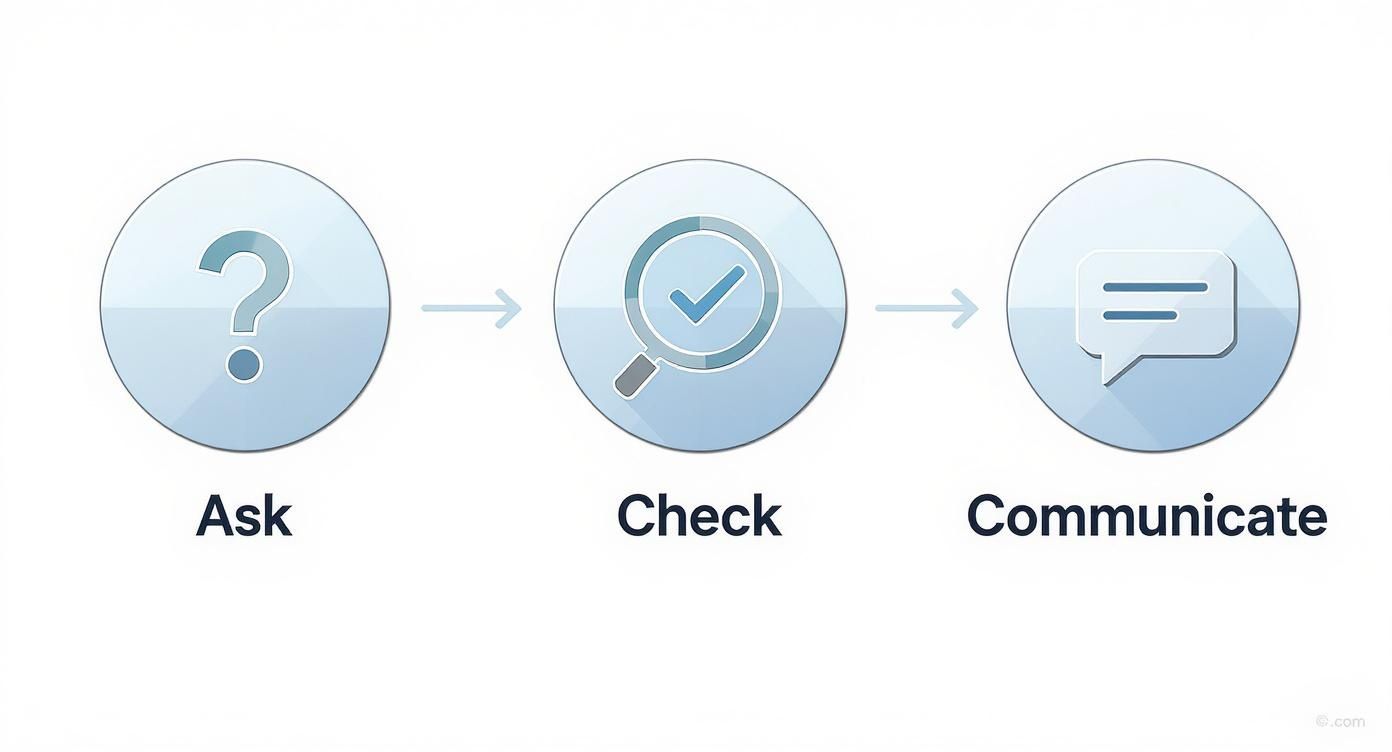
As you can see, a good partnership really comes down to asking the right questions, checking their background, and having clear communication from day one.
Cleaning Up and Moving Forward
A lot of times, when a business hires its first bookkeeper, the financial records from the past are a bit of a jumble. That's totally normal, so don't worry about it. A key part of the onboarding process is what’s called a "cleanup" or "catch-up."
Your new bookkeeper will carefully go through all your past transactions, organize everything the right way, and fix any mistakes they find. This creates a clean, accurate starting point to build on.
Setting up a strong foundation is everything. Once your past records are clean, your bookkeeper can create reliable financial reports right away, giving you an accurate picture of your business's health from the get-go.
This cleanup work prepares you for everything that comes next. With organized books, you can finally trust the numbers you’re seeing and start using them to make smarter decisions about your company's future. It's the last, most important step in getting your new financial partnership off to a great start.
Making Sense of Your Financial Reports
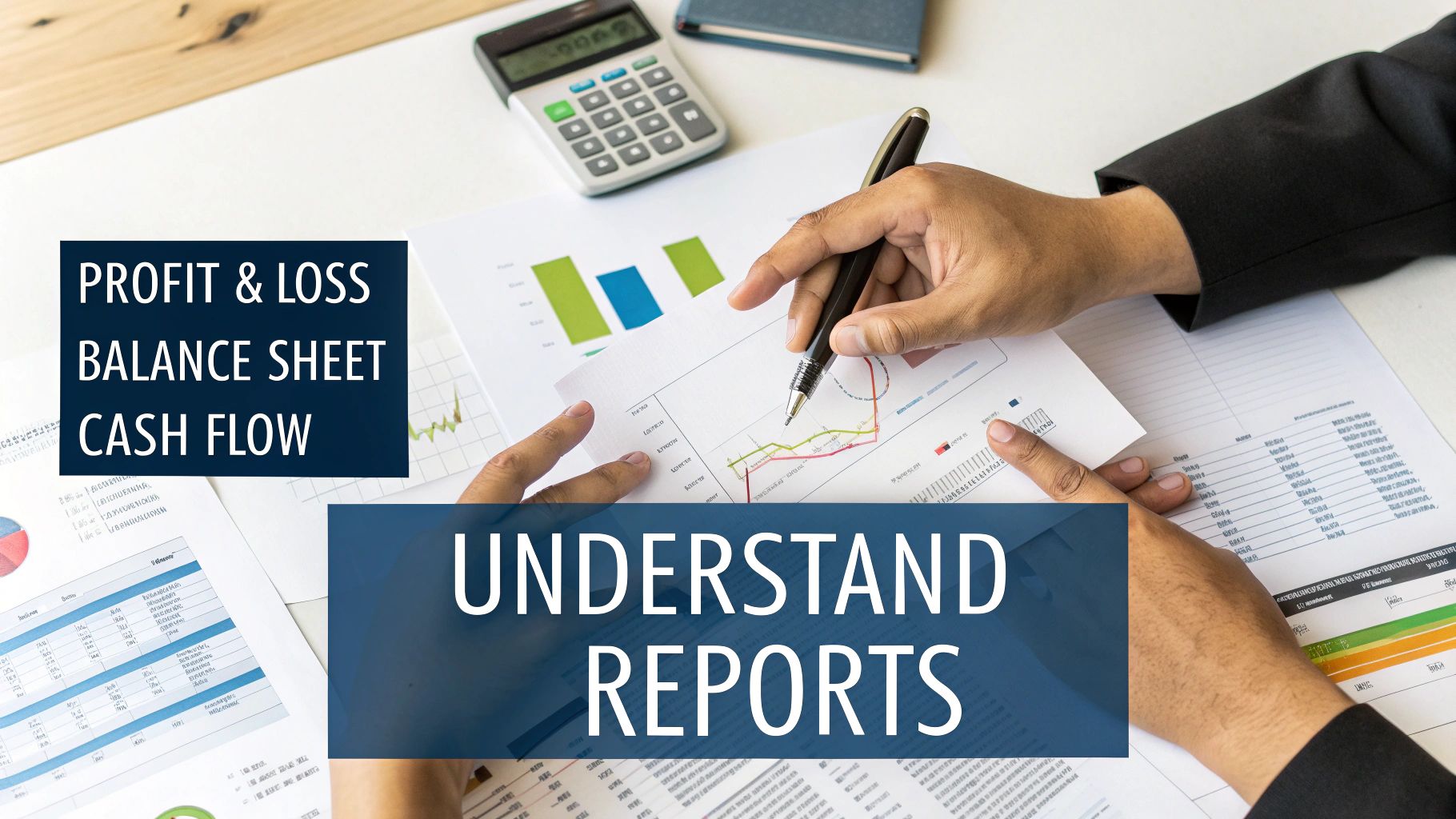
Once your bookkeeper gets things organized, they’ll start sending you financial reports. At first, these documents can look like a different language—just a bunch of confusing numbers. But these reports are like your business’s report card, and learning to read them is a huge advantage.
Think of them as simple tools that answer the big questions you have about your business. These reports take all the numbers your bookkeeper has organized and put them together into a clear story. When you understand this story, bookkeeping stops being a chore and becomes your best tool for making smart business decisions.
Your Business Scoreboard: The Profit And Loss Statement
The first report you'll probably see is the Profit and Loss (P&L) statement. This one is pretty simple: it tells you if your business made or lost money over a certain time, like a month or a quarter. It's like looking at the final score after a game.
The P&L adds up all your revenue (the money you brought in) and then subtracts all your expenses (the money you spent). What’s left is your net profit or loss. It's the clearest way to answer that big question: "Are we actually making money?" You can learn more about how this works by reading our guide on what is a profit and loss statement.
A Financial Snapshot: The Balance Sheet
Next up is the Balance Sheet. If the P&L is a game recap, the Balance Sheet is like a team photo—it’s a snapshot of your company's financial health on one specific day. It doesn't show you what happened over time; it shows you exactly where you stand right now.
It works by balancing two sides of a simple equation:
- Assets: Everything your business owns that is valuable, like cash in the bank, equipment, and money customers owe you.
- Liabilities & Equity: Everything your business owes to others (like loans) plus the owner's investment in the company.
The main rule of the Balance Sheet is that Assets must always equal Liabilities + Equity. This report gives you a solid, big-picture look at the overall financial strength of your company.
Following The Money: The Cash Flow Statement
Finally, there's the Cash Flow Statement. This report shows you exactly how cash moved in and out of your business. It’s different from the P&L because it only tracks actual cash.
For example, your P&L might show a big sale as money you earned, even if the client hasn’t paid you yet. The Cash Flow Statement doesn't care about that—it only counts the cash that's actually in your bank account. It shows where your cash came from and where it went, giving you a real-world look at your ability to pay bills and keep the lights on. For property managers, special property management apps for generating financial reports can do this automatically, giving instant clarity on where the cash is.
The global market for bookkeeping services for small businesses is growing fast for a reason. It was valued at about $50.62 billion in 2025, which shows just how many owners realize that understanding these reports is key to surviving and growing.
Common Questions About Bookkeeping Services
When you're thinking about letting someone else handle a part of your business, a lot of questions come to mind. That’s a good thing—it means you're being careful. Let's go over some of the most common questions we hear from business owners.
When Should I Hire a Bookkeeper?
Honestly, the best time to hire a bookkeeper is right before you feel like you really need one. If you wait until you're totally buried in receipts and spreadsheets, the cleanup job is always bigger and more stressful.
Think about looking for bookkeeping services for small businesses when you notice these signs:
- You're spending more than a few hours a month on your books—time you could be using to grow your business.
- You look at your bank account but aren't 100% sure if you're actually making a profit.
- You’re getting ready to apply for a business loan, and they will want to see clean financial records.
- Just thinking about tax season makes you nervous.
Getting help early sets you up for success instead of a last-minute panic.
What Is the Difference Between a Bookkeeper and an Accountant?
This is a great question, and the answer is simpler than you think. Imagine you're building a house.
A bookkeeper is like the construction crew. They do all the daily work—they lay the foundation, put up the walls, and make sure every single brick (or transaction) is in the right place. They are the ones recording all your daily financial activities to build a solid structure.
An accountant is like the architect. They take the solid structure your bookkeeper built and look at the big picture. They help design your overall financial plan, help with tricky tax questions, and give you high-level advice on what to do next. The architect can't do their job without the clean, accurate work of the construction crew.
Do I Still Need Software If I Have a Bookkeeper?
Yes, absolutely. A professional bookkeeper doesn't replace accounting software like QuickBooks or Xero; they are experts at using it. The software is the main place where all your financial information lives, and most importantly, it belongs to you.
Your bookkeeper uses special access to manage the information in that software. This is a huge benefit for you—it means you can log in any time and see exactly what’s going on with your money.
A quick note on security: Good bookkeepers use secure, 'read-only' or 'accountant-level' access to your bank accounts. This lets them see transactions to do their job without ever being able to move or take out your money. Your funds are always safe and under your control.
Is It Safe to Give a Bookkeeper My Bank Info?
It’s totally normal to be careful about this—we're talking about your money. A professional bookkeeper takes your security as seriously as you do. They should never ask for your personal login and password.
Instead, they use secure, industry-standard tools made just for financial professionals. This protects your private information while giving them the access they need to do their job. It's a normal and safe part of the process when you work with a company you trust.
Ready to get the financial clarity you need to grow? The team at MyOfficeOps provides expert bookkeeping and advisory services that go beyond just balancing the books. Let's schedule a discovery call to build your custom plan.