
Hiring a bookkeeper is one of the first big steps you take as a business owner. But you're not just looking for someone to enter numbers. You need a partner who can help you understand your money and guide your business.
Why a Great Bookkeeper Is More Than a Number Cruncher
Before you start looking, let's get one thing straight: what a great bookkeeper actually does. Many people think bookkeeping is just about logging receipts and payments. That’s part of it, but it’s just the beginning.
Running a business without clean books is like trying to drive through a new city at night with your headlights off. You’re moving, but you have no idea where you’re going or if there's a big pothole right in front of you. A good bookkeeper turns on the lights.
From Data Entry to Financial Clarity
A basic bookkeeper will record your sales and expenses. A great one turns all that data into a clear picture of how your business is doing. They don't just type in numbers; they organize them in a way that tells a story.
This means you can finally answer important questions with real facts:
- Did we actually make money this month?
- Which of our services are making the most money?
- Do we have enough cash to pay our bills and our team next month?
Without this, you’re just guessing. A good bookkeeper gives you the solid information you need to make smart choices.
I once worked with a busy construction client who thought he was making a profit. His bookkeeper dug into the numbers and found something shocking: he was losing money on his biggest projects. By pointing this out, the bookkeeper helped him completely turn his business around.
A Partner Who Spots Problems Early
A good bookkeeper is also your early warning system. They see every dollar that comes in and goes out, so they are often the first to notice when something is wrong.
For example, they might see that a big customer is always paying late, which hurts your cash flow. Or maybe they'll notice that you're spending more and more on software each month, quietly eating into your profits.
By catching these things early, they give you time to fix them before they become huge problems. This is the difference between someone who just does your books and a partner who helps protect your business.
Where to Find Qualified Bookkeepers
Okay, you know you need a great bookkeeper. But where do you find one? A quick online search can be overwhelming, so let's look at the best places to find someone you can trust with your money.
Tap Into Your Existing Network
Before you get lost on the internet, start with the people you already know and trust. This is often the fastest way to find a good person.
Your CPA is the perfect person to ask first. They have to work with your books, so they want them to be clean and accurate. Most CPAs have a short list of bookkeepers they trust because a good bookkeeper makes their job easier.
Next, ask your business lawyer or other business owners you know. A simple question like, "I'm looking for a bookkeeper—do you know anyone you'd recommend?" can go a long way. People are usually happy to share a good contact.
Professional Networks and Directories
If your own network doesn't have any leads, it's time to look a little wider. But instead of giant job websites, focus on places where finance pros hang out.
- LinkedIn: This is more than a place to post resumes. You can search for bookkeepers in your city (like Philadelphia or West Chester) and see their experience and what other people say about them. You can even search for specific skills, like "bookkeeper for restaurants."
- Accounting Directories: Websites run by groups like the American Institute of Professional Bookkeepers (AIPB) or the National Association of Certified Public Bookkeepers (NACPB) have lists of their members. This is a good way to find people who have passed tests to prove they know their stuff.
This diagram shows the different things a bookkeeper can do for you, from simple tasks to being a key advisor.
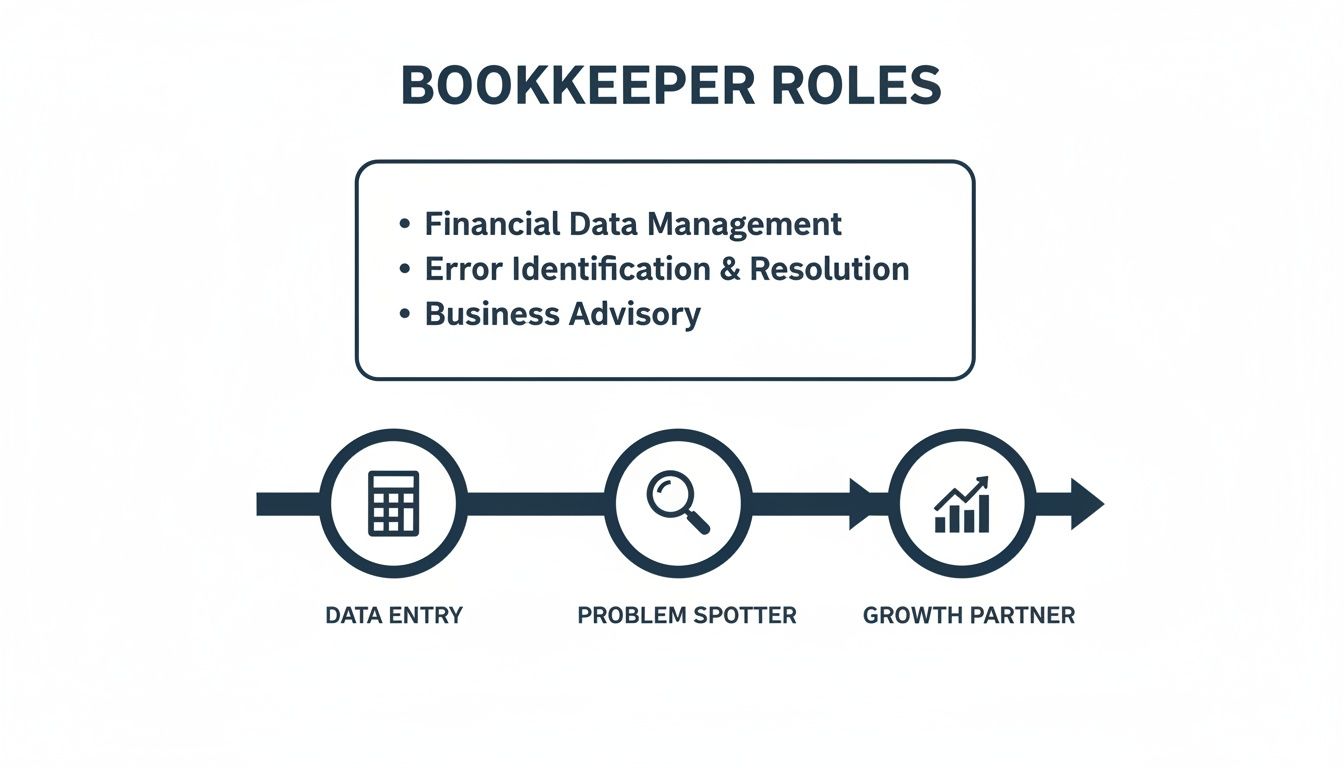
As you can see, a bookkeeper adds the most value when they help you understand what the numbers mean for your future.
Comparing Bookkeeper Hiring Options
To help you figure out where to look, here's a quick summary of the common ways to hire, with their good and bad points.
| Hiring Option | Best For | Potential Downside |
|---|---|---|
| Personal Referrals | Businesses that want a trusted option quickly. | You won't have many people to choose from. |
| Professional Directories | Companies looking for someone with proven skills and certifications. | Can cost more; takes time to contact and check everyone. |
| Outsourced Firms | Growing businesses that need a team with many skills and a backup plan. | Might not feel as personal as working with one person. |
| Online Job Boards | Businesses that have time to look through lots of applications. | You'll get a lot of people who aren't a good fit. |
Each option can work, but for a growing business, a bookkeeping firm often provides the most stability and value in the long run.
The Outsourced Firm Advantage
While hiring a single freelancer can work, many businesses find it's better to partner with a bookkeeping firm.
Think about it: a firm is a team. That means you're not relying on just one person who could get sick, go on vacation, or get too busy. Your finances keep running smoothly no matter what.
A team can offer a lot:
- A Broader Skill Set: You get access to people with different skills, from daily tasks to big-picture financial advice.
- Built-in Redundancy: If your main contact is out, someone else who already knows your business can step in. No delays.
- Scalability: As your business grows, a firm can easily handle more work. You won't have to hire someone new.
This is where the industry is heading. In-house accounting clerk jobs are expected to drop by 6% by 2034, while the need for remote bookkeeping services has grown a lot. The best bookkeepers want to work for modern companies that offer this flexibility—like the firms do.
Working with a firm like MyOfficeOps gives you both expertise and a reliable system. You can learn more in our guide on outsourced bookkeeping for small business. And if you're thinking about looking for talent around the world, there are great tips for hiring LatAm accountants that can help.
What to Look For When Evaluating Candidates
You’ve posted the job and gotten some names. Now the real work starts. Looking past the resume is key to finding a bookkeeper who will be a trusted part of your team.
It’s not just about what they’ve done. It’s about how they think, how they talk, and how they’ll fit in with your business.
Let's break down the three most important things to look at: their skills, the software they know, and the simple human skills that make a big difference.
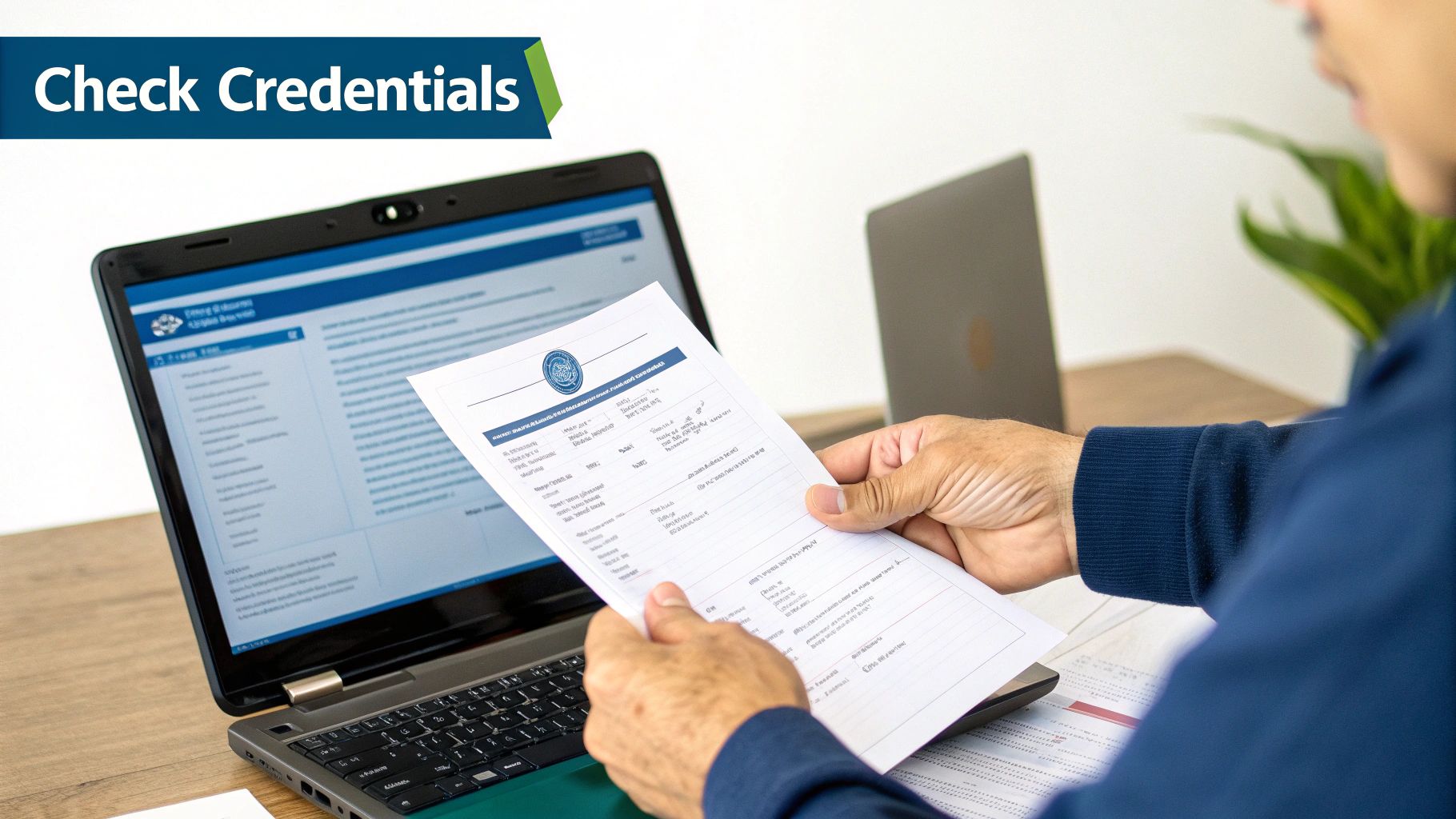
Core Skills and Credentials
First, let's talk about the must-haves. Any good bookkeeper needs to understand the basics of accounting, especially double-entry bookkeeping. This is the fundamental rule that keeps your finances balanced.
You'll also see different certifications on their resumes. These show that a person has taken the time to learn and get tested on their skills.
- QuickBooks ProAdvisor: This is a common one. It means the person has passed tests to prove they know how to use QuickBooks software. It’s a good start if you use QuickBooks.
- Certified Public Bookkeeper (CPB): This certification comes from the National Association of Certified Public Bookkeepers (NACPB) and requires passing a big exam on accounting rules.
- Certified Bookkeeper (CB): This one is from the American Institute of Professional Bookkeepers (AIPB). It's a bit harder to get, as it often requires work experience even before you can take the test.
Key Takeaway: Certifications are nice, but they don't replace real-world experience. Think of them like a driver's permit—it shows someone knows the rules, but you still want to know they can handle traffic. Understanding the different UK Bookkeeper Qualifications can also help you see how different programs test for skills.
Software and Industry Experience
A bookkeeper who already knows your software and your industry can start helping you right away. If your business uses Xero, someone who is a Xero expert is a huge plus.
But don’t make it a dealbreaker. A smart bookkeeper can learn new software quickly.
What's often more important is industry experience. A bookkeeper for a construction company deals with project costs, which is totally different from a doctor's office that handles insurance payments. Someone who already knows your industry's language will see things a general bookkeeper might miss. This is especially true for businesses in places like Philadelphia and West Chester, which have many different types of industries.
The All-Important Soft Skills
This is the stuff resumes don't tell you. You can teach someone new software, but you can’t easily teach them to be a good communicator or to pay attention to details. These are the things that make a bookkeeper great.
Look for these things during your interviews:
- Clear Communication: Can they explain a money concept in simple terms? If their answers are full of confusing words, that's a red flag. A great bookkeeper helps you feel smarter about your money, not confused.
- Attention to Detail: Bookkeeping is all about being exact. One misplaced decimal point can cause big problems. Ask them to tell you about a time they found a small mistake that made a big difference.
- Proactive Problem-Solving: Do they just enter numbers, or do they ask questions? A curious bookkeeper who asks, "Hey, why did this expense suddenly double?" is the kind of person you want on your team.
Finding the right person is about balancing these three things. A great way to keep track is to use a simple scorecard. Check out our free Bookkeeping Review Scorecard to help you compare people fairly.
Hiring an outside firm is becoming more popular for a reason—it often gives you this complete package. The global bookkeeping market is expected to grow by 9.8% between 2023 and 2030 as small businesses move away from hiring in-house.
For business owners in West Chester and Philly, this shows how important it is to find bookkeepers who know cloud software like Xero or Zoho. As working from home became more common, the need for virtual finance help grew by 25%. Today, 76% of finance professionals want a flexible work setup—something outsourced firms have already mastered.
Asking the Right Interview Questions
The interview is your chance to see what a person is really like, beyond their resume. This is where you find out if they have the right skills and if they’re someone you can work with. Forget the silly questions like "What's your biggest weakness?"—they don't tell you anything useful.
Your goal is to understand how a person thinks and solves problems. A good bookkeeper is more than just accurate; they're curious, proactive, and a good communicator. The questions you ask should bring these traits out.
Moving Beyond Yes or No Questions
Let's stop asking questions that get a one-word answer. Asking "Are you detail-oriented?" will always get you a "yes." That tells you nothing. Instead, ask questions that require them to tell a story.
Here’s how to change that common question:
- Instead of: "Are you detail-oriented?"
- Try this: "Tell me about a time you found a big mistake in a client's books. What was it, how did you find it, and what did you do to fix it?"
This one question shows you how they pay attention to detail, how they solve problems, and how they handle tricky situations. You’ll learn a lot more from their story than from a simple "yes."
Questions to Uncover Skills and Integrity
Here are some good, open-ended questions to add to your list. They test for skills, communication, and honesty.
"Walk me through your process for closing the books at the end of the month."
This shows you how organized they are. A good candidate will describe a clear process, including checking bank accounts and preparing financial reports."Imagine you see a charge you don't recognize. What do you do?"
The answer you want is simple: "I'd ask you about it." A bookkeeper who just guesses is a big risk. You want someone who isn't afraid to ask questions to make sure everything is right."How would you explain the difference between cash and accrual accounting to someone who doesn't know finance?"
This is a great test of their communication skills. A good bookkeeper can explain a complicated topic in a simple way. If they just spit out a textbook definition, they might have trouble helping you understand your own finances.
I once knew a business owner who hired a bookkeeper who sounded really smart in the interview. He used all the right jargon. The problem was, when it was time to explain the monthly reports, the owner couldn't understand a word he was saying. The smooth talker wasn't clear, and they had to let him go a few months later.
Red Flags to Watch Out For
Just as important as asking the right questions is knowing what warning signs to look for. Keep an eye out for these things during the interview.
- Vague Answers: If their stories don't have many details, they might be stretching the truth about their experience.
- No Curiosity: A great bookkeeper will be curious about your business. If they don't ask you any questions, it could mean they just see it as another data entry job.
- Blaming Others: Everyone has tough work experiences, but a professional takes responsibility. If they spend time complaining about a former client's messy books, that’s a bad sign.
Finding the right bookkeeper means hiring for both skill and character. By asking better questions, you can find someone who will truly be a trusted partner in your business.
Making the Hire and Setting Up for Success
You’ve looked at candidates, checked references, and finally found the right person. It feels like you're done, but this next step is very important. A good start sets you up for a great working relationship.
This part is all about the details—how you'll pay them, what it really costs, and how to get them started smoothly. Getting this right from day one builds trust and saves you from future headaches.

Understanding Pricing Models
One of the first things you’ll talk about is money. How a bookkeeper charges can tell you a lot about the kind of service you'll get.
Here are the common ways they charge:
Hourly Rates: This is simple—you pay for the time they work. This can be okay for small projects, but it makes it hard to budget. It can also encourage them to work slower.
Flat Monthly Fees: This is the model I like best for most businesses. You pay a set price each month for specific services. This puts everyone on the same page; your bookkeeper is encouraged to be efficient, not just to bill more hours.
Value-Based Packages: Some firms offer different packages. A basic package might just cover reports, while a higher-level one could include helping you plan your cash flow.
For most small businesses, a flat monthly fee is the best choice. It gives you a predictable cost and focuses on results, not hours. Your bookkeeper becomes more of a partner focused on giving you financial clarity.
The True Cost: In-House vs. Outsourced
It's easy to compare an employee’s salary to a firm's fee and think the employee is cheaper. That's a common mistake. The real cost of an employee is much more than their salary.
Let's look at the hidden costs of an employee:
- Benefits and Taxes: You have to pay for payroll taxes, health insurance, retirement plans, and vacation time. This can add 25-30% to their salary.
- Software and Training: You’ll have to pay for accounting software and any training they need to stay up-to-date.
- Overhead: Don't forget the cost of a desk, a computer, and other office supplies.
An outsourced service includes all of this in one monthly fee. They pay for their own benefits, software, and training. When you look at the total cost, outsourcing is often the cheaper and more flexible choice for small businesses. You get a whole team of experts for what might be less than the cost of one part-time employee.
Your Onboarding Checklist for a Smooth Start
A good start is about more than just giving them your passwords. It's your chance to set clear expectations, figure out how you'll communicate, and make your new bookkeeper feel like part of the team. A bumpy start can lead to problems later.
Here’s a simple checklist to help you:
Grant Access to Financial Tools: Give them secure, view-only access to your bank and credit card accounts. Add them as a user to your accounting software (like QuickBooks or Xero) and any other payment systems.
Share Key Documents: Get together old tax returns, business registration papers, loan agreements, and any financial reports you have. This history helps them get up to speed fast.
Define the Communication Plan: How will you two talk? Agree on a schedule, whether it’s a weekly email or a monthly call. Let them know who to contact with questions.
Set Clear Expectations and Goals: What does a good job look like in the first 90 days? Be specific. For example, "I need last month's financial reports by the 15th of each month."
Taking an hour or two to welcome your new bookkeeper properly is one of the smartest things you can do. It builds a good relationship from the start and helps them deliver great work right away. MyOfficeOps has a smooth start-up process built into all our bookkeeping services to make sure we work perfectly with your business from day one.
Common Questions About Hiring a Bookkeeper
If you're thinking about hiring a bookkeeper for the first time, you probably have questions. Let’s answer a few of the most common ones I hear.
What's the Difference Between a Bookkeeper and an Accountant?
I like to use a doctor analogy. Your bookkeeper is like the nurse who takes your temperature and blood pressure every day. They record every financial event—every sale, every bill, every payment—to make sure the daily financial health of your business is tracked correctly.
Your accountant is more like the specialist who looks at all that information to create a long-term health plan. They focus on the big picture: tax planning, future financial goals, and advising you on your business. You need both, which is why many firms like ours offer both services together.
How Much Should I Expect to Pay for a Bookkeeper?
Honestly, the cost can be all over the map. A freelance bookkeeper might charge by the hour. That sounds good at first, but it makes your monthly costs impossible to predict. One month might be cheap, but the next could be busy with taxes, making your bill skyrocket.
That's why most businesses prefer working with a firm for a fixed monthly fee. This usually costs anywhere from a few hundred to a couple of thousand dollars a month, depending on how complicated your business is. A flat fee lets you budget easily and avoids any surprise bills.
Key Takeaway: A low hourly rate might look like a deal, but a fixed monthly package gives you a predictable cost and better value. For a business owner, knowing your costs is a huge relief.
My Business Is Small. Do I Really Need a Bookkeeper?
Yes. Absolutely. In fact, getting your books right from the start is even more important for a small business. Clean books from day one help you manage your cash, make smart decisions, and avoid a huge, expensive mess at tax time.
Putting it off is like letting a big ball of string get tangled. Trying to untangle it later is a nightmare. It’s always easier to keep the string straight from the beginning.
Ready to get financial clarity for your business? The team at MyOfficeOps can provide the expert bookkeeping and advisory support you need to grow with confidence. Learn more about our services.