
Looking for an accounting firm in PA can feel like a chore. But finding a real partner for your business can completely change the game. I’m not just talking about getting your taxes done on time. I’m talking about getting real advice that helps you grow.
A great accountant doesn't just tell you what happened last month. They help you decide what to do next month.
Why the Right PA Accounting Firm is a Growth Partner
Let's be real—most business owners find their finances to be a big headache. You're busy running your business, so things like bookkeeping and payroll get pushed to the side. But what if your numbers could be your best tool for growth, not just a chore?

That’s the whole point of hiring a great accounting firm. It’s a switch from a "just get it done" mindset to having a money expert on your team.
It's More Than Just Bookkeeping
Think of it like this: anyone can plug numbers into software and tell you what you spent. A real partner uses that same information to help you see what's coming. They don't just hand you a pile of reports; they sit down and explain what the numbers really mean for your business.
A modern firm also works smarter. For example, they’ll use tools like automated data entry software for accountants to handle the boring stuff. This frees up their time to give you good advice instead of just typing in numbers all day.
The real value is when your accountant stops being a historian and starts being a strategist. They should help you answer questions like, "Can we afford to hire someone?" or "Which of our services is actually making us the most money?"
A Real-World Pennsylvania Example
I once worked with a construction guy in Chester County. His business was making money on paper, but he never had any cash. It didn't make sense. We teamed up with one of the local accounting firms pa that understood construction costs. We quickly found a few types of projects that were losing him money.
He changed how he bid on new jobs. Six months later, his cash flow was great.
This is the goal: find a partner who helps you make smarter choices. This kind of high-level help is often called CFO services. It's like having a top-tier financial expert without paying a full-time salary. We explain how it works in our guide on CFO services for small businesses.
A real partnership like this gives you:
- Clear Cash Flow: You’ll finally know where your money is going.
- Profit Insights: See what's making you money and what isn't.
- Smart Planning: Make big decisions about hiring or expanding with confidence.
In the end, the right firm doesn't just do your books. They help you build a stronger and more profitable business.
What Services Does Your Business Actually Need?
Looking at accounting services can feel like reading a huge, confusing menu. Do you need a little help or a lot? The truth is, most businesses don't need everything at once.
The key is to match the services to what you need right now and where you want to go.

Are you a new business just trying to keep your records straight? Or are you a bigger company trying to find ways to grow? The right answer depends on where you are today and where you want to be tomorrow.
The Three Levels of Accounting Help
Most accounting services fall into three levels. Think of them like gears you can shift as your business grows.
Core Accounting: This is the basic stuff. We're talking about daily bookkeeping, paying bills, and running payroll. The goal here is simple: keep your financial records accurate and organized.
Profit Optimization: This is where you start using your financial numbers to make more money. It's about looking at your budget, forecasting your cash flow, and figuring out which customers or services are your most profitable.
Strategic Advisory (Fractional CFO): This is the highest level of help. It’s for big-picture things—like planning a major expansion, getting your business ready to sell, or buying another company. This is where your accountant acts like a true partner in your business.
A big part of core accounting is just keeping good records. A firm can show you the best way for organizing receipts for taxes. This makes sure you're following the rules and getting every tax deduction you can.
Matching Your Goals to Accounting Services
So, what does this look like for a business in Pennsylvania? Let's make it simple. Use this table to see which services match your goals.
| Your Business Goal | Services to Look For | Example for a PA Business |
|---|---|---|
| Get organized | Core Accounting (Bookkeeping, Payroll, Tax Prep) | A new brewery in Pittsburgh needs clean books to track its costs and manage payroll for its staff. |
| Increase profit | Profit Optimization (Budgeting, Cash Flow Forecasting) | A growing landscaping company in Bucks County wants to know which service—lawn care or new projects—makes more money. |
| Get a business loan | Strategic Advisory (Financial Projections) | A tech startup in Philly needs a solid financial plan to show investors to get funding. |
| Prepare to sell the business | Strategic Advisory (Business Valuation) | The owner of a family factory near Harrisburg plans to retire in 5 years and wants to get the best price for the business. |
This table should make it clearer. The idea is to find a firm that can do what you need now and also help you as you grow.
A Real-World Example
Imagine a small coffee shop in West Chester. In the first year, the owner just needs good bookkeeping and maybe help with payroll for her three employees. That’s Core Accounting.
A few years later, business is great, and she's thinking about opening a second shop in Kennett Square. Now she needs more. She needs budgeting and cash flow forecasting to see if she can afford it. This is Profit Optimization.
Five years after that, a bigger company wants to buy her business. To handle that, she’ll need someone to figure out what her business is worth (business valuation). That's a job for Strategic Advisory.
The goal is to avoid paying for services you don’t need, but not miss out on advice that could save you thousands. A good firm will create a plan that fits you now and grows with you.
Many business owners get a mix of these services. If you want to see how that works, our guide on outsourced accounting for small business explains how a custom plan can be a big help.
Finding the right accounting firm in PA starts with knowing what you need. Once you know what you want them to do, it's much easier to find the right partner.
Understanding The Pennsylvania Accounting Landscape
If you own a business in Pennsylvania and need an accountant, you're in luck. The state, especially the area around Philadelphia, is full of smart accountants. But what does that mean for you?
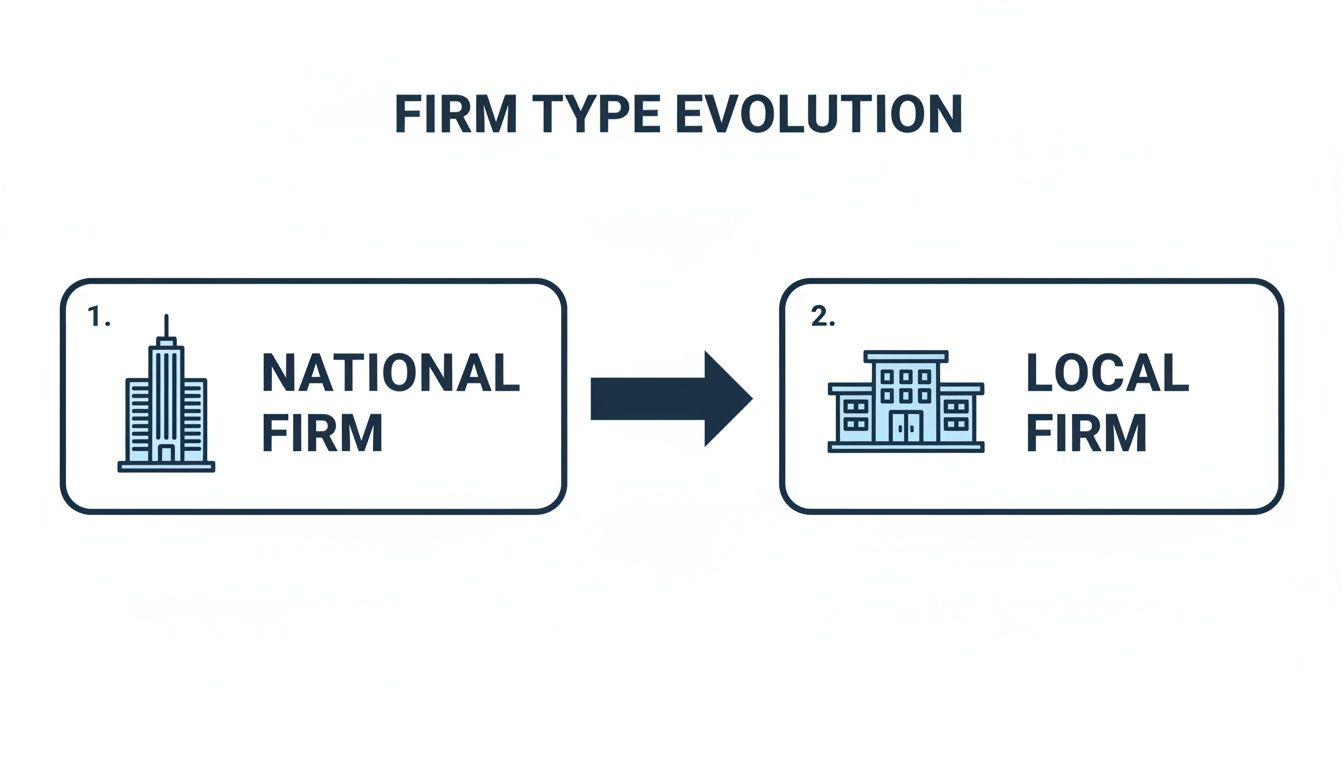
Think of it like picking a car mechanic. You could go to a giant national chain that works on all kinds of cars. Or, you could go to a local expert who knows your car model inside and out and answers the phone when you call. The huge accounting firms are like that chain—they offer a lot, but you're just another customer. A smaller, local team is often a better fit.
Big Firms vs. Local Experts
The accounting world in Pennsylvania has both giant national firms and great local experts. While the big names make a lot of money, the real advantage for you is all the local talent. Counties like Chester, Montgomery, and Delaware are full of great CPAs.
This means you can find an expert who really gets your industry. A local firm is more likely to understand the headaches of a construction company in West Chester or a doctor's office in Philly. You can learn more in our article on why hiring local certified public accountants matters.
The state’s accounting industry is very strong. For example, a firm called RKL LLP became Pennsylvania's top firm with $151.54 million in revenue. That shows how competitive it is. At the same time, the top 35 firms in the Greater Philadelphia area alone have over 3,400 local CPAs.
This huge pool of talent is your secret weapon. It means you don’t have to settle for just any accountant. You can find a firm that feels like a real partner—one who understands your local market and is there when you need them.
Finding an Expert for Your Business
Having so many choices means you can be picky. If you run a construction company, you need someone who understands your world: job costs, lien waivers, and managing money on long projects. A general accountant won't be as helpful.
The same is true for other industries in PA:
- Professional Services: You need a firm that gets billable hours and project profits.
- Healthcare: Look for experts who can handle complex medical billing and insurance.
- Real Estate: Find a partner who knows about property management and development.
The real benefit of Pennsylvania's accounting scene isn't just the number of firms. It's the specialized knowledge you can find close to home. This lets you find a team that doesn't just do your books, but helps you grow your business with advice that actually makes sense for you.
Okay, you've done your homework. You know what you need, and you know the types of firms out there. Now it's time to talk to them and make a choice.
This isn't just about finding the cheapest price. It's like an interview for a new partner. You're looking for an advisor you can trust with your business's money.
I've seen many business owners start with a big, faceless firm and later realize they needed a local partner. As businesses grow, they almost always need personal, smart advice from someone who feels like part of the team.
Questions That Get to the Point
When you interview firms, you need to cut through the sales talk. Don't ask boring questions. Ask things that make them prove they know their stuff.
Here are a few questions that separate the great firms from the average ones:
- "Can you show me a sample report you give to clients and explain it to me?" This is a great one. It shows if they can explain numbers in a simple way.
- "Tell me about a time you helped a business like mine with a cash flow problem." Their answer shows if they have real experience that matters to you. You want stories, not textbook answers.
- "Who will I talk to every day, and how do you handle questions?" This is important. It sets expectations for communication from the start.
The best accounting firms want you to ask hard questions. It shows you’re serious, and it lets them prove their value. If a firm gets defensive or avoids your questions, that's a big red flag.
Understanding How Firms Charge
Accounting prices can be confusing, but they usually fall into one of three types. Knowing the difference helps you compare your options.
- Hourly Billing: They charge for every minute they work. The problem? It’s unpredictable, and you might be afraid to call with a quick question because you'll get a surprise bill.
- Fixed-Fee: You pay a set price each month for specific services. This is great because it encourages you to talk to them, and there are no surprises.
- Value-Based: The price is based on the results they get for you. For example, if they help you save $50,000 in taxes, the fee would be higher than just filing your taxes. It’s all about the outcome.
Most modern firms are moving to fixed-fee or value-based pricing. It just makes more sense. It means they win when you win.
Red Flags to Watch For
While you’re looking for good signs, it’s just as important to spot the bad ones. Keep an eye out for these warning signs when checking out accounting firms pa.
- They use a lot of jargon. If an accountant can't explain something in plain English, they either don't understand it well enough or they don't care if you do. Either way, it's a problem.
- They're slow to reply. Think about it. If they take days to get back to you when they're trying to get your business, what will it be like when you're a client?
- They give you a generic proposal. A real partner takes time to understand your business before telling you what you need. A one-size-fits-all plan means they weren't listening.
Finding the right accounting partner is a big deal. Take your time, ask good questions, and trust your gut. You’re not just hiring someone to do a task; you’re building a relationship that can shape your company's future.
Making the Switch and What to Expect
You’ve done the interviews, checked references, and picked your new accounting firm. Great! But for many business owners, this is when the stress starts: the handover. The idea of switching can be scarier than the search itself.
A smooth start is key to building a strong partnership.

A professional firm won’t just ask for your passwords and vanish. They should have a clear plan for getting started. This isn't their first time. A good process takes the stress out of handing over your financial info.
What to Have Ready for Day One
To make the switch as smooth as possible, your new team will need some key information. Think of it like giving a new doctor your medical history—the more they know upfront, the faster they can help.
Be ready to share access to these things:
- Financial Accounts: Logins for your business bank accounts, credit cards, and any loans.
- Existing Software: Admin access to your current accounting software (like QuickBooks), payroll system, and other money-related tools.
- Past Financials: Your last 2-3 years of tax returns and old financial reports.
- Key Documents: Business formation papers (like your Articles of Incorporation) and any important contracts.
A quick note on security: any good firm will have a secure way for you to share this information. If someone asks you to email passwords, that's a huge red flag.
The First 90 Days: A Typical Timeline
So, what happens after you've handed everything over? The first three months are usually focused on cleaning up your books, setting up systems, and getting everything stable. Every business is different, but the process usually looks like this.
- First 30 Days (Cleanup and Setup): Your new team will dive into your existing books. This month is all about cleanup—fixing old errors and connecting their systems to yours. Expect to talk with them a lot as they learn about your business.
- Next 30 Days (Finding a Rhythm): By month two, things should calm down. This is when you'll start getting into a routine. You’ll get regular reports, like your monthly profit and loss statement, on a set schedule. You'll start to see the consistency you hired them for.
- Final 30 Days (Getting Advice): With clean books and a good routine, the relationship changes. By month three, your firm should have a good handle on your business. This is when they can start giving you advice that helps you look ahead and make smarter decisions.
The goal isn’t just to get clean reports. It’s to feel confident that someone has your back. You should feel less stressed about your finances and more in control.
This process is backed by a lot of local expertise. The Philadelphia area has some of the top accounting firms pa, with the top 42 firms employing over 10,000 professionals. That deep pool of talent is ready to make your switch smooth and successful.
Common Questions About Hiring a PA Accounting Firm
Deciding to hire an accounting firm is a big step. It’s normal to have a lot of questions. You aren't just buying a service; you're bringing in a partner who will see every detail of your business's finances.
Let's answer the questions I hear most often from business owners in Pennsylvania. My goal is to help you feel confident in your choice.
How Much Should I Expect to Pay?
This is always the first question, and the honest answer is: it depends on what your business needs. Accounting services in PA are not a one-size-fits-all product.
For a small business that just needs basic bookkeeping, you might pay a few hundred dollars a month. But if your business is bigger—say, you have 15 employees and need detailed monthly reports—the cost can easily be $1,000 to $3,000+ a month. High-level advice, like from a fractional CFO, is a bigger investment.
The most important thing is to look at the value, not just the price. A cheap firm that misses tax savings or gives bad advice will cost you more in the long run. The right firm should pay for itself by helping you increase profits, save money on taxes, and avoid expensive mistakes.
Any firm worth hiring will create a custom plan after getting to know your business. You'll know the exact cost upfront, with no surprises.
Do I Really Need a Local Firm in West Chester or Philadelphia?
In a world where you can work with anyone online, it's a fair question. Does location really matter for an accountant? For your business, the answer is yes.
You could hire a firm from anywhere, but a local Pennsylvania firm has some big advantages.
They know the specific state and local tax laws that can be tricky, like the Philadelphia Business Income and Receipts Tax (BIRT). A firm from another state just won't have that practical knowledge. They also have a network of local bankers, lawyers, and other professionals, which is a huge help when you need a good referral.
A local firm just gets the business world here. They understand the challenges and opportunities for companies in Chester County, Montgomery County, and the Philly area. You can't get that level of local insight from a firm a thousand miles away.
What Is the Difference Between a Bookkeeper, an Accountant, and a CFO?
It's easy to get these titles mixed up. They all work with numbers, right? I use a simple home-building analogy to explain it.
- The Bookkeeper is the person pouring the foundation and putting up the frame of the house. They handle the daily work of recording every financial transaction—every sale, every purchase, every bill.
- The Accountant is the architect. They take the bookkeeper's raw data and build the structure. They prepare your financial statements, file tax returns, and make sure everything is done right.
- The Fractional CFO is the general contractor. They look at the big picture. They use the financial information to help you make smart decisions about pricing, hiring, growing, and your long-term plan.
Most businesses start with a bookkeeper, then add an accountant and CFO help as they grow.
Can I Switch Accounting Firms if I'm Unhappy?
Yes, and if you’re unhappy, you definitely should. The idea of switching might seem like a huge pain, but it's a normal process for any good firm.
Don't let the fear of a messy switch keep you in a bad partnership. A good firm will have a smooth process to make it easy. They’ll work with you to get all your old data, set up your accounts, and get up to speed on your business quickly.
The right partner will do all the heavy lifting for you, making the change much easier than you probably think.
Feeling clearer about what you need in a financial partner? At MyOfficeOps, we take the confusion out of accounting. We give simple advice and build custom financial plans that help Pennsylvania businesses grow and succeed.
If you’re ready for a firm that actually answers the phone and gets you real results, let's talk. Schedule your free discovery call with us today.