
Outsourced accounting for a small business is just hiring an outside company to handle your money tasks. Instead of hiring someone to work in your office, you get a team of money experts who manage your books, payroll, and financial reports from their own office. This way, you get top-notch financial help without the high cost of an in-house accounting department.
What Is Outsourced Accounting, Really?
Imagine you own a small coffee shop. You’re amazing at making the perfect latte and chatting with your customers, but your nights are spent drowning in receipts and messy spreadsheets. You’re trying to figure out if you can afford a new espresso machine, but your numbers are a confusing mess.
Outsourced accounting is like hiring a professional crew to take over all that paperwork for you. They don't need a desk in your shop. This team of experts works from their own office, handling everything from paying your coffee bean supplier to making sure your baristas get paid on time.
More Than Just a Bookkeeper
But this isn't just about getting rid of annoying paperwork. It's about getting answers. A good outsourced accounting partner turns your jumbled numbers into simple, easy-to-read reports that actually tell you something.
Suddenly, you're not guessing anymore. You know exactly which days you make the most money, how much you’re spending on milk, and whether that new espresso machine is a smart move or a bad idea. It’s like cleaning a foggy windshield and finally seeing a clear dashboard showing how your business is doing right now.
Think of it this way: You’re an expert at running your business. An outsourced accounting firm is an expert at managing the money. By letting them do what they do best, you free yourself up to focus on what you do best—growing your shop.
More and more small businesses are starting to do this. The chart below shows just how popular it's becoming.
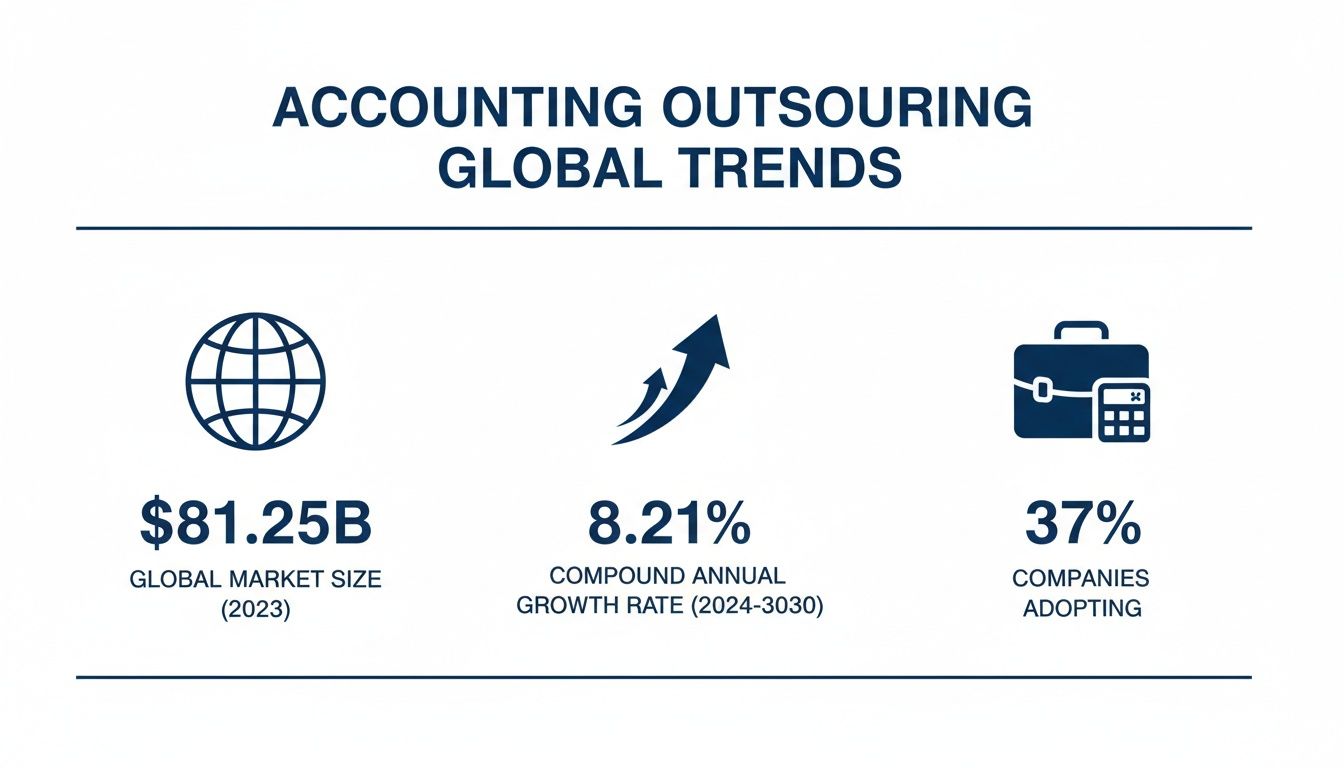
This data shows that businesses everywhere are realizing they can get expert financial help without the high price of hiring someone full-time.
Why Small Businesses Are Making the Switch
The global market for outsourced accounting is expected to grow to $81.25 billion by 2030. That’s a huge jump. It’s not just giant corporations doing this; it's mainly small and medium-sized businesses. In fact, 37% of U.S. businesses are planning to outsource their accounting, with small companies leading the way. You can read the full research about these accounting outsourcing statistics to learn more.
So, why is everyone doing this? It comes down to a few simple reasons:
- It Costs Less: It's almost always cheaper than hiring a full-time accountant when you add up salary, benefits, and office costs.
- You Get Experts: You get a whole team—bookkeepers, tax experts, and financial planners—for the price of one employee.
- You Get Your Time Back: You can stop fighting with spreadsheets and get back to focusing on your customers and your business.
- You Make Smarter Choices: With clear, correct numbers, you can make better decisions about hiring, pricing, and growing your company.
In the end, outsourced accounting for a small business is about getting a real financial partner who helps you build a stronger, more profitable company.
What You Can Actually Outsource
When people hear “outsourced accounting,” they often think of the person who just does their taxes once a year. That’s only a tiny piece of the puzzle.
Think of it like a menu. You can order just the basics, like bookkeeping, or you can get the full meal with financial planning. You don't have to do it all at once. The best part is you can start with what you need now and add more services as your company gets bigger.
It’s all about building a financial support system that fits your business. Let's look at what you can hand over, starting with the basics every business needs.
The Everyday Stuff: Bookkeeping and Payroll
These are the absolute basics of your financial world. You have to get them right, but they’re also some of the most time-consuming and annoying tasks for a business owner.
First is bookkeeping. Running a business without good bookkeeping is like trying to build a house with no foundation—it’s going to fall apart. Bookkeeping is just tracking every dollar that comes in and goes out. An outsourced team takes this off your plate. They sort your expenses, check your bank accounts, and make sure your financial records are clean and organized. This isn't just about being neat; it's about having numbers you can trust for every decision you make. If you want to learn more, our guide on outsourced bookkeeping for small business explains it all.
Next is payroll. Paying your team correctly and on time is super important. An outsourced partner can manage all of it, from figuring out wages and taxes to handling direct deposits. They also make sure all the right payroll reports are sent to the government, so you stay out of trouble and avoid the huge headaches that come with payroll mistakes.
Turning Numbers into Reports You Can Use
Once your daily money stuff is organized, the next step is to understand what it all means. This is where financial reports come in. Raw numbers are just a jumble; reports turn those numbers into a story about your business’s health.
Your outsourced team will prepare key reports for you, usually every month or quarter. These aren't just generic printouts from a computer. They are simple reports that show you exactly how your business is doing.
- Profit & Loss (P&L) Statement: This is your report card. It tells you if you made or lost money over a certain time.
- Balance Sheet: This is a snapshot of your company's financial health. It shows what you own (assets) and what you owe (liabilities).
- Cash Flow Statement: This tracks the money moving in and out of your business. It's key for knowing if you have enough cash to pay your bills and grow.
The goal here is simple: get clear answers. A good partner doesn't just email you a spreadsheet. They help you understand what the numbers mean. For example, they can show you which of your services make the most money, helping you decide where to focus your efforts.
Big-Picture Help with a Virtual CFO
This is where outsourced accounting goes from just managing your books to helping you grow your business. For most small companies, hiring a full-time Chief Financial Officer (CFO) is way too expensive. A full-time CFO can easily cost over $200,000 per year with salary and benefits.
Outsourced CFO services give you that same expert advice for a much lower price. Think of this person as your financial co-pilot—someone who helps you make the big decisions.
So, what does a virtual CFO actually do?
- Budgeting and Planning: They help you create a realistic budget and predict future sales and costs, so you can plan for growth without just guessing.
- Cash Flow Help: They look at your cash patterns and help you make sure you always have enough money in the bank to run your business smoothly.
- Strategic Advice: Facing a big decision? Like whether to rent a new office, buy expensive equipment, or hire more people? Your virtual CFO helps you see the financial impact of these choices before you make them.
This kind of big-picture advice is what separates basic bookkeeping from a real financial partnership. It’s about using your numbers not just to look back, but to plan a clear, profitable path forward.
The Real Benefits of Making the Switch

When you're running a small business, every dollar and every minute counts. The idea of adding another bill might feel wrong, but looking at outsourced accounting for small business as just another cost is missing the point. It's an investment that pays you back in big ways.
The first thing people talk about is saving money. But how does that work? Let's be real. Hiring one full-time accountant means paying a salary, benefits, payroll taxes, and giving them a place to work. Those costs add up fast.
With an outsourced partner, you get a whole team of experts for one monthly fee—often much less than what you'd pay for that single employee.
But the real win isn’t just saving money. It's what you get for it.
Gain a Full Team of Experts
When you hire one person, you get one person’s skills. They might be a great bookkeeper, but are they also a tax expert? Do they know how to plan for the future? It's hard to find one person who is great at everything.
Outsourced accounting isn’t about hiring one person; it’s like getting an entire finance department. You get a whole team of specialists for less than one salary.
- A bookkeeper to keep your daily records perfect.
- A payroll specialist to make sure your team is paid right and on time.
- A tax expert who helps you plan ahead to pay as little tax as legally possible.
- A CFO-level advisor to give you high-level advice for your biggest moves.
Imagine trying to hire all those people yourself. For a small business, it would be impossible. Outsourcing gives you all that brainpower from day one.
Grow Your Business Without the Headaches
What happens when your business starts growing fast? An in-house accountant can get buried in work. Suddenly, you have to find, hire, and train another person, which takes a lot of time and money.
An outsourced accounting team grows with you automatically. As you get more sales or your needs get more complicated, your team just handles it. No hiring, no interviews, no growing pains. Your financial support grows right alongside your business, so you never miss a step.
This is a huge plus that helps smart businesses stay nimble. Instead of getting stuck on paperwork, you can focus on serving your customers and finding new opportunities.
The peace of mind you get is huge. Knowing that professionals are watching your numbers means you don't have to worry about costly mistakes, missed tax deadlines, or other problems that can keep you up at night.
Making the switch also means you start following Top Financial Reporting Best Practices. This isn't just about rules; it’s about building a strong company that banks, investors, and you can trust.
There's a reason why so many companies outsource accounting. A recent study shows 37% of companies do it because of high costs and a lack of good people to hire. In the end, it's about getting better results and getting your time back to do what you love.
Is Outsourced Accounting Right for Your Business?
Deciding when to hand over your finances is a big deal. How do you know if you're ready? The signs are usually right in front of you, starting as small frustrations that grow into bigger problems.
It almost always starts with your time. If your weekends are spent digging through receipts, that’s a huge red flag. An owner spending hours on paperwork is an owner who isn't focused on growing the business.
Common Signs Your System Is Broken
Think about how you run your business. Do any of these sound familiar? It’s not just about being busy; it’s about whether your money tasks are holding you back.
- Your Financial Reports Are Always Late or Confusing: You can't make smart choices with old or messy information. If you don't know last month's profit until the end of this month, you're just guessing.
- You're Guessing on Big Decisions: Should you hire someone new? Can you afford that new equipment? Using your gut instead of real numbers is a risky way to run a business.
- Tax Season Is a Nightmare: Do you spend months scrambling to get everything ready for your tax person? That’s a sign your daily bookkeeping isn't working.
- Cash Flow Is a Constant Surprise: One month you have plenty of cash, and the next you're worried about making payroll. This rollercoaster means you don't have a clear picture of your money.
These problems happen in every kind of business. For a construction company, it might be the struggle to track costs on each job to see which ones are actually making money. For a marketing agency, it could be the chaos of managing client budgets.
Who Benefits the Most from Outsourcing?
So, who is the perfect fit for outsourced accounting for small business? While any company can benefit, some types of businesses see the biggest improvements right away. Understanding your business structure, like defining a sole proprietorship, can also help you see what kind of accounting help you need.
The businesses that get the most out of it usually fall into these groups:
- Growing Businesses: As your company grows, so does the paperwork. More customers and employees mean more financial work. An outsourced team can grow with you, so your finances never slow you down.
- Owners Who Want to Focus on Their Work: You didn't start a business to become an accountant. Whether you're a doctor, a consultant, or a designer, outsourcing lets you get back to doing the work you love.
- Companies That Need a Real Strategy: If you're ready to do more than just track expenses and want to use your numbers to make smart moves, it's time for an expert. This is where services like a part-time CFO can make a huge difference. To see what that means, you can explore the benefits of CFO services for small business.
It really comes down to one question: Is managing your own finances distracting you from what really matters? If the answer is yes, it’s probably time to call a pro.
How to Choose the Right Accounting Partner
Deciding to outsource your accounting is a big step. Now comes the hard part: picking the right partner.
Think of it like hiring a key employee. But instead of one person, you're hiring a team to manage the financial heart of your business. Not all firms are the same, and picking the wrong one can cause more problems than it solves.
So, how do you find a team that feels like they're part of your own? It starts with asking the right questions. You need to look past the price and find a partner who understands your business, communicates well, and uses technology that makes your life easier. This isn't just about finding someone to do your books; it's about finding a guide for your financial journey.
Do They Understand Your Industry?
Imagine trying to explain construction project costs to an accountant who has only worked with coffee shops. They might get the basics, but they won't really understand your specific challenges.
That’s why industry experience is so important.
An accounting firm that already works with businesses like yours has a huge advantage. They know the common problems, the right questions to ask, and the best ways to improve your finances.
For example:
- For a doctor's office: They’ll understand insurance billing, co-pays, and how to manage payments.
- For a construction company: They’ll know how to manage project budgets, track labor costs, and handle payments properly.
- For a consulting firm: They’ll be experts at tracking billable hours, managing client payments, and seeing how busy your team is.
Don’t be afraid to ask for proof. A good firm will happily show you examples or connect you with other clients they have in your field. This special knowledge means they can give you real, helpful advice—not just generic bookkeeping.
How Well Do They Communicate?
When you have a question about your cash flow or need a report for a loan, the last thing you want is to send an email and get no reply. Good communication is the most important part of a good partnership.
You need a team that answers you quickly and, just as importantly, speaks in plain English.
A lot of business owners worry that outsourcing means losing track of their numbers. A great partner does the opposite—they bring you closer to your finances by making them simple and clear.
Your accounting partner should be like a translator, turning confusing financial numbers into simple information you can use to run your business better. They should be proactive, reaching out with ideas and suggestions before you even have to ask.
Before you sign anything, get a feel for how they talk to you. Do they answer the phone? Do they offer regular meetings to explain your reports? Find a team that makes you feel heard and supported, not like just another customer.
What Technology Do They Use?
Today, your financial information shouldn't be locked in a filing cabinet or stuck on one computer. Modern accounting is done online in the cloud. This is a must.
Your outsourced partner should be using modern, cloud-based software like QuickBooks Online or Xero. Why does this matter? It gives you 24/7 access to your financial information from anywhere, on any device. You should be able to open an app on your phone and see a quick snapshot of your business's health whenever you want.
Also, ask them about security. You're trusting them with your most private information, so they need to have strong protection in place. A professional firm will be open about how they keep your data safe, using things like data encryption and secure client websites.
Finding a partner who is good with technology makes sure your financial work is done well, is secure, and is always easy for you to see.
What to Expect During the Onboarding Process
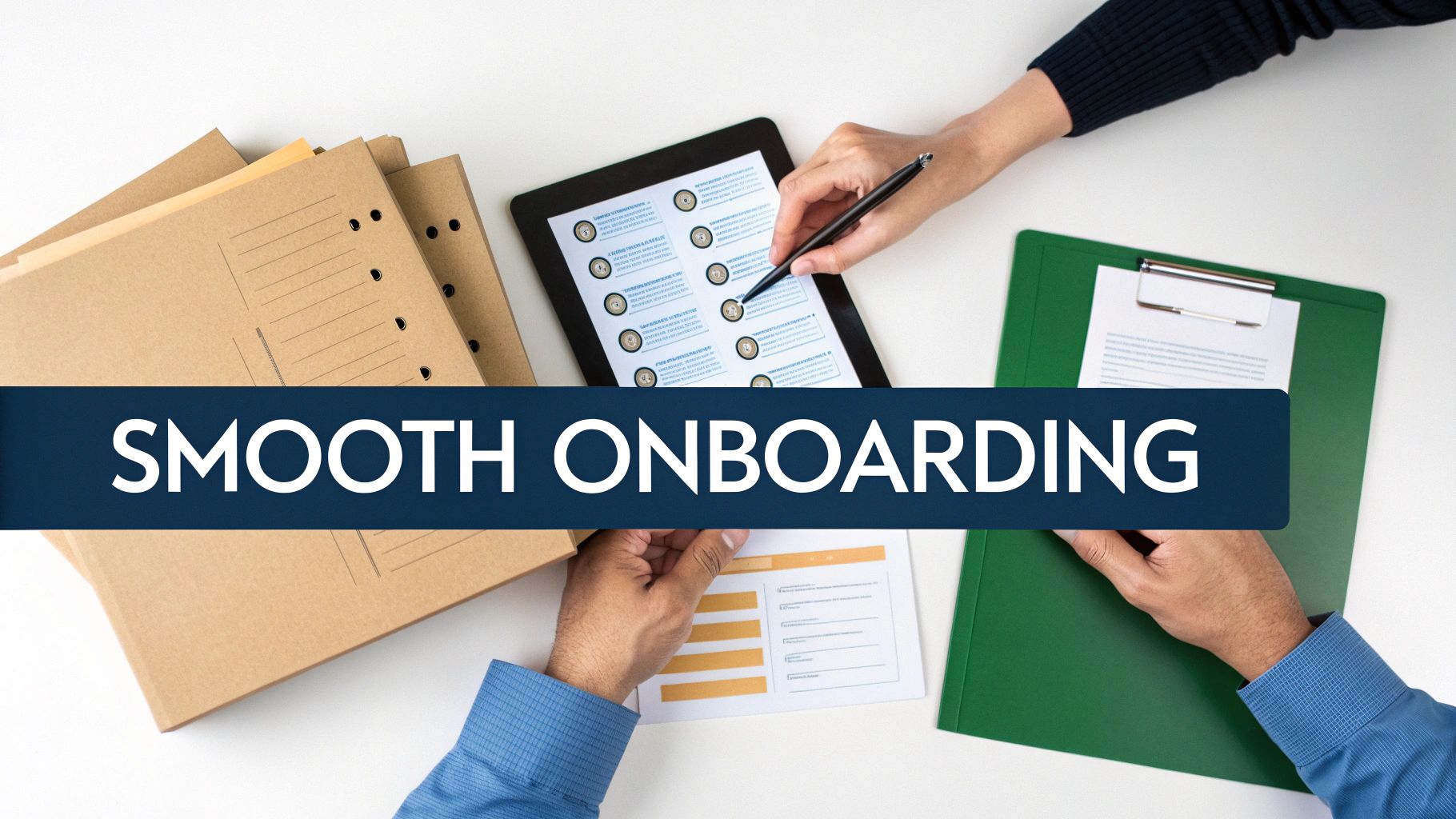
The idea of switching how you do your accounting can feel like a huge, messy project. To be honest, it sounds like a pain. But a good partner makes the change surprisingly easy.
They do all the hard work for you so you can keep running your business. Think of it like hiring a professional organizer. First, they learn how you want things to work, then they do all the sorting, and finally, they give you a clean, simple system that just works.
The Discovery Phase
The first step is all about getting to know your business. Your new accounting team will sit down with you to learn how your company works, what your goals are, and what problems you're having.
This isn't just a question-and-answer session; it's a planning meeting. They'll use this information to create a plan that fits you perfectly, figuring out which reports will be most helpful and how to set up your accounts to tell a clear story.
Setup and Cleanup
Next, your team gets to work on the technical stuff. They will securely connect to your bank accounts, credit cards, and any other financial tools you use. This is where they start organizing your financial world.
If your books are messy from the past—and most people's are—they'll fix them. This is one of the most valuable parts of the whole process.
Many business owners come to us with months or even years of confusing records. A professional team untangles everything, giving you a fresh start with accurate numbers you can finally trust to make decisions.
During this time, they'll also set you up with a client website or dashboard. This will be your window into your finances, giving you real-time information whenever you need it. They might also show you new tools to make your life easier, which you can learn more about in our guide to financial reporting automation.
Hitting a Rhythm
Once everything is connected, cleaned up, and organized, the final step is getting into a smooth, regular routine. Your team will set up a simple way for you to share things like receipts or bills.
They'll also set a clear schedule for sending you your financial reports, so you always know what to expect and when.
A true professional firm manages this whole switch smoothly. They keep you updated without confusing you with technical terms. The goal is simple: get you from where you are now to a place of complete financial clarity as quickly and easily as possible.
The Big Questions: What Business Owners Really Ask About Outsourcing
Even when you know it's a good idea, handing over your finances can feel like a big step. That's completely normal. Let's tackle some of the most common questions and concerns I hear from business owners every day. No jargon, just straight answers.
How Much Is This Going to Cost Me?
There's no single price tag, and honestly, you should be wary of any firm that gives you one without asking questions first. The cost really depends on the size of your business and what you need help with. Think of it like a menu—you only pay for what you order.
Most firms offer different packages. A basic plan just covering your monthly bookkeeping might start at a few hundred dollars. If you need a more complete solution with payroll, bill pay, and CFO-level advice, the price will reflect that.
The key thing to remember is that you're paying a predictable monthly fee. This is almost always much, much less than the total cost of hiring a full-time employee once you factor in salary, benefits, training, and software licenses. The only way to know for sure is to get a custom quote based on your actual needs.
Will I Lose Control of My Finances?
This is probably the biggest fear business owners have, and I get it. But the reality is the exact opposite. You actually gain more control, not less.
A good outsourced partner gives you clear, accurate, and up-to-date financial information at your fingertips. You can see everything on a simple dashboard whenever you want. You are still the one who approves payments, sets the budget, and makes every final call.
Your outsourced team does the tedious work and gives you expert advice, but you are always in the driver’s seat. It's about getting better information so you can make smarter, more confident decisions.
Is My Financial Data Safe With Another Company?
Yes, absolutely. Any reputable firm takes data security as seriously as a bank does. They use powerful data encryption and secure cloud platforms to protect your information around the clock.
Frankly, this setup is often much safer than keeping sensitive financial files on a single computer in your office. That computer could crash, get stolen, or be hit with a virus, and everything could be gone in an instant. Professional firms have entire systems and teams dedicated to keeping your data protected.
Always ask a potential partner about their security practices. A trustworthy firm will be happy to walk you through exactly how they keep your information safe and sound.
Ready to get financial clarity and get back to running your business? The team at MyOfficeOps can build a custom plan that fits your exact needs. Schedule a discovery call today.