
You're looking at your profit and loss statement, checking the bank balance, and wondering whether you can afford the hire you've been discussing for months. The reports contain plenty of numbers, but they don't give you one clear answer. That's where forecasting vs budgeting becomes practical, not academic.
A budget tells you what you planned to do. A forecast tells you what you now expect to happen. You need both because a business can stay committed to its targets while still changing its decisions when sales, costs, or customer timing move.
The Real Difference Between Your Financial Targets and Reality
Think about a road trip. Your budget is the destination and route you chose before leaving. You decide how far you want to travel, how much fuel you can use, and where you expect to stop. Your forecast is the live GPS. It checks traffic, road closures, and your current position, then shows whether you're still likely to arrive on time.
A business owner named Marcus might set a yearly plan that includes a new employee, a marketing push, and an equipment purchase. That plan becomes his budget. In March, one large customer pays late and a supplier raises prices. Marcus shouldn't rewrite the original target to pretend those changes never happened. He should update his forecast and decide whether the hire still fits the cash position.
IBM describes budgeting as a month-to-month execution plan tied to a fiscal year. It describes forecasting as a forward view based on historical data and current market conditions, revised as new information arrives in its guide to planning, budgeting, and forecasting. That distinction is the foundation of useful financial planning.
One target, one honest expectation
A budget is a fixed financial target for a defined period. It gives your team a stable reference point for revenue, spending, and performance. A forecast is an updated estimate, not a target and not an authorization document. It answers a different question: “Given what we know today, where are we likely to land?”
That separation matters. If you keep changing the budget every time reality changes, you lose the benchmark that shows whether the business performed as planned. If you never update the forecast, you're steering with old information.
Practical rule: Keep the budget steady. Change the forecast when the facts change.
This doesn't require an accounting degree. You need clean records, sensible assumptions, and a regular habit of comparing your expectation with what happened. Successful companies don't just record history. They use financial data to choose the next turn.
What a Budget Actually Does for Your Business
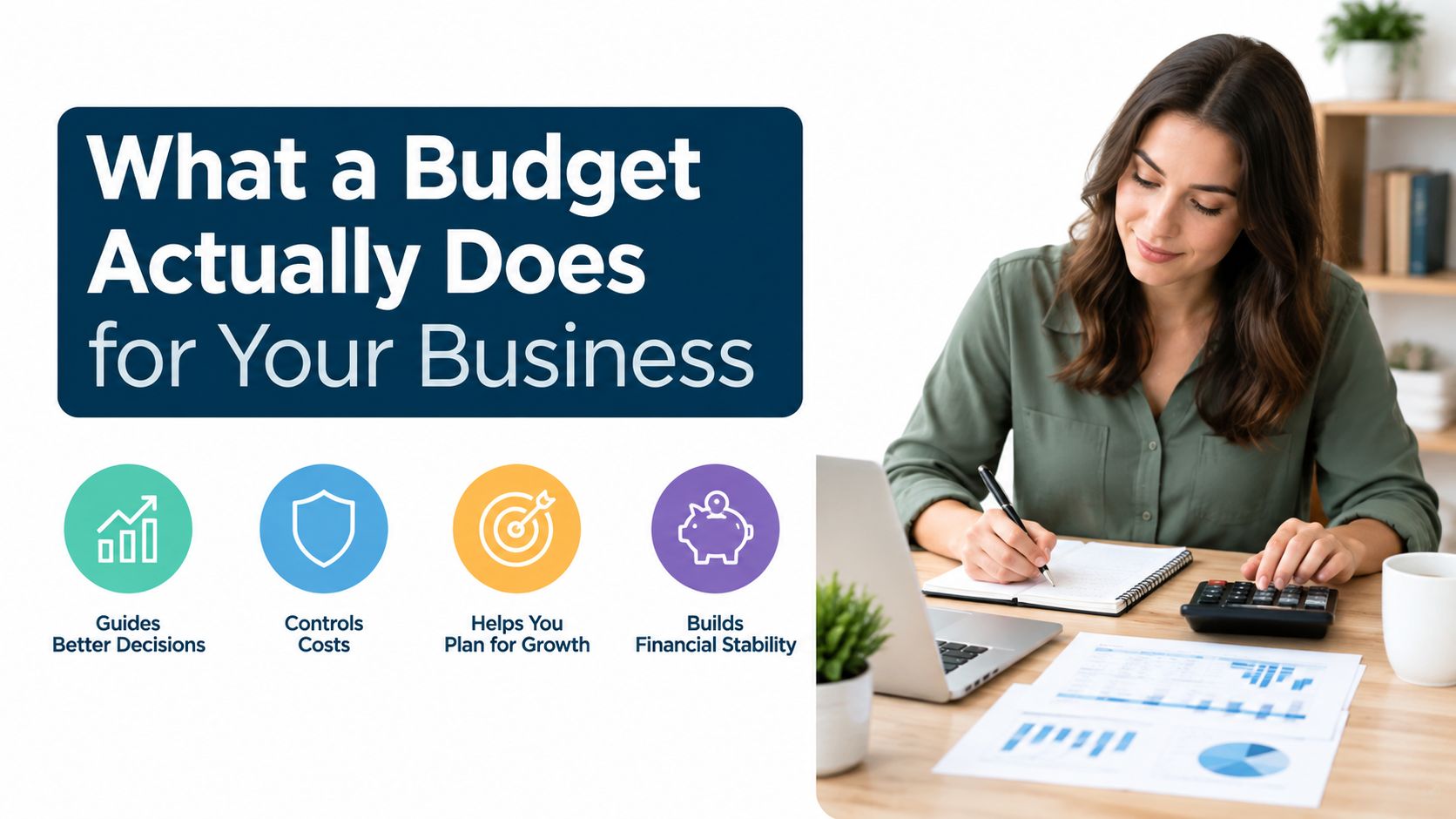
A budget is your financial rulebook for a fixed period, often a financial year. It turns your plans into specific limits and targets, then gives you a stable benchmark for measuring actual performance. The Office of the Chief Financial Officer explains the difference between budgeting and forecasting, noting that a budget is usually fixed and used as the reference point, while a forecast changes as new information arrives.
Start with the decisions you already know you'll need to make. Estimate revenue, list expected costs, and assign spending limits to the areas that affect daily operations. A practical budget might separate:
- Payroll: Planned wages, salaries, and related costs.
- Marketing: Campaigns, outside contractors, and software.
- Facilities: Rent, utilities, and maintenance.
- Equipment: Planned purchases and replacement needs.
- Cash reserves: Money you intend to keep available for surprises.
Suppose your service business plans to add a salesperson and increase marketing activity during the year. Your budget can authorize the expected payroll and campaign spending before the year begins. Department leaders then know what they can spend, and you have something concrete to review when actual costs arrive.
Use the budget as a control, not a prediction
A budget's strength is its stability. You can compare actual revenue and expenses against the same plan throughout the period. If marketing spends more than approved, you can ask why. If payroll runs below plan because a role stayed open, you can decide what that means for delivery and growth.
That comparison helps you separate a business problem from a planning difference. A revenue shortfall may come from weak sales, delayed customer payments, or an unrealistic target. An expense variance may reflect waste, a timing issue, or a deliberate investment. The budget gives you the starting point for that conversation.
You can follow a practical process in this guide to creating a business budget. Keep the detail useful, though. A budget that takes so much time to maintain that nobody uses it has failed, even if the spreadsheet looks impressive.
The budget also supports accountability. Managers can explain requests against an agreed plan instead of asking for money without context. You can approve a large purchase because it was planned, or pause it because it wasn't. That doesn't mean every budget line is permanent. It means changes should be visible and intentional.
Use the budget to answer questions such as:
- Are we spending what we agreed to spend?
- Did each department receive enough resources?
- Did actual sales support the planned costs?
- Which differences need management action?
The budget sets the guardrails. It shouldn't be mistaken for a promise that the year will unfold exactly as planned.
How Forecasting Keeps You on Track When Things Change
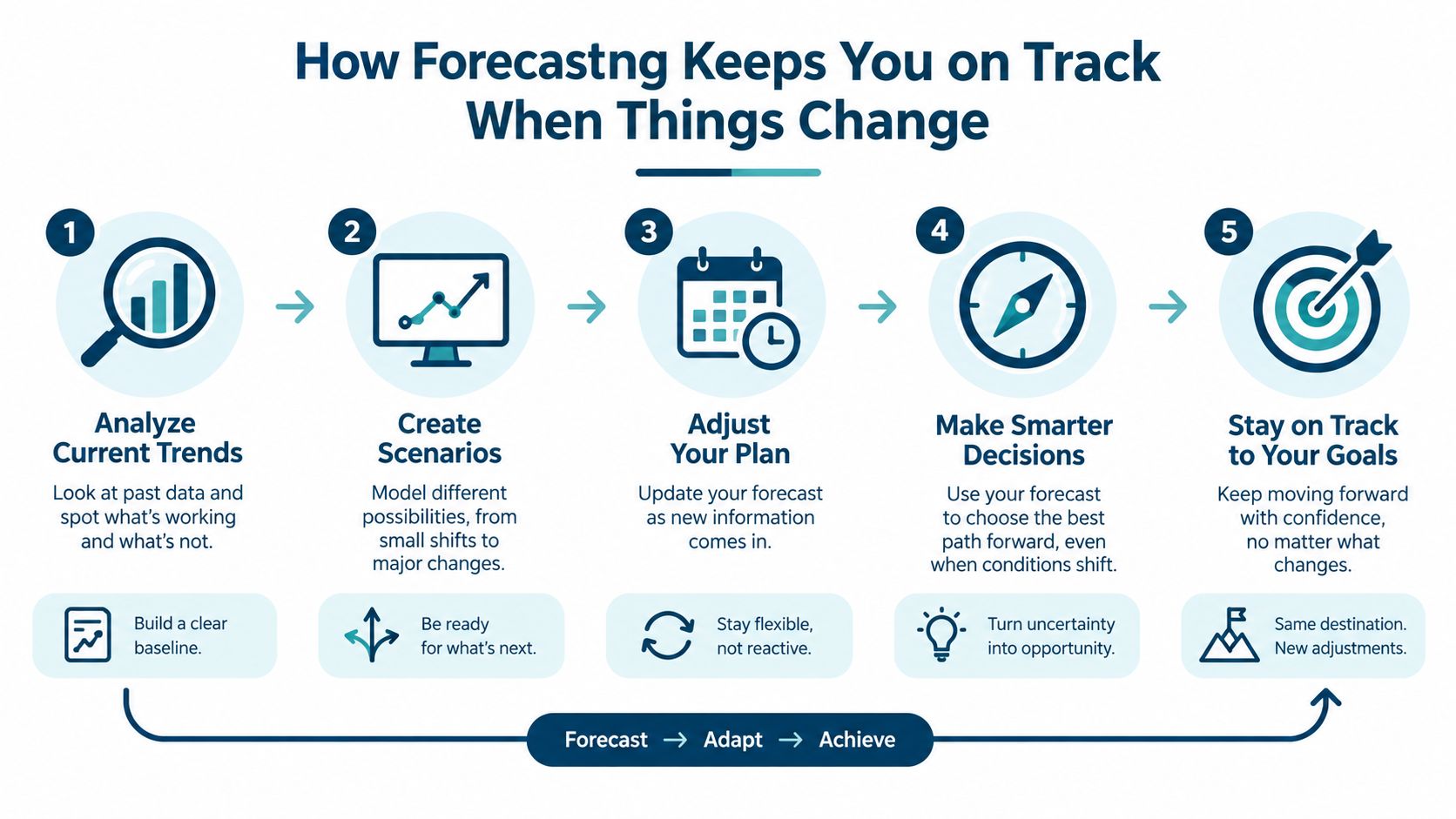
A forecast starts with the business you have today, not just the business you hoped to build at the start of the year. It uses recent results, current customer activity, known costs, and updated assumptions to estimate what comes next.
That makes forecasting especially useful for cash flow decisions. You might have enough profit on paper to support a hire, but not enough cash in the weeks before customer invoices are paid. A current forecast can show that timing problem before you commit.
Rolling forecasts keep the view open
A rolling forecast keeps adding future periods as the latest period closes. For example, a business might close one month, review the new actuals, and add another month to the end of its forward view. Sage's explanation of budgeting and forecasting describes this method as adding a new period, usually a month or quarter, so the business continues looking forward from the present.
The process is simple:
- Close the latest period using accurate actual results.
- Compare those results with the current expectation.
- Update the assumptions that have changed.
- Extend the forecast with a new future period.
- Assign an owner to each important variance.
Forecasts usually stay at a higher level than budgets. You may forecast total revenue, labor cost, and overhead rather than rebuild every expense line for every department. That gives you speed. If demand drops, a key customer delays work, or a supplier changes terms, you can test the effect without rebuilding the entire financial plan.
For practical ideas, review these budget forecasting examples that work, then adapt the process to the size and speed of your business. Small firms rarely need a large FP&A department. They do need a reliable view of what the next operating period may bring.
You can also use this introduction to financial forecasting to build a shared understanding among owners and managers. The goal isn't to produce a perfect number. It's to spot a cash gap, staffing pressure, or margin problem early enough to act.
Comparing Budgets and Forecasts Side by Side
Budgets and forecasts answer different management questions. The budget asks, “What did we commit to?” The forecast asks, “What do we now expect?”
The difference is easiest to see when you compare their working parts.
Budget vs Forecast Quick Reference
| Feature | Budget | Forecast |
|---|---|---|
| Main purpose | Set targets, spending limits, and accountability | Estimate the likely outcome using current information |
| Time period | Usually a fixed financial year | Updated as new information arrives |
| Update pattern | Held steady for comparison | Revised monthly, quarterly, or when conditions change |
| Detail level | Often detailed by month, department, and account | Usually higher level, focused on major revenue and expense categories |
| Structure | Commonly built bottom-up by department and account | Commonly built top-down across service lines or major income-statement categories |
| Best use | Authorizing planned spending and measuring performance | Guiding hiring, pricing, cash flow, and operating decisions |
| Management question | Did we follow the plan? | Where are we likely to land? |
| Relationship to targets | It is the target | It is not the target or authorization document |
Budgets often map revenue, expenses, and cash flow by month and department, while forecasts focus on the numbers that matter most for near-term decisions. That difference in detail is not a weakness. It reflects the job each tool needs to perform, as explained in NetSuite's comparison of budgeting and forecasting.
Why the structure changes the answer
A bottom-up budget asks department leaders to estimate what they need. That can produce useful detail for spending control, but it takes time and may encourage people to defend their requests. A top-down forecast starts with the major drivers, such as sales volume, billable work, labor, and overhead, then estimates the likely result quickly.
Neither tool should replace the other. A budget anchors accountability. A forecast helps you steer when the road changes. If the forecast falls below the budget, management can decide whether to cut costs, change pricing, improve collections, delay hiring, or accept a smaller result. If the forecast rises above the budget, the owner can decide whether to invest or preserve cash.
Software can help connect the two, but it won't fix unclear ownership or poor records. If you're comparing options, review what budgeting and forecasting software can support, then choose a process your team will maintain.
The most useful answer to forecasting vs budgeting is not “pick one.” Run both from the same underlying numbers, keep their purposes separate, and make the gap between them the focus of your management meetings.
When to Use a Budget and When to Rely on a Forecast
Use the budget when you're deciding what the business is allowed or expected to do. Use the forecast when you're deciding what the business can safely do now.
That rule works in ordinary owner decisions.
Planned spending belongs beside the budget
You're planning an annual marketing campaign. Start with the budget. It shows the approved spending limit, the revenue goal connected to the campaign, and the other commitments competing for cash. If the campaign changes, document the decision instead of moving money between categories.
The same applies to a planned equipment purchase. Check whether the budget includes it, then review the forecast to confirm that current cash timing still supports the purchase. A purchase can be approved in principle but postponed if collections have slowed.
Before approving a major expense, ask two questions: Was it in the budget, and can the current forecast support it?
Fast changes belong beside the forecast
Hiring is a good example. The budget may include a new employee, but your latest forecast should tell you whether current sales and cash flow can carry the role. If a contract is delayed, use the forecast to test a later start date or a different compensation plan.
A supply disruption calls for the same approach. Update expected costs, delivery timing, and customer commitments. Don't wait for the next annual planning cycle to discover that a margin has disappeared.
Owners who want a broader framework for connecting present decisions with longer-term goals can review Advisor Momentum's financial planning stages. The useful habit is to connect each decision to both the immediate cash position and the direction you want the company to take.
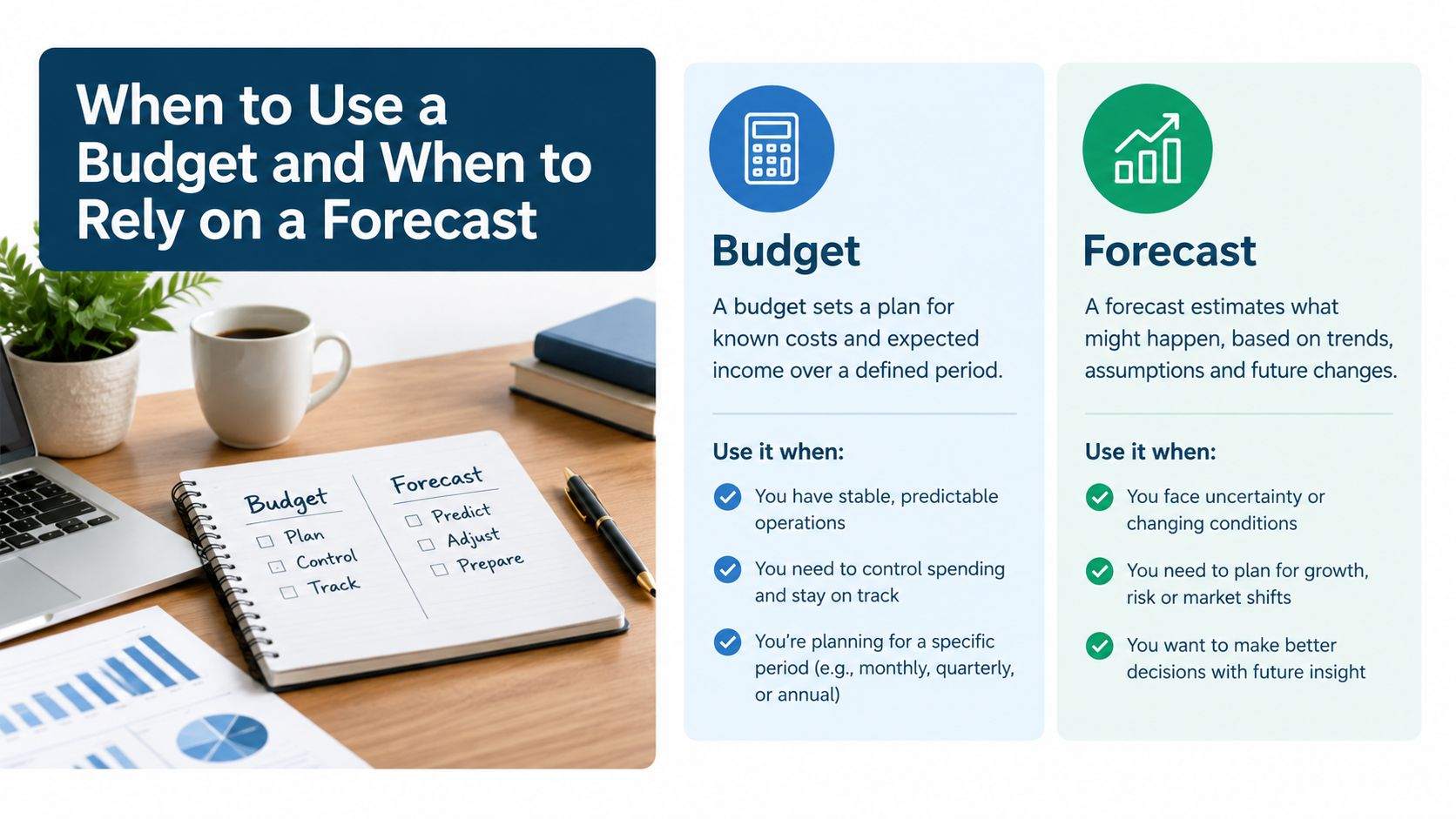
For a small business, the decision guide can stay short:
- Annual goals: Use the budget to set sales, hiring, and spending commitments.
- Monthly operations: Use the forecast to adjust cash, labor, pricing, and customer timing.
- Unplanned events: Use the forecast to test responses before approving action.
- Performance review: Use actual results against the budget to identify accountability and planning gaps.
Don't let the forecast become an excuse to abandon the budget. Don't let the budget become an excuse to ignore new facts.
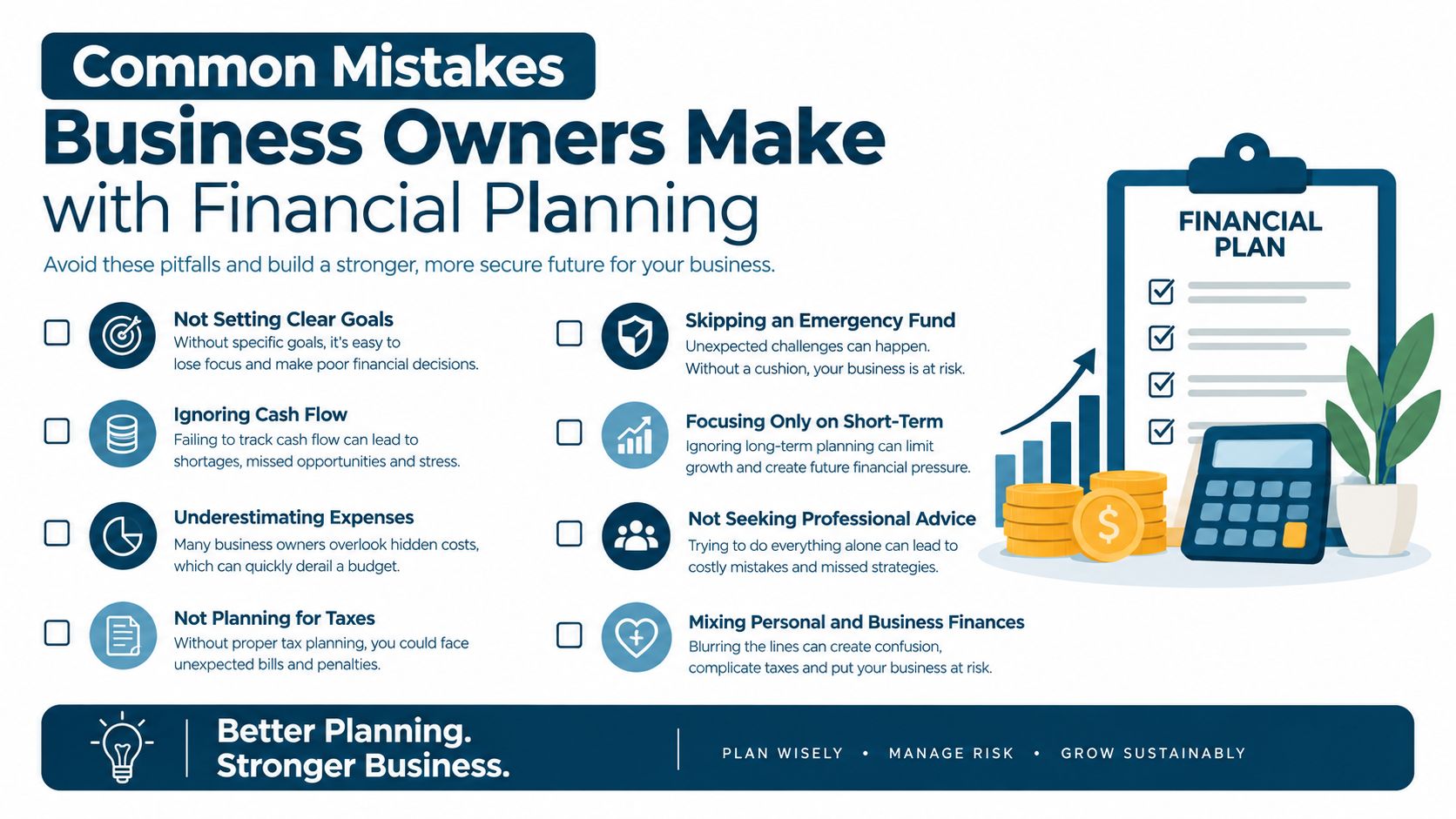
Common Mistakes Business Owners Make with Financial Planning
Most financial planning failures don't start with the wrong forecasting method. They start with numbers nobody trusts.
If your books contain uncategorized transactions, delayed payroll entries, missing bills, or inconsistent job costs, your forecast inherits those problems. A polished spreadsheet can't turn late or incomplete data into a reliable decision.
The data problem
Start with the basic records that feed your plan:
- Bank activity: Reconcile accounts so cash balances reflect reality.
- Payroll: Record payroll costs on time, including the employer costs that affect margins.
- Receivables: Track when customers are likely to pay, not just when invoices are issued.
- Job costs: Match labor and materials to the work that produced the revenue.
- Recurring bills: Capture subscriptions, rent, insurance, and other regular commitments.
A business that provides services may look profitable because revenue is recorded before cash arrives. A contractor may see strong sales while a project loses money because labor and materials weren't assigned correctly. In both cases, the model isn't the first problem. The records are.
The behavior problem
Over-optimism creates another blind spot. Owners may assume every proposal will close, every customer will pay on time, and every cost increase will be absorbed by margin. Managers may also adjust assumptions to protect a target rather than report their most honest expectation.
A 2025 paper on forecasting and budgeting accuracy connects better budget outcomes with stronger integration across financial planning functions and more agile managers, and identifies forecast accuracy as a determinant of budget performance in its discussion of data accuracy and organizational performance.
Diagnose the root cause
Identify the problem you face:
- Process issue: Nobody owns the close, review, or update.
- Data hygiene issue: The books are incomplete or inconsistent.
- Behavior issue: People report desired outcomes instead of likely outcomes.
- Volatility issue: External conditions changed faster than the plan.
The fix should match the diagnosis. Better software may help with the first problem. Bookkeeping support may solve the second. Clear review rules can expose the third. Scenario planning helps with the fourth.
How Advisory Services Turn Numbers into an Exit Strategy
A clean budget and a credible forecast do more than help you manage this month. They create a record of how the business earns money, controls costs, converts profit into cash, and handles change. That record matters when you want to sell, bring in a partner, or step away from daily operations.
Buyers don't want a business whose results depend on the owner's memory and a collection of disconnected spreadsheets. They want financial statements they can follow, repeatable reporting, understandable margins, and evidence that management knows where future results are coming from.
Build the foundation before you need it
Advisory support should begin with the books. Someone needs to reconcile accounts, integrate payroll, classify transactions, track receivables, and make sure project or service-line results are visible. Without that foundation, the budget and forecast may disagree for reasons nobody can explain.
The next layer is management reporting. A useful advisor helps you connect actual results to budget, update the forecast, explain the variance, and decide what action belongs to the owner or manager. That might mean changing prices, reducing low-value work, delaying a hire, improving collections, or protecting a profitable service line.
Automation can reduce manual work. Owners evaluating technology may also find it useful to review accounting AI tools by Truespeak. Treat these tools as support for a disciplined process, not as a substitute for judgment or clean source data.
Connect today's decisions with tomorrow's value
Exit preparation changes the standard. You're no longer asking only whether the company can pay its bills. You're asking whether another owner could understand the business and operate it without inheriting hidden surprises.
That means your forecast should highlight recurring revenue, customer concentration, labor needs, cash conversion, and margin by service or project where those details matter. Your budget should show deliberate control over spending. Both should reconcile to the accounting records.
MyOfficeOps offers bookkeeping, payroll integration, financial analytics, budgeting, forecasting, KPI reporting, and CFO-level advisory for small and midsize businesses. Its work can support decisions around pricing, hiring, cash flow, profitability, valuation, and preparation for a future transition.
You don't need a complicated model. You need one reliable set of numbers, a budget that holds the business accountable, a forecast that stays honest, and an advisor who helps you act on the difference.
If your books are hard to trust or your budget never matches what happens in the bank account, visit MyOfficeOps for bookkeeping, forecasting, budgeting, and CFO-level advisory support. Start with a clear review of your current numbers, then build a planning process that supports stronger cash flow today and a more valuable business when you're ready to exit.