
Financial forecasting is just a smart way of guessing what your company's money situation will look like in the future. You use information you already have—like past sales and current bills—to make a good prediction. It's not about using a crystal ball; it’s about making better decisions so you can plan for growth, manage your cash, and avoid surprises.
What Financial Forecasting Really Means
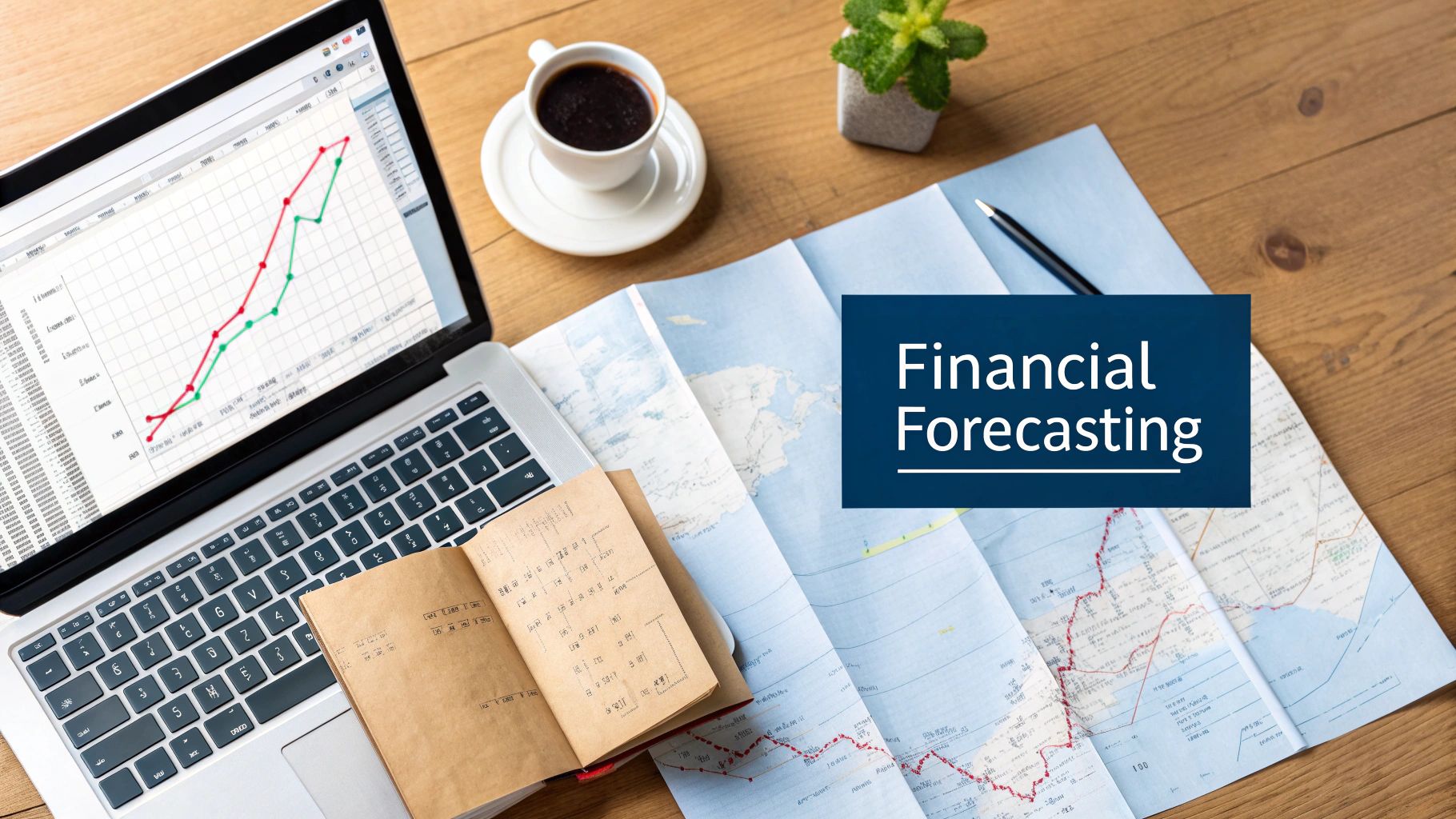
Think of it like planning a big road trip. You wouldn't just hop in the car and drive. You’d check the map, look at the weather, and figure out how much money you'll need for gas, food, and hotels.
Financial forecasting is the same idea, but for your business. It’s your money map, showing you where you're headed.
A Simple Breakdown of Forecasting
Instead of driving with your eyes closed, you’re using facts to see what’s coming. For a business, this means looking at how you've done in the past to guess what will probably happen next. With that knowledge, you can get ready for any bumps in the road or decide when it’s a good time to try something new.
This isn't a new idea, even if the tools are better now. The practice of using old data to guess a company’s future started around the middle of the 20th century. By the 1950s and 1960s, big companies and governments were already using these methods to predict how much money they’d make and spend. You can learn more about these early models by exploring the history of economic surveys.
The whole point is to answer important questions before they turn into big problems:
- Do we have enough cash to get through a slow month?
- Can we afford to hire another person right now?
- Is this a good time to buy new equipment?
At its heart, a financial forecast is just an educated guess. It turns old numbers into a plan for the future, helping you make smart decisions instead of just reacting to problems.
The Who, What, When, and Why
Understanding the basic parts of financial forecasting makes it a lot less confusing. It’s not just for big bosses in fancy offices; it’s a tool for anyone in charge of a business's money, from someone working alone to a manager of a team.
Here's a quick summary to put it all into perspective for your business.
Financial Forecasting at a Glance
This table breaks down the key parts of financial forecasting and what they mean for how you run your business.
| Component | What It Means for Your Business |
|---|---|
| Who Uses It | Business owners, managers, and finance teams who need to make smart choices. |
| What It Is | A guess of future money coming in, money going out, and cash on hand, based on old numbers and smart thinking. |
| When to Do It | Regularly—often monthly or quarterly—to keep your business plan on track and deal with changes. |
| Why It's Important | It gives you a clear picture of your money situation, helping you set real goals and use your resources well. |
In short, forecasting helps you understand and control your money, turning guesswork into a real plan.
Why Forecasting Is a Game-Changer for Your Business
Let’s be honest, a good financial forecast is the starting point for almost every big decision you'll make. It helps you find clear answers to the tough questions that keep business owners up at night.
Questions like, "Can we really afford to hire a new salesperson?" or "Do we have enough cash to survive a slow season?" or "Is now the right time to buy that new machine?"
Without a forecast, you’re just guessing. With one, you're making smart moves.
See the Future and Prepare for It
One of the best things about forecasting is that it helps you avoid nasty surprises. A shocking 82% of business failures happen because of bad cash flow management. That’s a huge number, and it often happens because owners don't see a cash shortage coming until it’s too late.
A forecast is your early warning system. It can show you that you might run low on cash months from now, giving you plenty of time to do something about it. You could decide to have a sale to bring in extra money, wait to make a big purchase, or get a line of credit before you need it. This turns a potential crisis into a small problem you can handle.
Think of it this way: A forecast doesn’t just tell you if it’s going to rain. It tells you to bring an umbrella, so you can stay dry no matter what.
This is what helps a business go from always reacting to problems to planning for the future.
Set Goals You Can Actually Hit
Every business owner has goals. Maybe you want to double your income in two years or open a second store. That’s great, but a financial forecast helps connect those dreams to reality. It helps you see what’s really possible and what you need to do to get there.
Let’s imagine a local coffee shop owner who wants to open a second location.
- The Dream: Open a new shop across town in 18 months.
- The Forecast: She builds a forecast based on her current shop's sales, costs, and busy and slow seasons.
- The Reality Check: The forecast shows that with her current growth, she won't have enough cash for a down payment on a new lease for at least 24 months.
- The Action Plan: Instead of giving up, she uses the forecast to make a new plan. She sees that if she can get each customer to spend just $1.50 more by offering pastry combos, she can hit her 18-month goal.
The forecast didn’t crush her dream; it gave her a clear target to aim for. It turned a fuzzy hope into a real plan.
Make Banks and Investors Trust You
Finally, if you ever plan to ask for a business loan or get people to invest in your company, a solid financial forecast is a must-have. Lenders and investors want to see more than just how you've done in the past; they want to see that you have a real plan for the future.
Handing them a good forecast shows you've done your homework. It proves you understand your business, your costs, and your chances to grow. It’s a tool that builds trust and makes it much more likely you’ll get the money you need.
Simple Financial Forecasting Methods Explained
Deciding how to predict your business's financial future is like picking the right tool from a toolbox. You wouldn't use a hammer to cut wood. Each financial forecasting method has a specific job, and picking the right one is key.
These methods fall into two main groups:
- Qualitative Forecasting: This is the "gut feeling" approach, but it's backed by experience. You ask people who really know your industry what they think will happen. It's great for new companies that don't have a lot of past information to look at.
- Quantitative Forecasting: This is the "numbers-driven" approach. You use your past financial numbers—like sales from the last two years—to find patterns and guess what will happen next. It’s a great fit for businesses that have been around for a while.
Most businesses use a mix of both. They look at the numbers and then ask, "Does this feel right based on what we know is coming?" Now, let's break down some of the most common methods you can use.
Cash Flow Forecasting
This is all about keeping track of the money moving in and out of your bank account. It's like managing your own checking account—you need to know if you'll have enough cash to pay your rent and buy groceries next week.
A cash flow forecast does the same for your business. It predicts your cash balance for the next few weeks or months. Its main job is to make sure you never run out of money to pay your bills, your employees, and your suppliers.
For example, a construction company might use a cash flow forecast to make sure they have enough cash to buy materials and pay workers before they get a big payment from a client.
Our guide on cash flow forecasting techniques offers a deeper look into this important skill.
Sales Forecasting
As the name suggests, this method is all about predicting your future sales. You'll look at your past sales, what's happening in the market, and any upcoming ads to guess how much you'll sell.
This is super helpful for making all sorts of decisions. Knowing your likely sales helps you figure out how much product to order, whether you can afford to hire new people, and what your profit might be. A retail store, for instance, would use its sales forecast to decide how much holiday stuff to buy before December.
Key Takeaway: A sales forecast isn't just a number—it's the starting point for your entire business plan. Almost every other money prediction, from your budget to your profit, starts with a good sales forecast.
This is where forecasting connects to the bigger picture. Understanding how leading economic indicators for the stock market are used as an early warning for bigger trends can give you an edge in predicting changes that could affect your sales.
Budget-Based Forecasting
This method uses your existing budget as a starting point. A budget is your plan for how you want to spend money. A budget-based forecast takes that plan and predicts what will happen if you stick to it.
You'll compare what you actually spend to your budget each month. If there are big differences—say, you spent way more on ads than you planned—you can adjust your forecast for the rest of the year. This method is all about keeping your financial plan on track.
Financial forecasting helps with the big decisions every business owner has to make, from hiring people to buying new equipment.
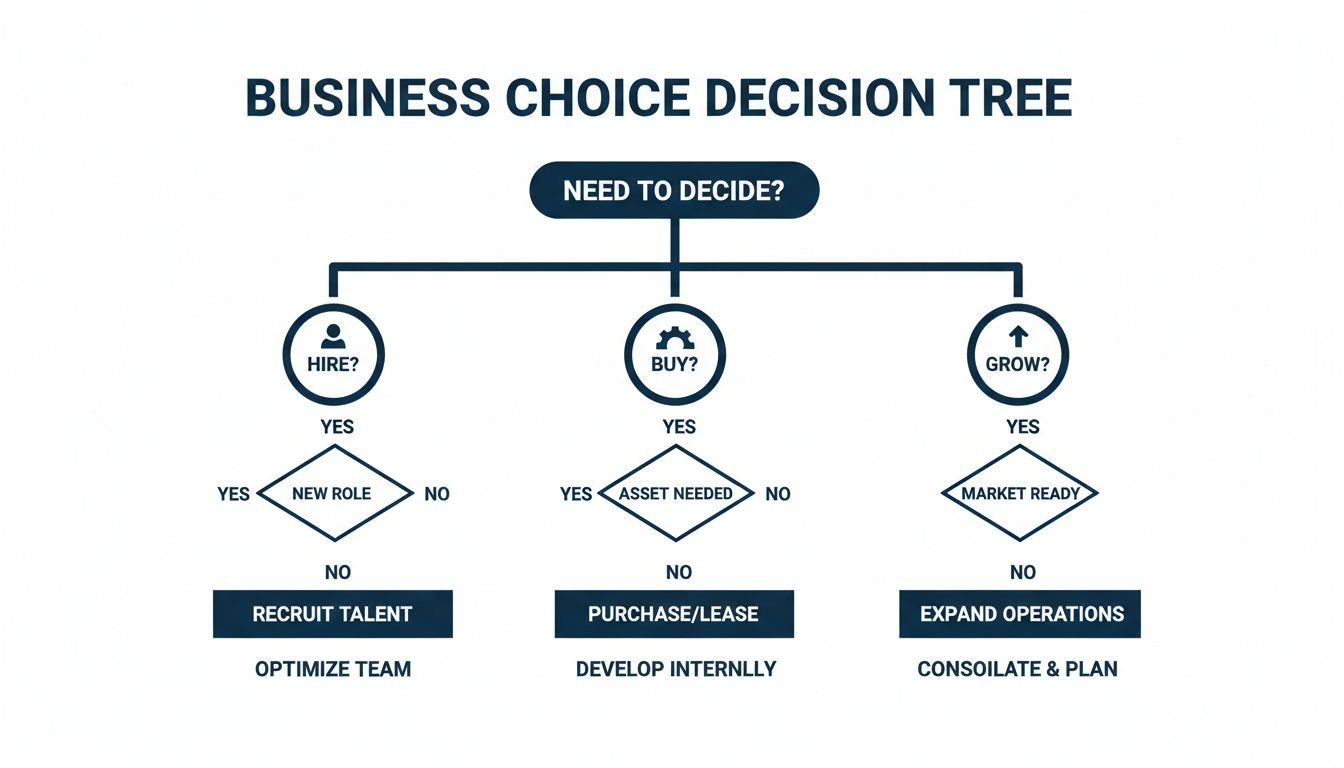
This picture shows how forecasting helps you make choices, like whether to hire, buy, or grow your business.
Choosing the right method often depends on your business's age, industry, and what you want to achieve. A new startup with no sales history might rely on gut feelings and market research, while a ten-year-old business will use its past numbers for a numbers-driven forecast.
Which Forecasting Method Is Right for You?
Still not sure where to start? This table breaks down which method works best for different situations.
| Method | Best For | Example Use Case |
|---|---|---|
| Cash Flow Forecasting | Businesses with tight cash, seasonal sales, or big, spaced-out payments. Key for managing day-to-day money. | A landscaping company uses it to manage cash during the slow winter months and prepare for spring hiring. |
| Sales Forecasting | All businesses, especially retail, e-commerce, and service companies. It's the foundation for most other plans. | A software company forecasts monthly subscription fees to plan for server upgrades and hiring. |
| Budget-Based Forecasting | Established businesses with a steady history and a clear budget. Great for controlling costs and tracking performance. | A non-profit organization uses its annual budget to forecast expenses and make sure it stays within its grant money limits. |
The best approach is often the simplest one that gives you the clarity you need. You can always get more complex later, but starting with a solid, easy-to-understand forecast is the most important first step.
How to Build Your First Financial Forecast Step-by-Step
Ready to build your own forecast? I know it sounds scary, but it’s really just a series of simple steps. Think of it like following a recipe—if you get the right ingredients and follow the instructions, you’ll end up with something very useful.
Let's walk through the whole process. To make it clear, we'll use a simple example: a small online shop called "CoolTees" that sells custom t-shirts.
Step 1: Gather Your Ingredients
Just like a chef needs good ingredients, you need clean numbers. The first step is making sure you have accurate information from the past. This all comes down to good accurate bookkeeping practices. If your numbers are a mess, your forecast will be, too. Garbage in, garbage out.
You'll need a few key reports. Don't worry if you don't have years of info; even a few months is a great start.
- Income Statements: These show your money in and money out over a period, like a month or a quarter.
- Balance Sheets: This shows what your business owns and owes at one moment in time.
- Cash Flow Statements: These track the actual cash moving in and out of your business. This is very important.
For our example, the owner of CoolTees would pull their sales reports, receipts for blank t-shirts, and records of ad spending from the last six months. These are the building blocks. To keep these categories organized, you'll need what's called a chart of accounts. If that term is new to you, our guide on what is a chart of accounts will get you up to speed.
Step 2: Choose Your Timeframe
Next, you need to decide how far into the future you want to look. Are you planning for the next three months, the next year, or the next five years? The right timeframe depends on your goal.
- Short-Term (3-6 months): This is perfect for managing day-to-day cash. It helps you answer questions like, "Will we have enough cash to pay everyone next month?"
- Mid-Term (12 months): A one-year forecast is great for annual budgeting and setting goals for your team.
- Long-Term (3-5 years): This is for big-picture planning. It helps you think about major investments or growing the business.
The owner of CoolTees decides to build a 12-month forecast. This will help them plan for the holiday rush and figure out if they can afford to hire a helper next summer.
Step 3: Make Your Assumptions
This is where you get to be a bit of a detective. A forecast isn't just about copying old numbers. It’s about using what you know to make educated guesses about what’s next. You have to write down your assumptions.
These are the things you believe will happen that will affect your numbers. For example:
- "We plan to raise our prices by 5% in July."
- "I expect our web hosting costs to go up by $20 a month in the fall."
- "Our new ad campaign should increase sales by 10% in the winter."
Writing these down is a must. It makes it clear how you built your forecast. If your actual results are way off, you can go back and see which of your guesses was wrong.
Step 4: Build the Model
Now it’s time to put it all together. You don’t need fancy software for this; a simple spreadsheet in Google Sheets or Excel works great for most small businesses.
You’ll create a table with months across the top and your money categories down the side (like Sales, Cost of Goods, Rent, Marketing, etc.).
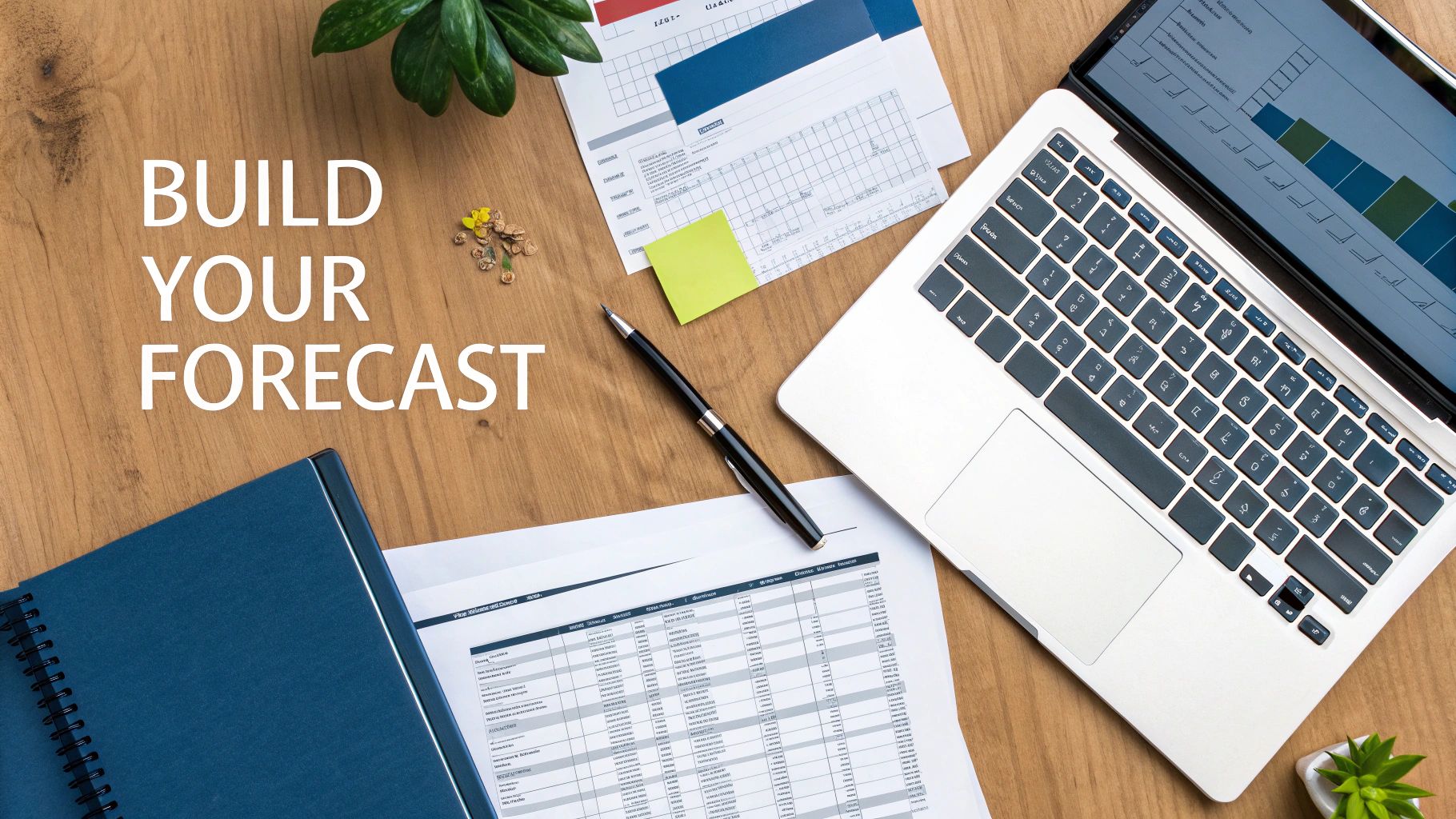
You’ll then put in your old numbers and extend them into the future based on the assumptions you just made. For CoolTees, the owner would project their t-shirt sales month by month, making sure to plan for a slow season and a big jump for the holidays.
Remember, the goal here isn’t perfection. It’s about creating a reasonable picture of your financial future based on the best information you have today.
Step 5: Review and Adjust
Finally, remember that your forecast is a living document. It’s not something you make once and forget about. You have to review it regularly—at least once a month. Compare your forecasted numbers to your actual results.
Where were you right? Where were you wrong? Understanding these differences is how you get better at this over time. This regular check-in helps you stay on track and make smarter, faster decisions for your business. An effective forecast also considers outside forces. After all, big economic changes can affect even the smallest local businesses.
Common Forecasting Mistakes and How to Avoid Them
Creating a financial forecast is a huge step, but it's easy to fall into a few common traps. These mistakes can turn a useful tool into a worthless one. Think of this as your guide to avoiding those problems.
Knowing what not to do is just as important as knowing what to do. Let's look at the biggest mistakes business owners make and how you can avoid them. These simple fixes will help you build a forecast that’s realistic, trustworthy, and a true help for your business.
Overly Optimistic Predictions
It’s normal to be excited about your business, but letting that excitement make you unrealistic is a classic mistake. This is where people predict slow growth followed by a sudden, huge jump in sales that never actually happens.
Being too optimistic leads to bad decisions. You might buy too much product, hire too many people too soon, or run out of cash when your dream numbers don't happen. A forecast should be based on what's likely to happen, not just what you hope will happen.
How to Avoid It: Base your sales predictions on past numbers, not just hopes. If you're a new business, research what's normal for your industry. Question every assumption and ask yourself, "What's the most realistic outcome here, not just the best one?"
Ignoring Seasonal Changes
Forgetting about busy and slow seasons is like owning an ice cream shop and not planning for winter. Almost every business has its own rhythm. If your forecast predicts the same amount of sales every single month, it's probably wrong.
Ignoring these ups and downs means you won't have enough cash or staff during your busy times and you’ll have way too much during the slow ones.
To build a better forecast, it helps to think about different possibilities. Big forecasting firms often show a range of possible outcomes to give a clearer picture of what might happen. You can see how experts talk about this in reports on global economic growth.
The Set It and Forget It Approach
This is probably the most common mistake of all: treating your forecast like a school project you hand in and never look at again. A forecast is not a one-and-done document. It’s a living tool that needs regular updates.
The business world changes fast. A new competitor might show up, a supplier could raise prices, or an ad campaign could do way better than expected. If your forecast isn't updated to show these changes, it quickly becomes useless.
To avoid this, follow these simple steps:
- Schedule a Monthly Review: Put it on your calendar. Don't skip it.
- Compare Forecast vs. Actuals: Look at what you predicted versus what really happened.
- Analyze the Differences: Ask "why" you were off. Was a guess wrong? Did something unexpected happen?
- Adjust Future Months: Use what you've learned to make the rest of your forecast more accurate.
This simple habit turns your forecast from a static picture into a dynamic guide, helping you make smarter decisions all year long.
Helpful Tools for Financial Forecasting
You don’t need a dusty old calculator to build a financial forecast. A few simple tools can make the process easier and more accurate, and you probably already have them.
The key isn't finding the most complicated system. It's about picking the right tool for where your business is right now. For many small businesses, that means starting simple.
Start with Simple Spreadsheets
Honestly, for most small businesses, a good old spreadsheet is more than enough. Programs like Microsoft Excel or Google Sheets are powerful, flexible, and free if you use Google's version.
What’s great about spreadsheets is the control. You can build a forecast that perfectly fits your unique business. You can create a simple model to track your sales, expenses, and cash flow month by month.
Need a hand getting started? You can even download a pre-built template to guide you. Our own free cash flow forecasting template gives you a solid foundation to build on.
Use Your Accounting Software
If you’re already using accounting software like QuickBooks or Xero to manage your books, you have another great tool ready to go. These programs are a goldmine because they hold all your past financial information—the most important ingredient for any good forecast.
Most modern accounting software has features that can create budget reports and even basic cash flow guesses. They can automatically pull your past numbers, helping you spot trends and make much smarter predictions for the future.
This screenshot from QuickBooks shows how the software can predict your cash balance over time.
The chart gives you a quick visual of how money coming in and going out will affect your bank balance, helping you see potential cash problems before they happen.
Know When to Call in an Expert
Spreadsheets and software are great, but sometimes you need more help. If your business is growing fast, has money coming in from many different places, or you need a perfect forecast to get a big bank loan, it might be time to call a professional.
Working with an expert isn't just a cost; it's an investment in your company's future. They won't just help you build a better forecast. They'll help you understand what the numbers are really telling you about your business.
This kind of knowledge is about more than just your own planning; it’s similar to how big companies predict major market changes. For instance, big firms like S&P Global update their outlook on worldwide GDP using complex data. Bringing in an expert for your business gives you that same level of confidence and frees you up to focus on what you do best: running your business.
Common Questions About Financial Forecasting
Even when you understand the basics, a few questions always pop up when business owners start forecasting. That's completely normal. Let’s answer some of the most common ones I hear to clear things up.
Getting these details straight is what turns forecasting from an idea into a real tool you can use to run your business better. Think of this as a quick Q&A.
How Often Should I Update My Financial Forecast?
Great question. As a rule, you should look at and update your forecast at least once a month. This gives you enough time to compare what you thought would happen with what actually happened, letting you make smart changes as you go.
Now, if your business is brand new or things change quickly in your industry, you might want to check it every week. It's like glancing at your GPS during a road trip—you check it regularly to make sure you’re still on the right road.
What Is the Difference Between a Budget and a Forecast?
This one confuses a lot of people, but the difference is pretty simple.
A budget is a plan for what you want to happen. It sets spending limits and money goals. Think of it as drawing the lines on a map: "We will spend no more than $500 on ads this month."
A forecast, on the other hand, is your best guess at what you think will happen based on real information and your judgment. Your forecast might predict you'll end up spending $600 on ads because of rising costs, even though your budget is still set at $500.
Bottom line: Budgets are your goals; forecasts are your predictions. You need both to guide your business.
Can I Make a Forecast if My Business Is Brand New?
Absolutely! In fact, it’s one of the most important things a new business owner can do. The process just looks a little different when you don't have your own past sales numbers to look at.
Instead of looking at your own history, you’ll rely more on outside research and smart guesses.
- Market Research: Take a look at similar businesses. How much do they sell? What do their costs look like? This gives you a realistic starting point.
- Business Plan: Your own plan is your first map. How many customers do you really expect to get from your first ads? What are your expected costs?
- Educated Assumptions: Your first forecast will be built on these informed guesses.
Don't worry that your first few forecasts are mostly guesses—that’s completely fine. As soon as you start making sales, you'll begin replacing those guesses with real numbers. With each month that passes, your forecast will get better and more accurate.
Ready to stop guessing and start planning with confidence? The team at MyOfficeOps can help you build a clear, accurate financial forecast that guides your business toward its goals. Learn how our advisory services can give you the clarity you need.