
Automating how you pay your bills comes down to two things: seeing how much time and money you're losing by doing it by hand, and then finding a smart system to do the boring work for you.
It's all about trading stacks of paper and endless typing for a digital system where invoices are captured, approved, and paid with just a few clicks. The switch gives your team their time back and, more importantly, gives you a much better handle on your company's cash.
Why Manual AP Is Holding Your Business Back
If you're still dealing with paper invoices, spreadsheets, and writing checks, you know it's a pain. But it's more than just an annoying task—it’s a process that actively slows your business down.
Every minute your team spends chasing a signature or typing in invoice details is a minute they aren't spending on work that actually helps the company grow.

This old way of doing things is full of delays. An invoice might sit on a manager’s desk for a week, waiting for a signature. Another bill gets lost in the mail, and boom—you get hit with a late fee. These small problems add up fast, creating a constant mess that wastes both time and money.
The True Cost of Sticking With Paper
The financial hit from paying bills by hand is bigger than most business owners think. It’s not just the cost of stamps; you’re dealing with a system that is slow, full of mistakes, and costs a lot to keep running.
When you look at the numbers, the story becomes clear.
Doing an invoice by hand can cost a business between $12 and $18 per invoice. In contrast, automating that same process drops the cost to just $2 to $4 per invoice. That’s a massive 60-80% reduction in costs.
This isn't just about saving a few dollars. If your business handles 200 invoices a month, the savings can easily be thousands of dollars each year. Think about what your business could do with that extra cash.
Let's break down what this actually looks like for a company processing 200 invoices each month.
The Real Cost of Manual vs Automated AP
| Metric | Manual Accounts Payable | Automated Accounts Payable |
|---|---|---|
| Cost Per Invoice | $15 (average) | $3 (average) |
| Monthly Processing Cost | $3,000 | $600 |
| Annual Processing Cost | $36,000 | $7,200 |
| Team Time (Data Entry) | ~30% of their day | ~5% of their day |
| Early Payment Discounts | Often missed | Easily captured |
| Error Rate | High (manual entry) | Low (automated capture) |
Looking at the table, the numbers speak for themselves. The difference isn't small; it’s a game-changer for your bank account and your team's sanity. You're not just saving money—you're getting valuable time back.
Lost Time and Missed Opportunities
Beyond the money, the biggest drain is on your team’s time. Studies show that AP employees can spend around 30% of their day just on manual data entry. Imagine a construction manager trying to approve invoices from a messy job site, or a law firm buried in paperwork when they should be focused on serving clients.
Automation can cut that time-wasting task down to just 5% of their day. You can read the full analysis in this report on accounts payable automation trends.
This lost time leads to other missed chances:
- Early Payment Discounts: Many suppliers offer a 1-2% discount for paying early. A manual process is almost always too slow to catch these deadlines, leaving free money on the table.
- Strained Vendor Relationships: Late payments are a top reason for problems with suppliers. A slow, messy AP process can easily damage the important relationships your business needs.
- Lack of Visibility: When everything is on paper, you have no real-time view of your spending. This makes it incredibly hard to manage cash flow or create an accurate budget.
Moving away from manual AP isn’t just about making life easier. It’s a smart decision to make your business more efficient, profitable, and ready for the future.
Understanding Your Current Bill Pay Process
Before you even think about picking software, you have to know what you’re trying to fix. It's like a doctor figuring out what's wrong before writing a prescription. To automate accounts payable, you first need an honest look at how you pay bills right now, problems and all.
This isn't about creating fancy charts. It's about taking a clear look at your current process, step-by-step, to find the weak spots. Doing this will show you exactly where things get stuck, where mistakes happen, and where your team is losing the most time.
How Bills Arrive and Who Handles Them
Let’s start at the very beginning. How do invoices even get to your business? For most small companies, it's a mix of different ways.
- Snail Mail: Do you still get paper invoices in the mail? Who opens them? What happens if that person is out for a few days?
- Email Inboxes: Do bills land in one person’s email? What if it’s a general inbox like
accounting@yourcompany.com? Who’s in charge of checking it?
Once an invoice arrives, its journey has just begun. The next step is getting that information into your accounting system, and this is often where the first big delay happens. Manually typing in data is not only slow, but it's also a place where typos and errors happen that cause payment headaches later. A single misplaced decimal point can turn a $100.00 bill into a $1,000.00 nightmare.
It's no surprise that 60% of accounts payable teams still type in invoice data by hand, even though it’s a huge time-waster.
The Approval Black Hole
After an invoice is entered, it has to be approved. This is where things often slow to a crawl. Maybe you need a project manager to sign off on a supplier's bill for a construction job, or the office manager has to approve the purchase of new computers.
Think about your own process:
- Who needs to approve invoices? Is it just one person, or does it change based on the department or the amount of money?
- How do they approve it? A signature on a piece of paper? A quick "looks good" reply to an email?
- What happens when that person is busy? This is the classic problem. An invoice sits in an email inbox or a pile on a desk for days—or even weeks—just waiting.
This constant chase for approvals is a massive time sink. It leads directly to late payments, which can hurt your relationships with vendors and make you miss out on valuable discounts for paying early.
A slow approval process is one of the biggest hidden costs in paying bills by hand. It’s not just inefficient; it directly hurts your company’s cash flow and relationships with suppliers.
Making the Actual Payment
Finally, the invoice is approved, and it's time to pay. How are you actually sending the money? Each payment method comes with its own set of manual tasks.
- Writing Checks: This is the most time-consuming method. It involves printing the check, getting it signed, putting it in an envelope, adding a stamp, and getting it in the mail.
- ACH or Wire Transfers: While faster, this often requires someone to log into the bank website, manually type in all the payment details, and click through several security steps.
- Credit Cards: This means pulling out a physical card, typing the numbers online, and then manually recording the payment back in your accounting software.
After the payment is sent, someone has to go back and mark the invoice as paid in your books. This final step is just one more chance for a human mistake to sneak in. For a deeper dive into the standard workflow, you can learn more about the complete accounts payable process in our detailed guide. It's a lot of moving parts, and every single one is a chance for automation to make your life easier.
Choosing the Right AP Automation Software
Looking for AP automation software can feel like walking into a huge store with hundreds of options—they all look great and promise to solve all your problems. But the truth is, not every tool is the right fit for every business.
The key is to ignore the flashy ads and focus on what your business actually needs to make paying bills easier.
Think about it this way: a busy plumbing company has totally different needs than a doctor's office. The plumbing manager needs to approve a supplier invoice on his phone right from a job site. The doctor's office, on the other hand, needs top-notch security to protect sensitive information. Your business is unique, and the right software will feel like it was made just for you.
Start with What You Can't Live Without
Before you watch a single demo, make a short list of your must-have features. I've seen too many business owners get impressed by fancy features they'll never actually use. This isn't about finding a tool that does everything; it's about finding one that does the things you need it to do, really well.
Here are a few core features that most small and medium businesses should look for:
- Smart Invoice Capture: How does the software get invoices into the system? Look for tools that can automatically grab invoices from an email inbox or let you snap a picture with your phone. The goal is to stop typing in data by hand.
- Custom Approval Workflows: This is a big one. Can you set up rules that match how your business already works? For example, can you make it so any invoice over $1,000 automatically goes to the owner for a final look, while smaller ones can be approved by a manager?
- Easy Integration: Your AP software must connect to your accounting system. If you use QuickBooks or Xero, make sure the tool you choose connects to it without a fuss. A bad connection just creates more manual work, which defeats the whole point.
Once you have your list, you can start looking at options with a clear goal in mind.
Look Beyond the Basic Features
Once you've confirmed a tool has the basics covered, it's time to dig a little deeper. The best software doesn't just automate tasks; it gives you much better control and a clearer view of your company’s money.
A great example is how the software handles payments. Does it give you options? You should be able to pay vendors with an ACH bank transfer, a virtual card, or even have the service mail a check for you. This flexibility is important because not all of your vendors will want to be paid the same way.
Another key area is reporting. Can you easily pull up a report to see how much you've spent with a certain supplier this year? Can you see which bills are due next week at a glance? Good data helps you make smarter decisions about your cash flow.
The right software shouldn't just be a digital filing cabinet for invoices. It should be a command center that gives you a clear, real-time view of what your company owes.
Questions to Ask During a Demo
Sales demos are designed to impress you, but your job is to get real answers. Don't be afraid to ask tough questions that get to the heart of how the software will work for your team every day.
Here are some questions I always tell my clients to ask:
- What does the setup process really look like? Ask them to walk you through the exact steps. How much help will you get setting up your vendor list and approval rules? Or is it all on you?
- Can you show me how it connects with my accounting software? Don't just take their word for it. Ask to see what the connection process actually looks like. If you need help choosing the right accounting platform first, check out our guide on the best accounting software for small businesses.
- How do you handle customer support? What happens when you have a problem? Do you get to talk to a real person, or are you stuck with a chatbot?
- What's the real price? Are there hidden fees for adding more users, processing more invoices, or using certain payment features? Get the full story on costs so there are no surprises later.
When selecting a solution, understanding the specific features and benefits of dedicated accounts payable automation software is crucial for making an informed choice that fits your business.
Remember, choosing the right partner is just as important as choosing the right features. You're not just buying software; you're investing in a tool that will become a key part of how you run your business.
A Practical Plan For Implementing Your New System
Switching to a new system can feel like a huge project, but it doesn't have to be a headache. With a little preparation and a clear plan, you can make the change smooth for everyone—your team, your vendors, and yourself.
Think of it less like a major disruption and more like a simple upgrade. The goal is to get from manual chaos to automated calm without causing extra stress. The key is to break it down into small, easy steps.
Getting Your House In Order First
Before you even turn on the new software, there’s some prep work to do. This is the step that makes the difference between a smooth rollout and a messy one. It starts with your vendors.
Let's be honest, your vendor list is probably a bit messy. You might have old contact information, several entries for the same company, or vendors you haven’t worked with in years. Now is the perfect time to clean that up. A clean, correct vendor list will make moving to the new system much easier and stop payment errors later.
Once your list is clean, you need to let your suppliers know what's happening.
- Send a Simple Announcement: Write a short, friendly email explaining that you're switching to a new, faster payment system. Let them know where they should send their invoices from now on—this is usually a special email address provided by the software.
- Explain the Benefits to Them: Frame it as a good thing for them, too. Mention that this change will help you pay their invoices faster and more reliably.
This small step avoids a lot of confusion and shows your vendors that you care about your relationship. It sets the stage for a better way of working together.
Setting Up Your New Digital Workflow
With your vendors ready, it’s time to set up the software itself. This is where you build the digital version of your bill-paying process. The good news is that most modern software is designed to make this easy.
Your first technical step is connecting the new tool to your bank account and accounting software, like QuickBooks or Xero. A solid connection between these systems is what makes the whole process work smoothly, getting rid of the need to type information in two different places.
Next, you'll set up your approval rules. This is your chance to automate the annoying task of chasing signatures. You can create simple but powerful rules, such as:
- Invoices under $500 from a specific supplier are automatically approved.
- Bills between $500 and $2,500 need approval from a project manager.
- Anything over $2,500 needs a final sign-off from the owner.
The core of AP automation revolves around a few key steps, from capturing invoices to syncing with your accounting software.
This visual shows that a successful system relies on easy invoice scanning, a clear approval process, and a reliable connection to your accounting records.
The real power of automation comes from setting your approval rules upfront. Once set, the software becomes your tireless helper, making sure no bill gets paid without the right person's approval.
For those ready to dive into the practicalities, a comprehensive guide on how to automate your accounts payable process can provide essential steps for streamlining approvals and beyond.
Getting Your Team On Board And Confident
A new tool is only as good as the people who use it. One of the biggest mistakes business owners make is giving new software to their team with little to no training and expecting them to figure it out. This almost always leads to frustration.
Success depends on getting your team comfortable from day one. You don't need a week-long training course. Instead, focus on short, hands-on sessions.
Start by showing them how the new system makes their specific job easier. For an office manager, show them how they’ll no longer have to manually type in invoice data. For a department head, show them how easy it is to approve a bill from their phone in under a minute.
Run a few real invoices through the system together as a training exercise. This hands-on practice is much better than just watching a video. It helps people feel involved and builds their confidence quickly. Remember, this change is supposed to make their job easier, so make sure they see and feel that benefit right away.
Making the Most of Your Automated AP Workflow
You’ve done the hard work of planning your process and setting up the software. Now comes the best part: seeing it all work. This is where you trade the constant paper chase for a smooth system that puts you ahead of your bills, not just trying to keep up.
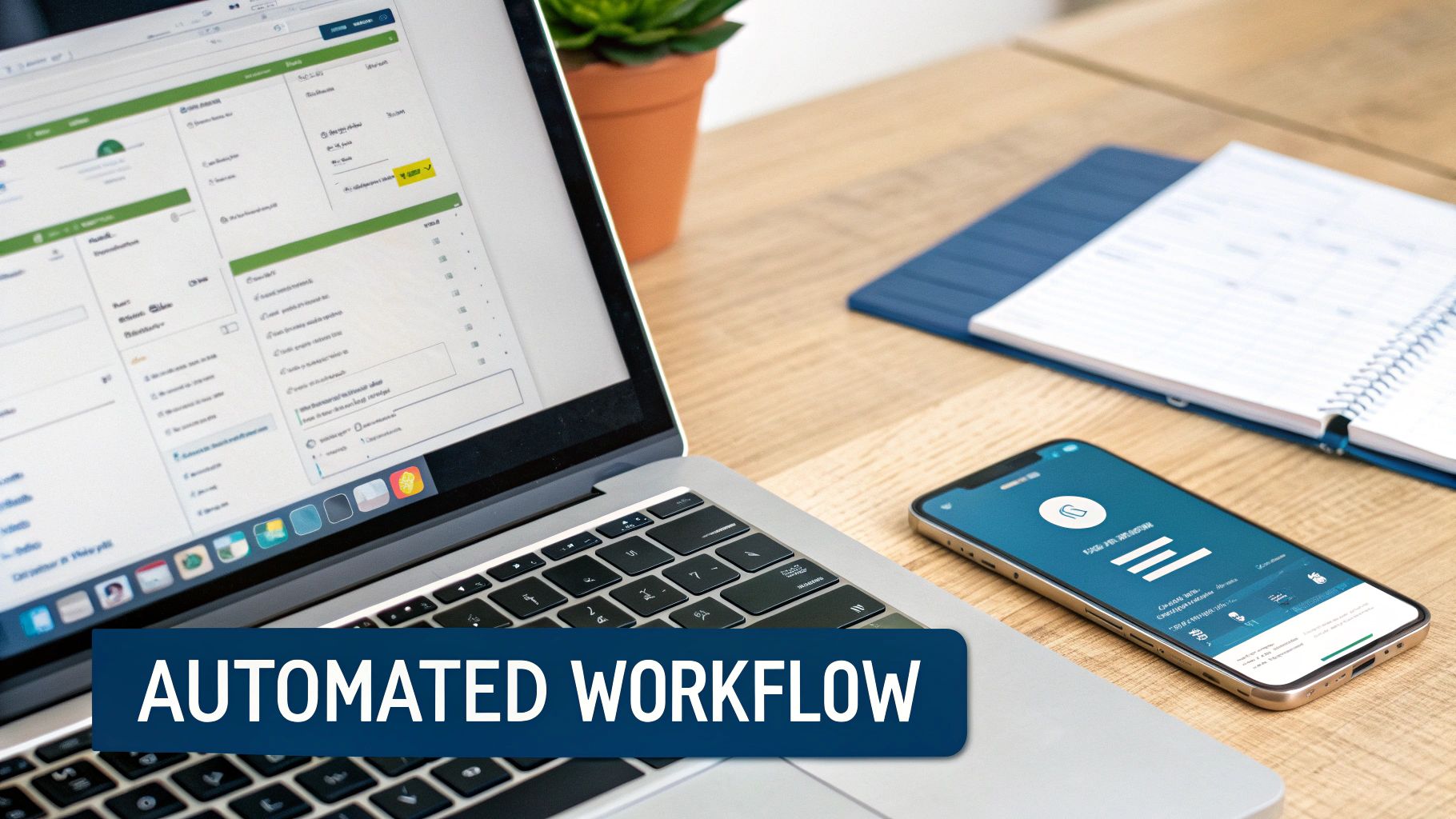
Your daily routine is about to get a lot simpler. Forget digging through stacks of mail or messy email chains. Now, every invoice lands in one central, digital inbox. The software immediately gets to work, pulling key details like the vendor name, invoice number, and amount due, getting it ready for you without anyone lifting a finger.
From Invoice Arrival to Easy Approval
Once an invoice is in the system, it's sent to the right person based on the rules you created. This is where you’ll feel the biggest and fastest improvement.
Imagine your project manager for a construction job gets an invoice from a lumber supplier. Instead of waiting for someone to drive it back to the office, he gets a notification on his phone. He can look at the invoice, confirm the wood was delivered, and approve it with a single click—all while standing on the job site. That approval is instantly saved, and the invoice moves on without delay.
This digital trail completely gets rid of the "black hole" where invoices used to disappear for days. Now, everything is tracked, giving you a clear, real-time view of where every single bill stands.
Taking Control of Payments
When it's time to pay, you’re in complete command. No more printing and signing checks one by one. You can simply look at all your approved bills on one screen and schedule payments in groups, which is a massive time-saver.
You also get much more choice in how you pay.
- ACH: For vendors who prefer a direct deposit, you can send secure electronic payments right from the system.
- Virtual Card: Some software offers single-use credit card numbers, which adds a strong layer of security to your payments.
- Check: If a vendor still wants a paper check, the service can print and mail it for you. You never have to touch an envelope.
This flexibility helps you keep great relationships with vendors by paying them how they prefer, all while keeping your own process simple. You can schedule payments right on their due dates, helping you manage cash flow better by holding onto your money longer.
Unlocking New Financial Insights
Maybe the best part of automating AP is the data you suddenly have. With manual systems, getting a clear picture of your spending is a huge chore. Now, it’s built right in.
In just a few clicks, you can create reports that were once hard, if not impossible, to make. A law firm, for example, can quickly see how much it’s spending on expert witness fees across all its cases. A medical practice can track spending on different types of supplies to find better deals.
Your new AP system isn't just a bill-paying tool; it's a source of valuable financial information. You can finally see where your money is going in real-time, allowing you to make smarter, faster decisions.
This clear view is a true game-changer. You can spot spending trends, build more accurate budgets, and get better prices from vendors because you have the hard data to back it up. This is how you move from just managing bills to smartly managing your business's money.
Common Questions About AP Automation
When you’re thinking about changing a key part of your business, like how you pay bills, it’s normal to have questions. I talk to business owners every day who are curious about AP automation but want to be sure it’s the right move for them.
Let’s go over some of the most common questions and worries I hear.
Is AP Automation Actually Secure?
Yes, and it’s almost always much safer than using paper checks and invoices. Think about it: a paper check can get lost in the mail or stolen, putting your bank account number out there for anyone to see. Doing things by hand also opens the door to simple mistakes, like accidentally paying the same bill twice.
Good AP automation software is built with bank-level security.
- Encryption: All your financial information is scrambled and protected, just like it is on your online banking website.
- Audit Trails: Every single action—from an invoice showing up to the final payment—is digitally tracked. You can see exactly who approved what and when, which is a huge help in preventing fraud. A recent study found that 43% of companies dealt with payment fraud in 2023, making this kind of digital tracking more important than ever.
- Payment Protection: Using methods like virtual cards or ACH through the software adds another layer of safety, since you’re not giving your main bank account details to every single vendor.
Will I Lose Control Over Paying Bills?
This is probably the biggest myth out there. The reality is the complete opposite—you gain a level of control you never had before.
Automation doesn't mean the computer makes decisions for you. It means the computer follows the rules that you create. You're the one who decides:
- Who needs to approve an invoice.
- How much money requires a second look from a manager.
- Which vendors get paid from which bank account.
The software simply does the busywork of sending everything where it needs to go based on your plan. Instead of you having to chase a manager for a signature, the system sends them a reminder. But the final "pay" button is always in your hands.
You’re not giving up control; you’re automating your own financial rules. This frees you up to focus on the actual decision of whether a bill should be paid, not the process of getting it approved.
How Much Does AP Automation Software Cost?
It’s much more affordable than you might think. The days of needing a huge upfront payment for this kind of technology are long gone. Most modern tools for small and medium businesses are subscription-based, which makes them very budget-friendly.
Pricing is usually based on how much you use it. A common model is a flat monthly fee that includes a certain number of invoices, with small charges for any that go over. For most small businesses, a good AP automation plan can range from $50 to a few hundred dollars a month.
When you compare that to the hidden costs of doing things by hand—like the $12 to $18 it costs to process a single paper invoice—the software often pays for itself very quickly. You're not just buying software; you're buying back hours of your team's time and getting rid of expensive mistakes.
What If My Vendors Still Mail Paper Invoices?
This is a very common situation, and a good automation system is built to handle it. You don't have to force all your vendors to change how they do business just because you've upgraded your system.
Modern software gives you a couple of easy options to handle old-school vendors:
- Dedicated Email Address: You get a special email address just for invoices. You can forward any bills you receive there, or just tell your vendors to send them there directly.
- Scanning Service: Some companies offer a P.O. box service. Any paper invoices sent there are opened, scanned, and turned into digital files for you, appearing in your system automatically.
No matter how an invoice arrives—email, snail mail, or even a picture from your phone—it all ends up in the same simple, digital system.
Ready to stop chasing paper and get real control over your finances? MyOfficeOps can help you implement a seamless, automated AP process that saves you time and money. Let’s schedule a call to see how we can help.