
If you want to cut business expenses, you have to know where your money is going first. This isn't about guessing. It's about organizing your financial records so you have a clear map of your spending. Once you see the map, you can find where money is being wasted and make smart cuts that don't hurt your business.
Your First Move To Cut Business Costs Smartly
Before you can cut a single expense, you need to know what you’re spending money on. I mean really know. It’s not about just looking at your bank account. It’s about turning a messy pile of receipts and invoices into a clear story about your business's money. Without this clarity, you're just guessing—and guessing is a bad way to run a business.
Imagine trying to explore a new city without a map. You might get lucky, but you’ll probably waste a lot of time and gas making wrong turns. Your financial records—like your profit and loss (P&L) statement—are your map. When they're clean and correct, they show you the fastest way to save money.
Why Clean Books Are Your Best Tool
I once worked with a construction company near Philadelphia that was struggling to make a profit. They thought they needed to fire people or make big, painful cuts. I asked them to wait. Before we did anything, we spent a week just organizing their financial records.
What we found was surprising. They were accidentally ordering the same expensive materials twice for different construction sites because their buying process was a mess. By simply cleaning up their records and creating a clear way to track purchases, they saved thousands of dollars a month. No one was fired, and they didn't even have to switch to cheaper suppliers. This shows why knowing your numbers is the real first step.
Your Profit & Loss statement isn't just for taxes; it's your guide to making smart cuts. When it's correct, it tells you exactly which costs are growing and where you can find easy savings.
This simple process of organizing your information, looking at it closely, and then making a decision is how any good cost-cutting plan works. You can’t skip a step.
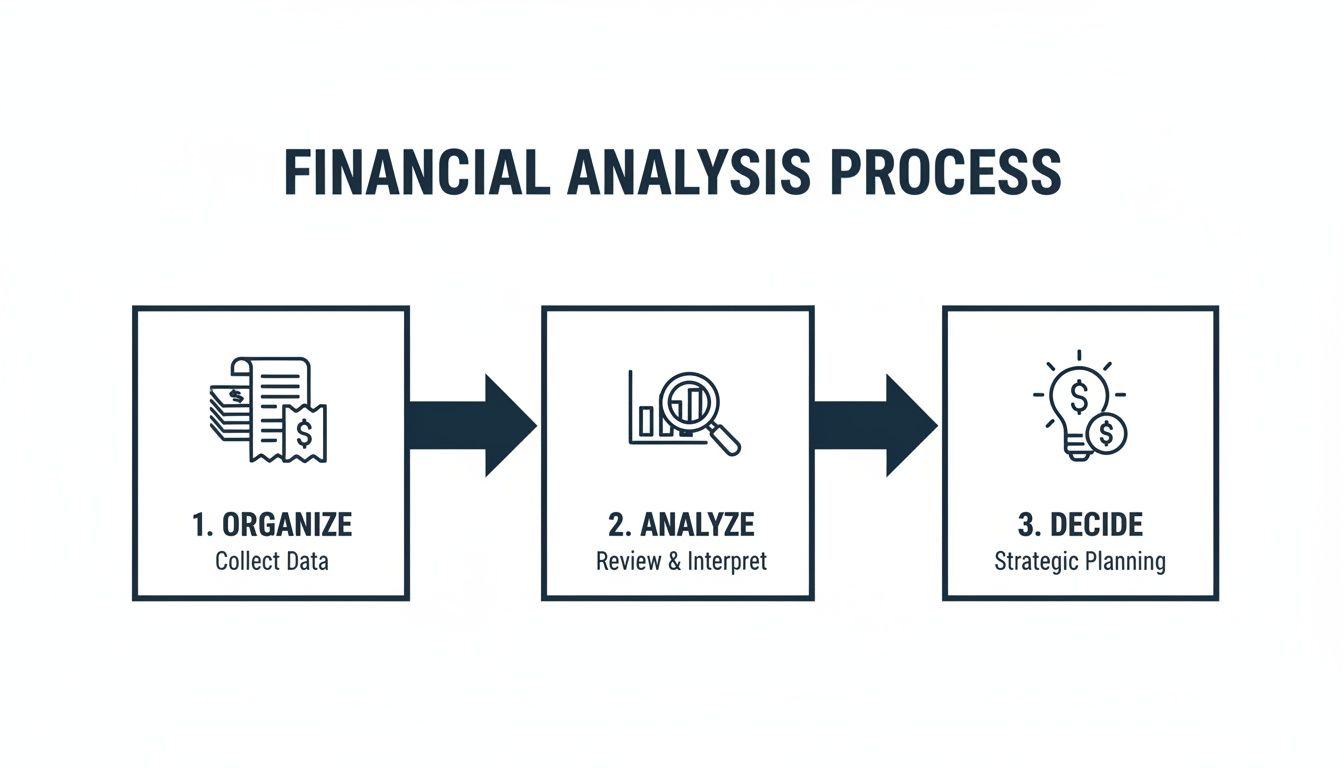
The main point is you can't jump straight to making decisions. You have to start by getting your information organized first.
From Messy Numbers to a Clear Plan
Once your records are clean, you can start looking at the right numbers to help you make decisions. These are called key performance indicators (KPIs). Don't let the name scare you. They are just simple numbers that tell you if your business is healthy.
Here are a few to start with:
- Gross Profit Margin: This shows how much money you make from what you sell, before paying for things like rent and salaries. If this number is going down, it might mean the cost of your materials is going up.
- Operating Expense Ratio: This compares your day-to-day running costs (like rent and marketing) to the money you bring in. If this number is climbing, it's a sign that your overhead costs are growing faster than your sales.
- Customer Acquisition Cost (CAC): How much do you spend to get one new customer? If your CAC is going up, it’s time to look closely at your marketing and sales spending.
Tracking these numbers turns your financial data from a history report into a tool that helps you see the future. It helps you spot problems early so you can make changes before they become big emergencies. If you're new to this, a great place to begin is by learning how to create a business budget, which gives you a plan for tracking these costs.
By the way, these ideas apply everywhere. Looking at tips for reducing healthcare costs, for example, can give you good ideas for finding savings, no matter what business you're in.
Finding Quick Savings That Boost Your Bottom Line
Once your money situation is organized, you can start looking for quick wins. These are the easy-to-find savings that give you an immediate boost without a lot of effort. Think of it as picking the lowest-hanging fruit—it's right there for you to take.
This is how you start cutting costs in a way you can feel right away. You'd be surprised how a few phone calls or a careful look at your bills can put thousands of dollars back into your business. Let’s look at where you should check first.
Review and Renegotiate Vendor Contracts
Every business works with other companies for services like internet, cleaning, software, or supplies. Often, you sign a contract and then forget about it. That's a mistake.
Over time, your business needs change, and prices in the market go down. The deal you signed two years ago is probably not the best deal today.
I had a client, a law firm, that was paying a huge yearly bill for its case management software. They felt stuck. We just picked up the phone, called their provider, and explained that we were reviewing all major costs. After a couple of phone calls, they knocked over 15% off their yearly bill. All it took was asking.
Here’s how you can do it:
- Make a List: Write down all your main vendors and when their contracts end. Set a calendar reminder 90 days before that date.
- Do Your Homework: Before you call, look up what competitors are charging. Knowing the market price gives you power when you talk to them.
- Just Ask: Call your account manager and be honest. Say, "We're looking at ways to reduce expenses, and we need to find a way to lower this cost. What can you do for us?" They’d often rather give you a discount than lose you as a customer.
Never assume a price is final just because it's on a contract. Most companies expect you to negotiate, especially if you've been a customer for a long time.
This simple act of reviewing and talking to vendors can be one of the fastest ways to cut your monthly costs.
Conduct a Subscription Audit
In today's world, it's very easy to sign up for software and services with a credit card and then forget about them. These small, repeating charges are sneaky. A $20 monthly fee here and a $50 fee there might not seem like much, but they can add up to thousands of dollars a year.
It's time for a "subscription audit."
Go through your company credit card and bank statements for the last three months. List every single repeating charge. For each one, ask yourself:
- What is this for? If you don’t know, find out right away.
- Do we still use this? Be honest. If no one has used it in six months, you don't need it.
- Are we on the right plan? You might be paying for a premium plan with features your team never uses. Switching to a cheaper plan is an easy win.
Canceling even a few unused subscriptions can free up hundreds of dollars each month. This is pure savings that goes straight to your profit.
Look at Your Payroll and Staffing Smarter
When people hear "cut payroll costs," they immediately think of firing people. That's not what this is about, and it should always be the last option. Letting good employees go hurts the team and costs a lot of money to hire and train someone new.
Instead, you can find savings by being smarter with how you manage your team.
For example, look at your schedule for hourly workers. Are you often overstaffed during slow times? Creating better schedules based on when you're actually busy can cut labor costs without letting anyone go.
Another quick win is to review your payroll service provider. Are you paying too much in fees? Some payroll companies charge high fees per employee or extra for simple tasks. Shopping around for a new provider could save you a good amount of money each year. Changing roles or combining tasks can also make things more efficient, letting your best people focus on more important work.
Streamlining Your Work with Simple Automation
One of the biggest hidden costs in any business is wasted time. Think about all the hours your team spends on small, repeating tasks that don’t actually make money—like manually typing in data, chasing down late payments, or sending appointment reminders.
These slow, manual tasks are more than just annoying; they are a direct drain on your money. Every hour an employee spends on a boring manual task is an hour they could have spent helping a customer or coming up with new ideas. This is where automation can be a game-changer.
Where to Find Easy Automation Wins
You don't need to be a tech expert to start automating. There are many simple, affordable tools that can handle these repeating jobs, freeing up your team for more valuable work. The goal is to let technology handle what it's good at so your people can focus on what they're good at.
I once worked with a doctor's office that was losing money from missed appointments. Their front desk staff spent hours each week manually calling patients to remind them. We set up a simple system to send automated appointment reminders by text and email.
The results were almost immediate. No-shows dropped by over 30%, and the admin team got back almost a full day's worth of work each week. That’s a huge win that directly increased their income and cut wasted labor costs.
Here are a few common areas ready for automation:
- Invoicing and Payments: Instead of manually creating and chasing every invoice, use software that does it for you. It can also automatically send reminders for late payments, which gets you paid faster and saves your bookkeeper a lot of headaches. To see how powerful this can be, check out our guide on how you can automate accounts payable.
- Customer Scheduling: If you run a service business, let clients book their own appointments online. This simple change gets rid of the endless back-and-forth emails and phone calls.
- Data Entry: Many tools can automatically move information between programs, stopping your team from wasting time on mind-numbing copy-and-paste work.
Don't think of automation as replacing your employees. Think of it as giving them a robot helper to handle the boring parts of their job so they can focus on work that needs a human.
Using just one of these can create a ripple effect, improving not just your profit but also your team's happiness. Nobody enjoys doing boring work.
Deciding Between Outsourcing and a Full-Time Hire
As you start to clean up your internal work, you might find you need a specific skill—like bookkeeping, IT support, or special marketing—but not enough work for a full-time person. This is a common situation for growing businesses. Do you hire an expert from an outside company or bring someone in full-time?
Hiring a full-time employee comes with a lot of costs besides just their salary. You have to pay for payroll taxes, health insurance, and paid time off. These can easily add 20-30% on top of their base pay.
Outsourcing to a professional or a firm can be a cheaper way to get the expertise you need. You pay only for the work you need done, without all the extra costs of a full-time employee.
Here's a simple checklist to help you decide:
| Consideration | Better to Hire an Employee | Better to Outsource |
|---|---|---|
| Workload | You have 40+ hours of steady work per week. | The work is part-time, for a specific project, or changes a lot. |
| Expertise | The job is key to your daily business. | You need a special skill for a specific task. |
| Cost | You have the money for a full-time salary plus benefits. | You want to keep overhead costs low and predictable. |
| Management | You have the time to train and manage them. | You want an expert who can start work right away on their own. |
By thinking through these points, you can make a smart money decision that fits your goals. Outsourcing can be a great way to get top-level talent while you work to reduce business expenses.
Targeted Cost-Cutting Tips for Your Industry
Every business owner knows that cutting costs is important, but using the same approach for every business just doesn't work. Slashing budgets everywhere is like using a sledgehammer when you need a small screwdriver. The costs that hurt a construction company are totally different from those at a doctor's office.
The real trick is knowing exactly where to look for savings in your specific industry. This is about making smart, targeted cuts that trim the fat without touching the muscle of your business. Let’s break down where you can find those hidden savings in some common industries we work with here in the Philadelphia area.
For Professional Services: Marketing, IT, and Law Firms
If you run a service business—like a marketing agency, an IT firm, or a law practice—your two biggest costs are almost always your people and your software. The goal is to make sure every project and every hour you bill for is actually making you money.
One of the most common profit killers I see is scope creep. This happens when a client project slowly gets bigger than what was originally agreed upon, but you're not charging any more money for the extra work.
To get this under control, you need to be disciplined:
- Track Your Time: Every employee needs to track their hours for each client and project. This isn't about watching over their shoulder; it's about getting a clear picture of which projects are making you money and which are secretly costing you.
- Review Project Profitability: After a project is finished, look back at it. Compare the total hours worked to the price you charged. If a project lost money, you have to understand why before you agree to another one like it.
- Audit Your Software: Service firms use a lot of software, but it's easy to overspend. Do a regular check of all your tools. You might be paying for 50 user accounts when you only need 30, or you might have two different programs that basically do the same thing.
The most common waste we see in service firms is paying for fancy software features that nobody on the team actually uses. Switching to a cheaper plan or a more affordable tool can lead to immediate savings.
For Healthcare Practices and Clinics
For doctors, dentists, and other healthcare providers, the biggest expenses besides payroll are usually medical supplies and the very complex world of billing and insurance. Small changes in these areas can have a huge impact on your profit.
A great place to start is your medical supply inventory. It’s way too easy to order too many supplies or lose track of what you have, leading to waste from expired products.
- Use an Inventory System: This doesn't have to be a fancy, expensive system. A simple spreadsheet or a special inventory tool can help you track what you use, see what you actually need, and watch expiration dates.
- Check Your Billing Process: Medical billing is a minefield, and mistakes are expensive. Wrong codes, late submissions, or missed follow-ups lead to denied insurance claims, which means you're not getting paid for work you’ve already done.
Checking your billing process to find and fix common mistakes can greatly improve your cash flow. Sometimes, outsourcing your billing to a specialized company can save you more money in the long run than trying to manage it in-house with a busy team.
For Construction and the Trades
If you're in construction, plumbing, or another trade, your money is tied up in three places: materials, labor on job sites, and expensive equipment. The key to reducing expenses here is to track your costs for each job.
I’ve seen contractors lose all their profit because they didn't realize how much material was being wasted on-site or how many hours of work a "small" job actually took.
Here’s where you need to focus:
- Implement Job Costing: Use your accounting software to track every dollar spent on materials and every hour of labor for each specific job. This is the only way to see which jobs are making you money and which are losing you money.
- Get a Handle on Material Waste: On a busy job site, materials get lost, damaged, or used poorly. A better system for tracking, storing, and using materials can cut this waste down.
- Manage Your Equipment Costs: That excavator or heavy-duty truck costs you money even when it’s just sitting there. It’s important to figure out if it's cheaper to rent certain equipment for specific jobs instead of paying to buy and maintain it yourself.
For Real Estate Businesses
For real estate agencies and property management companies, the big expenses are typically marketing and property maintenance. You have to spend money to attract clients and keep properties in good shape, but it's very easy to overspend.
One of the smartest moves you can make is to track your marketing spending very closely. You absolutely must know which of your ads or campaigns are bringing in real leads.
- Track Your Marketing ROI: For every dollar you put into online ads, Zillow listings, or social media, how many good leads and closed deals does it bring in? If a marketing channel isn't working, cut it.
- Be Proactive with Maintenance: If you're a property manager, it is almost always cheaper to do regular, preventive maintenance than to wait for an emergency call. Fixing a small leak is a small expense; repairing major water damage later is a disaster.
To help you find the best cost-saving opportunities, it helps to see where your industry typically loses the most money.
Expense Reduction Focus by Industry
This table shows the main areas where different types of businesses can usually find the biggest savings when cutting costs.
| Industry | Primary Expense Area to Target | Example Action |
|---|---|---|
| Professional Services | Labor & Software | Analyze project profitability to stop taking on money-losing work. |
| Healthcare | Medical Supplies & Billing | Audit your medical billing codes to reduce claim denials and improve cash flow. |
| Construction & Trades | Materials & Equipment | Use job costing to track material waste and decide whether to rent or buy equipment. |
| Real Estate | Marketing & Maintenance | Track marketing ROI and cut channels that don't produce leads. |
By focusing your efforts on these high-impact areas first, you can make real cuts without hurting your core business.
Many businesses in these fields also have big travel costs, and tracking them is key. For instance, knowing that global business travel spending in the Asia-Pacific region is expected to hit $379.5 billion in 2025 can help you compare your own international costs if you do business there. This kind of data helps you see if your spending is normal for your industry or if you're spending too much. You can discover more about these global travel spending trends to help with your budgeting.
How To Manage Travel and Entertainment Costs
Business trips, client dinners, and team events can feel like costs you can't avoid. You need them to build relationships and grow your business, but the costs can quickly get out of control. The good news is that you can manage these expenses without hurting relationships or team morale. The key is to be smart and strategic, not just cheap.

This isn’t about canceling the company holiday party or banning travel. It’s about creating simple, clear rules that everyone on your team can follow. When used all the time, these small changes add up to huge savings over the year.
Create a Simple and Clear Travel Policy
The very first step to control these costs is to write down your rules. A formal travel and entertainment (T&E) policy removes the guesswork for your employees and gives you a way to enforce your budget. It doesn't need to be a 50-page legal document—a simple one-pager is often all you need.
To get costs under control, it's important to have strong policies for effective corporate travel expense management.
Your policy should clearly state the rules for common expenses:
- Booking Flights: Require employees to book flights at least 14 to 21 days early. We’ve all seen how last-minute tickets can cost so much more.
- Hotel Stays: Set a maximum price per night or create a list of preferred, affordable hotels. This tells your team that fancy hotels are for special times, not regular business trips.
- Meals and Entertainment: Set a per diem (a daily allowance) for meals. This is much easier to manage than collecting and approving dozens of individual receipts.
- Ground Transportation: Make it clear when it’s better to use a rental car versus a ride-sharing service. For mileage reimbursement, having a clear policy is key. You can learn more about setting a fair company mileage rate in our detailed guide.
By setting these rules up front, you avoid awkward talks later and make it easy for your team to do the right thing.
Focus on Small Tweaks, Not Big Bans
Big savings on travel and entertainment almost never come from one big cut. Instead, they come from making dozens of small, smart choices over and over again. This method is much easier to stick with and less damaging to morale than a sudden travel ban.
Recent data shows this is exactly how smart companies are managing their budgets. A 2025 survey found that 60% of travel managers see budget cuts happening as small, targeted changes to individual trips, not as huge policy changes. The same study showed that 87% of business travelers have seen these cuts happen over the last year.
The secret to cutting travel costs is accumulation. Saving $50 on ten different trips is more effective and less disruptive than trying to save $500 on one.
Practical Ways to Trim Trip Costs
So, what do these small changes look like in the real world? They're often simple things that, when added up across your whole team and an entire year, make a real difference in your expenses.
Here are a few examples you can use right away:
- Eliminate Automatic Upgrades: Make it clear that paying for upgrades to business class or premium hotel rooms is not standard and needs special permission.
- Say No to Checked Bags: For short trips, encourage employees to use carry-on luggage only. Many airlines now charge $30 or more each way for a checked bag—a cost you can completely avoid.
- Question Overnight Stays: For meetings in nearby cities, ask if a day trip is possible. This saves on both hotel and meal costs. The data shows 30% of travelers have seen these types of trips cut.
These are not extreme measures. They are small, practical steps that show your team you are serious about managing costs while still letting them do their jobs. By focusing on these small savings, you can significantly reduce business expenses in this tricky category.
Common Questions About Reducing Expenses
When it's time to save money, a lot of questions pop up. It’s normal to feel a bit overwhelmed. You need to save money, but you can't afford to hurt your business, lose great people, or let your quality of work drop.
Let me walk you through some of the most common questions I hear from business owners, with simple answers based on years of helping companies with this exact problem.
Where Should I Start Cutting Costs?
This is the big one. The smartest place to begin is almost always with your largest, most controllable expenses. But there's a catch: you can't make smart cuts if you don't have a very clear picture of where your money is actually going. Clean, up-to-date financial records are a must.
Once your records are in order, pull up your Profit & Loss statement. This is your roadmap. For most businesses, the quickest savings are hiding in two places:
- Vendor Contracts: Are you still paying the same price for your internet or office cleaning that you agreed to three years ago? A quick phone call or shopping around can often get you a better deal. It's that simple.
- Software Subscriptions: Do a quick check of your monthly credit card statements. I can almost guarantee you'll find subscriptions for software your team hasn't used in months. Canceling these is pure, immediate savings.
Starting here lets you trim fat without cutting into the muscle of your business—your team and your main operations.
How Can I Cut Expenses Without Upsetting My Employees?
The key to cutting costs without making your team panic is to be open and honest. Focus the conversation on getting rid of waste, not on getting rid of people. Your team is on the front lines every day; they know where things are inefficient better than anyone.
Don't make cost-cutting a secret mission. Announce that you're looking for ways to run the business smarter and ask for their ideas. You’ll be surprised by what they come up with—from pointing out a slow process that wastes hours to finding better deals on supplies.
Always, always, always cut spending on "things" before you even think about touching people-related costs like pay, benefits, or training. When your team sees you renegotiating an expensive contract or getting rid of software that doesn't work, they see a leader building a stronger company for everyone. This builds trust, it doesn't break it.
How Often Should I Review My Business Expenses?
Watching your expenses shouldn't be a one-time panic. Think of it as a regular health checkup for your business. This is how you catch costs that slowly add up over time before they become a big problem.
A good schedule looks like this:
- Monthly Review: Take a quick look at your key financial reports, like your P&L, every single month. This is your early warning system for any strange spikes or trends that need a closer look.
- Annual Deep Dive: Once a year, set aside time for a full review of all your major contracts, insurance policies, and software subscriptions. The perfect time to do this is about 90 days before they're set to renew, which gives you plenty of time to negotiate or find a better option.
When you make this a regular habit, managing costs stops being a stressful reaction and becomes a calm, proactive strategy.
Are you ready to stop guessing and start making data-driven decisions to cut costs and boost your profits? The team at MyOfficeOps provides the clear bookkeeping and expert financial guidance you need to build a more resilient business. Learn how we can help you.