
If you're running a business, you know the drill. A pile of bills shows up, and someone has to type everything into the computer, get it approved, and send the payment. It feels old-fashioned, right? It’s slow, it’s easy to make mistakes, and it’s a huge time-waster. What if you could get all that time back and even save money? That's what automating your accounts payable (AP) does.
Think of it like switching from an old flip phone to a new smartphone. It just makes everything easier and faster. Instead of your team spending hours typing in numbers, chasing people for approvals, and mailing checks, you can have a system do it all for you. This isn't just about making things easier; it helps your business make more money and run smoother. For many business owners I talk to in Philadelphia and West Chester, doing this by hand is a real bottleneck that stops them from working on growing the company.
In this article, we'll go through the top 10 accounts payable automation benefits that can completely change your business. We'll show you how this one change can help you stop shuffling papers and start focusing on what really matters: having more cash on hand, building better relationships with suppliers, and growing your company. You'll see how to cut costs, reduce the risk of fraud, and get a clearer picture of your money. This guide will show you how to turn paying bills from a headache into an advantage.
1. Cut Down Invoice Processing Time and Free Up Your Team
Imagine your best employees spending hours each week just copying details from a bill into a spreadsheet. Accounts payable (AP) automation is like a super-fast helper who does all that boring work in seconds. It uses smart technology to "read" the bills, pull out the important info like who to pay, the date, and the amount, and puts it all in your system without anyone having to type a thing.
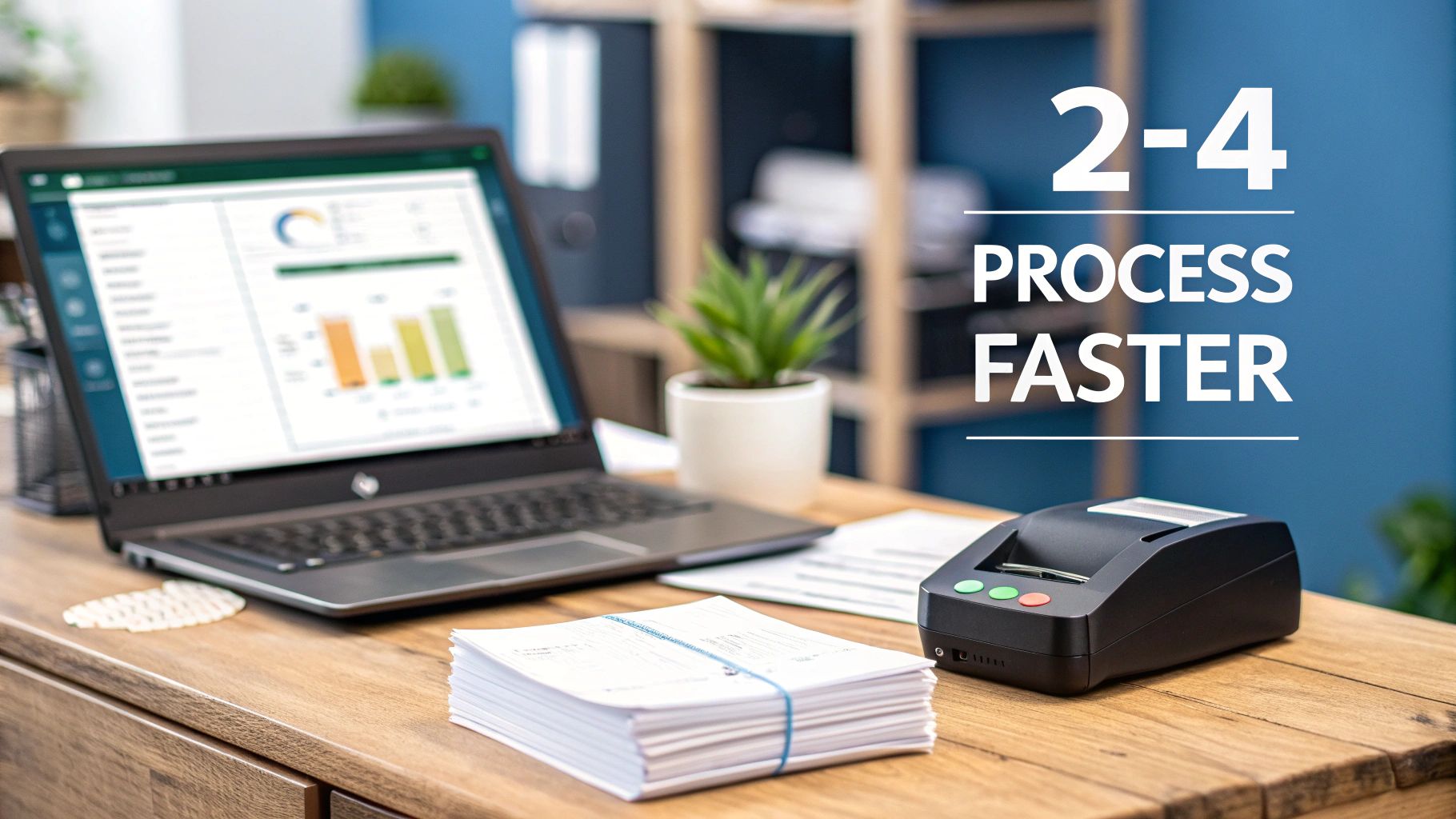
This isn't just a small time-saver; it’s a huge deal for a small business. It lets your team stop doing boring data entry and start doing more important things. Instead of being buried in paperwork, they can focus on things like calling suppliers to get better prices, looking at where the money is going to find savings, and building good relationships. This is one of the first and biggest accounts payable automation benefits you'll notice. By using modern tools, you can truly use AI document processing to end manual data entry and spend way less time on bills.
Real-World Impact
- A law firm I know cut the time it took to process a bill from three weeks down to just four days.
- A local construction company started automating bills from their subcontractors, which cut the time it took to check and approve them in half.
- With MyOfficeOps, a healthcare practice in Philly stopped waiting to do bills in big batches. Now they do them every day, so they always know exactly how much cash they have.
How to Get Started
- Start Small: Don't try to do everything at once. Begin by automating the easy, regular bills first, like your rent or electric bill.
- Map Your Workflow: Before you get software, figure out who needs to approve what. A clear chain of command for approvals stops things from getting stuck later. For more on this, check out the basics of a modern accounts payable process.
- Train and Verify: Make sure your team knows how to use the new system. It's a good idea to double-check the first 50-100 bills the software handles to make sure it's grabbing the information correctly.
2. Catch Early Payment Discounts and Manage Your Cash Better
What if your bills came with a discount? Many suppliers offer a small discount, like 2% off, if you pay them in 10 days instead of 30. When you're dealing with a pile of paper bills, it's easy to miss these deadlines and leave money on the table. AP automation fixes that. It's like having a financial watchdog that’s always looking for these deals for you. The system automatically spots bills with discounts and schedules the payments so you get those savings every time.

It's not just about discounts. Automation helps you be smart with your cash. Instead of paying bills as soon as they come in, the system can time the payments to let you hold onto your cash as long as possible without being late. This smart scheduling helps you avoid running low on cash and gives you more money to work with. This is one of the most powerful accounts payable automation benefits for small businesses because it puts more money directly in your pocket. A good payment plan is a big part of learning how to increase business profitability without making huge changes to your business.
Real-World Impact
- A law firm with about $2 million in bills each year saved over $40,000 in one year just by always getting those early payment discounts.
- A healthcare clinic in West Chester used automation to pay its suppliers five days faster on average, which freed up almost $50,000 of cash.
- MyOfficeOps helped a local IT company organize its payments better, which cut its bank transfer fees by 30% for the year.
How to Get Started
- Audit Your Vendors: Look at the agreements with your top suppliers to see what discounts they offer. Make a simple list to keep track of them.
- Set Up Automated Alerts: Set up your AP software to send you and your team a reminder about 10 days before a discount is about to expire.
- Prioritize High-Value Discounts: Look at your cash forecast to decide which discounts are worth taking. A 2% discount might not be worth it if it means you'll be short on cash.
3. Better Compliance, Audit Trails, and Tax Reporting (Compliance)
Think of an audit like a surprise test you always want to pass. AP automation creates a perfect, digital study guide for every single payment, making sure you always have the right answers. It automatically keeps a complete, unchangeable record of every bill, every approval, and every payment—down to the exact second it happened. This digital paper trail is your best friend during an audit.
The system doesn't just keep records; it helps you follow the rules for taxes and regulations. For instance, it can manage important paperwork like W-9 forms for freelancers and help with special rules in different industries, like healthcare or construction. By making these things digital and automatic, one of the key accounts payable automation benefits is that it greatly lowers your risk of breaking rules and cuts down the time you spend getting ready for audits. It turns a stressful scramble for papers into a calm, simple report you can get with the click of a button.
Real-World Impact
- A local healthcare clinic passed a big government audit with zero problems because they used their automated AP records to prove their payment process was secure.
- A Philadelphia professional services firm cut its audit time from four weeks down to just two by giving auditors instant access to their digital AP files.
- With MyOfficeOps, a construction company in West Chester made its audit much simpler by using the system to instantly show proof of payments to subcontractors and their compliance papers.
How to Get Started
- Define Approval Rules: Before you start, write down exactly who can approve payments and for how much. These rules should be programmed right into the system.
- Set Up User Roles: Give people different levels of access. For example, the person who enters a bill shouldn't be the same person who approves the payment for it.
- Automate Document Collection: Set up the system to automatically collect and keep track of supplier documents like W-9 forms and insurance certificates, and have it tell you if any are missing or expired.
4. Fraud Prevention and Better Payment Controls (Risk-Reduction)
If you're not careful, your bill-paying process can be an easy target for fraud. When you do everything by hand, you're counting on busy people to catch every problem. This makes it easy for things like fake bills, paying the same bill twice, or unapproved spending to happen. AP automation acts like a security guard, building powerful fraud-spotting and approval rules right into the process. It automatically flags anything that looks strange, like a bill from a supplier you've never used before or a duplicate bill, before any money is paid.
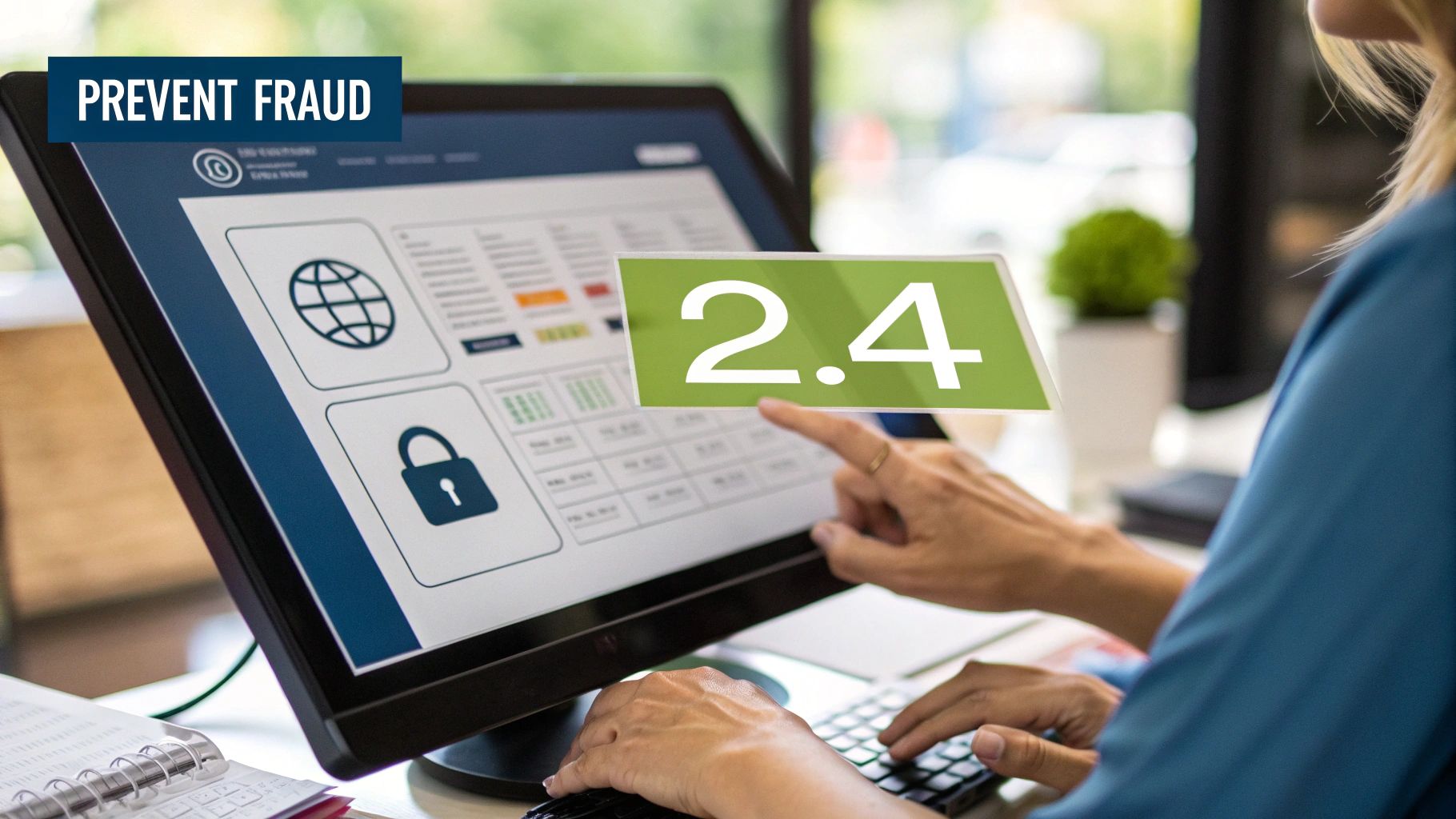
This level of security is one of the most important accounts payable automation benefits for any business. The system follows your rules all day, every day, checking every payment against your limits and approved supplier lists. Instead of finding out about fraud months later, you can stop it from happening in the first place. Setting up strong internal controls to prevent fraud is the key to financial safety, and automation is the best way to make sure those controls are followed every time without mistakes.
Real-World Impact
- A professional services firm in Philadelphia used its automated system to check suppliers and caught a fake $25,000 bill from a made-up company.
- A law practice in West Chester found that its system was catching and stopping an average of $8,000 in duplicate payments every month.
- MyOfficeOps helped a healthcare practice set up strict rules for checking new suppliers. It automatically blocked a payment to a new company that didn't pass a background check, preventing a potential scam.
How to Get Started
- Set Clear Approval Limits: Decide who can approve payments and for how much. For example, a manager can approve anything up to $1,000, but anything more needs a director's approval.
- Establish Vendor Rules: Create a strict process for adding new suppliers that includes checking them out first. Your AP system should only allow payments to suppliers on this approved list.
- Review Flagged Transactions: Once a week, look at any payments the system has flagged or blocked. This helps you see if there are any patterns or problems in your process.
5. Better Supplier Relationships Through Clear Communication
Think about your best suppliers. They deliver on time and are easy to work with. Now, how do they think of you? If you pay late, lose their bills, or make them call over and over to get paid, it can ruin a good relationship. AP automation flips that around by creating a clear, predictable, and professional payment process that suppliers appreciate.
Automation makes sure suppliers get paid on time, every time. It can send them automatic updates when their bill is received, approved, and paid. This gets rid of the frustrating "Did you get my bill?" phone calls. Being reliable doesn't just make you a good customer; it helps you get better prices, discounts for paying early, and better service. Better relationships with suppliers is one of the most underrated accounts payable automation benefits, and it can really help your business.
Real-World Impact
- A local construction company got 3-5% discounts from its material suppliers by paying them consistently in 15 days and sending automatic updates.
- A healthcare practice in Philly became a favorite customer of its medical suppliers by having a predictable payment schedule, which means they never run out of important supplies.
- An IT company in West Chester cut down on arguments over bills by 70% by giving suppliers a way to check the status of their bills online.
How to Get Started
- Communicate Proactively: Before you switch systems, let your suppliers know about the change and tell them they can expect to be paid faster.
- Set Up Automated Confirmations: Set up your system to send automatic emails to confirm when a bill is received and when it's paid. Include important details like the invoice number and payment date.
- Standardize Your Terms: If you can, create standard payment schedules for different types of suppliers. This makes things simpler for you and sets clear expectations for them. At MyOfficeOps, we help our clients set up these kinds of professional systems.
6. Real-Time View of Your Finances and Cash Flow
Guessing about how much cash you have can lead to big problems. AP automation replaces guesswork with facts by connecting directly to your accounting software. It gives you a live, clear picture of your finances. It organizes all your unpaid bills and scheduled payments on easy-to-read screens, so you know exactly what you owe and when it's due.
This instant access to information is one of the most powerful accounts payable automation benefits for any business owner. Instead of digging through papers or waiting for a report at the end of the month, you get real-time information right away. This lets you plan for your cash needs, manage your money well, and make smart decisions about hiring, buying new equipment, or expanding your business. You can finally stop being surprised by your finances and start planning ahead.
Real-World Impact
- A healthcare practice looked at its spending reports and found that one type of contract was 35% of its total spending. This led to a new deal that saved them $40,000 a year.
- A services firm in West Chester used the system to predict its cash needs two months in advance, which helped them avoid taking out a costly loan.
- With MyOfficeOps, a construction company in Philly noticed that one of its suppliers was always paid 12 days slower than others. This allowed them to fix the issue and improve their cash flow.
How to Get Started
- Define Key Metrics: Before you start, figure out which numbers are most important to your business. This could be how long it takes you to pay bills, your spending in different categories, or your cash cycle.
- Create Dashboards: Set up a simple screen that shows your most important numbers, like which bills are overdue and your cash forecast. This makes it easy to understand a lot of information quickly.
- Schedule Regular Reviews: Make looking at your finances a regular habit. Set up a monthly meeting to look at your AP data and talk about what you're spending money on. Understanding these numbers is key to avoiding common cash flow problems in small businesses.
7. Supports Your Business as It Grows (Operational)
As your business gets bigger, the last thing you want is for your office work to slow you down. More customers and projects mean more bills. If you're doing everything by hand, this can become a huge problem, forcing you to hire more people or live with delays and mistakes. AP automation is built to grow with you. It can handle a lot more bills without you needing to hire more people.
The system acts as the backbone of your operations, handling growth without any issues. It doesn't matter if you have ten bills or a thousand; the automated system processes them with the same speed and accuracy. This lets your team stay small and focused on the important work that helps your business grow, instead of drowning in paperwork. For any company that wants to get bigger, this is one of the most important accounts payable automation benefits.
Real-World Impact
- A professional services firm in Philadelphia grew its sales from $5M to $25M without hiring any new AP staff. Automation handled the 5x increase in bills.
- A local healthcare practice opened three new clinics in one quarter and handled all the new bills with no delays.
- A construction contractor in West Chester grew from one location to five, while still paying all its bills in an average of three days.
How to Get Started
- Choose a Cloud-Based Solution: Pick a system that is known for being able to grow, like Bill.com or AvidXchange. Make sure it can easily handle over 1,000 bills a month so it will still work as you get bigger.
- Document Your Growth Plans: Think about how your business might grow. Will you add new departments or locations? Make sure the AP system you choose can handle that. Our team at MyOfficeOps can help you match your bookkeeping services with your growth plans.
- Build a Flexible Approval Hierarchy: Set up an approval process that can be easily changed as your team grows and people's jobs change. This stops things from getting stuck when you add new managers or departments.
8. Faster Month-End and Year-End Closing (Operational)
Closing the books at the end of the month can feel like a mad dash, with your team chasing down missing bills and fixing mistakes at the last minute. AP automation turns this stressful race into a smooth and predictable process. Because it captures, codes, and gets all bills approved in real-time during the month, the system makes sure your books are always correct and up-to-date.
This means there are no surprises when it's time to close the books. All the financial information is already in the system and checked, so you don't have to waste time chasing people down or making manual corrections. This is one of the best accounts payable automation benefits for any business owner who dreads the end of the month. It changes closing the books from a stressful mess into a simple review.
Real-World Impact
- A law firm in Philadelphia used automation to close its books for the month by the 5th business day, which was a big improvement from its old average of the 12th.
- A healthcare practice can now get its monthly profit reports two days earlier, which helps them make faster and better decisions.
- By automating its AP, a local construction company finished its year-end closing one week early, which helped them get their reports to the bank faster.
How to Get Started
- Establish a Clear Cut-Off: Set a firm deadline for bills. For example, all bills for the month must be in by the second business day of the next month.
- Automate Pre-Close Reports: Set up your system to automatically create reports a few days before the end of the month. These reports should show any missing bills, approvals that are still waiting, or other problems that need to be fixed.
- Schedule AP Close Procedures: Use your software to schedule closing tasks to run automatically on the last day of the month. This makes sure the close is done on time, every time.
9. Keep Your Vendor Information Clean and Accurate
Your list of suppliers can get messy fast. Bills come in with slightly different company names, old bank information stays in the system, and soon you have several different entries for the same company. This isn't just messy; it can lead to paying the wrong person or even fraud. AP automation cleans this up by being a strict gatekeeper for your supplier information. It makes sure every piece of information is correct and checked from the start.
Think of it as an automatic bouncer for your supplier list. The system can spot possible duplicates, check bank account information before a new supplier is approved, and make sure all the necessary papers, like a W-9 form, are on file. This is one of the most important behind-the-scenes accounts payable automation benefits, and it stops expensive mistakes before they happen. For businesses that work with hundreds of suppliers, this level of control is key for paying correctly and managing suppliers well.
Real-World Impact
- A local healthcare practice used the system to find 47 duplicate suppliers in its list, which let them clean it up and reduce their number of active suppliers by 20%.
- A services firm in Philly stopped a $15,000 payment from going to the wrong account by using a system that automatically checks a supplier's bank information when they are added.
- MyOfficeOps helped a construction company in West Chester speed up its process for adding new suppliers from a 10-day manual job to just two days using an automatic workflow.
How to Get Started
- Audit First: Before you automate, do a full check of your current supplier information. Find and merge any duplicates and remove any suppliers you don't work with anymore.
- Define Your Rules: Make clear rules for your supplier data. Who is in charge of it? How often is it updated? Who has to approve a new supplier? A good accounts payable process starts with good data.
- Automate Onboarding: Set up a workflow in your system for adding new suppliers. Make sure fields like tax IDs and bank details are required so you get all the information you need right away.
10. Less Admin Work and More Productive Staff (Operational)
Think about your accounting team. How much of their day is spent on boring, repetitive tasks like typing in bill details, chasing people for approvals, and printing checks? AP automation takes this work off their plate, changing their jobs from data entry clerks to smart financial thinkers. The system does the boring work, so your team can focus on things that actually help the business grow.
This is more than just making things easier; it's a big change in how your finance team works. By automating the grunt work, you unlock the real talent of your employees. Instead of being stuck with paperwork, they can spend their time looking at spending, getting better deals with suppliers, and giving you information that helps you make better business decisions. This boost in productivity is one of the most powerful accounts payable automation benefits, and it helps your company run better and smarter.
Real-World Impact
- At a local law firm, the AP team went from spending 70% of their time processing bills to 70% of their time managing supplier relationships and finding ways to save money after they started using automation.
- The accounting manager at a healthcare practice in the Philly area got back 15 hours a month, which she now uses for financial planning and forecasting.
- A bookkeeper at a construction company in West Chester went from doing boring data entry to analyzing the costs of different jobs, which gives the company important information on which projects are most profitable.
How to Get Started
- Benchmark Your Time: Before you start, figure out how many hours your team spends on manual AP tasks each week. This gives you a clear "before" picture to compare against.
- Redefine Roles: Write new job descriptions that focus on more important tasks. Change the focus from "processing bills" to "managing supplier payments and analyzing spending."
- Invest in Training: Make sure your team gets good training not just on the new software, but also on how to use the information it provides. This helps them step into their new, more important roles.
- Create Development Plans: Work with your staff to help them learn new skills in areas like financial analysis and negotiation, so they can grow with the technology. At MyOfficeOps, we help businesses manage this change and turn their back office into a strategic part of the company.
AP Automation Benefits — 10-Point Comparison
| Item | Implementation Complexity 🔄 | Resource Requirements ⚡ | Expected Outcomes ⭐📊 | Ideal Use Cases 💡 | Key Advantages 📊⭐ |
|---|---|---|---|---|---|
| Reduced Processing Time and Manual Data Entry (Operational) | Moderate — OCR training, workflow mapping | Moderate — OCR, integration, staff training | 60–80% less processing time; seconds per invoice; faster month‑end | High‑volume standardized invoices; SMBs with month‑end bottlenecks | Faster throughput; fewer errors; staff reallocated to strategic work |
| Cost Savings Through Discount Capture and Payment Optimization (Financial) | Moderate — payment engine & forecasting integration | Moderate — vendor data, cash forecasting, integrations | Capture 2–5% discounts; $8K–$100K+ annual savings; 5–10 day cycle reduction | SMBs with tight cash flow and discountable terms | Improved working capital; lower fees and penalties |
| Enhanced Compliance, Audit Trail and Tax Reporting Support (Compliance) | High — RBAC, retention policies, tax config | High — secure storage, backups, ongoing maintenance | 40–50% reduction in audit prep; complete immutable trails; accurate 1099s | Regulated industries and audit‑heavy organizations | Reduced compliance risk; faster audits; clear evidence of controls |
| Fraud Prevention and Payment Authorization Controls (Risk-Reduction) | Moderate–High — anomaly rules, vendor validation | Moderate — vendor verification services, monitoring | Prevents 80–95% common AP fraud; high duplicate detection accuracy | Organizations exposed to invoice fraud or payment diversion | Strong controls; fewer fraud losses; consistent approval enforcement |
| Improved Supplier Relationships Through Transparent Communication (Supplier-Relations) | Low–Moderate — vendor portal and notifications | Low — portal setup, vendor onboarding effort | 95%+ on‑time payments; ~70% fewer disputes; potential 3–5% pricing gains | Businesses seeking better vendor terms and retention | Better vendor satisfaction; fewer inquiries; negotiation leverage |
| Real-Time Financial Visibility and Cash Flow Management (Analytics) | Moderate — dashboarding and data hygiene | Moderate — BI tools, clean chart of accounts | Real‑time cash view; ~85% forecast accuracy; 3–5% spend reduction opportunities | SMBs needing forecasting and spend control | Data‑driven decisions; improved forecasting; cost visibility |
| Scalability and Growth Support (Operational) | Low–Moderate — cloud config, multi‑entity setup | Moderate — cloud subscription, API integrations | Handle 5x invoice volume w/out staff increases; high uptime | Rapidly growing companies, multi‑location rollouts | Scales without proportional headcount; consistent performance |
| Faster Month-End and Year-End Close Cycles (Operational) | Moderate — cut‑off enforcement, accrual automation | Moderate — GL integration, automated reports | 5–10 day faster close; 90%+ invoices captured before period end | Firms needing accelerated reporting and stakeholder updates | Accelerated close; fewer adjustments; earlier management insight |
| Vendor Master Data Governance and Accuracy (Operational) | Moderate — initial cleanup and governance | Moderate — verification services, periodic audits | 90%+ duplicate reduction; ~99.9% payment data accuracy | Organizations with large or fragmented vendor bases | Fewer mispayments; better spend analytics; faster onboarding |
| Reduced Administrative Overhead and Staff Productivity Gains (Operational) | Low–Moderate — workflow automation and change mgmt | Low–Moderate — RPA/automation tools, training | 60–80% reduction in manual AP work; 10–15 hrs/month freed per staff | SMBs with small finance teams wearing multiple roles | Redeploy staff to strategic tasks; improved morale and retention |
Ready to Get Started? It's Easier Than You Think.
We've just gone through a long list of accounts payable automation benefits, and the takeaway is clear. This isn't just about moving digital papers around instead of real ones; it's a major upgrade to how your business works. Getting away from doing AP by hand means turning a slow, expensive, and mistake-prone part of your office into a smooth, smart asset that helps your business make more money.
Think back to the main points we covered. We saw how automation saves huge amounts of time, freeing up your team to do more important work. We looked at the real money you can save, from getting discounts for paying early to getting rid of late fees and duplicate payments. And the power of having a digital, searchable record for every payment is a game-changer when it comes to audits and taxes, giving you peace of mind and making audits less of a pain.
But the benefits go even deeper, affecting every part of your business. By putting strong digital controls in place, you greatly lower the risk of expensive payment fraud. You build stronger, more reliable relationships with your suppliers through clear, on-time payments. And maybe most importantly, you get a real-time view of your cash flow, which lets you make smarter, data-driven decisions that help your business grow.
The Real Barrier Isn't Technology, It's Inertia
For many business owners, especially in busy fields like construction, healthcare, or professional services, the list of accounts payable automation benefits sounds good. But the idea of setting up a new system feels like too much work. You're busy running your business, managing projects, and taking care of clients. The thought of researching software, moving data, and training your team seems like a mountain you don't have time to climb.
This is a common feeling, but it's based on a misunderstanding. The point of automation isn't to give you another complicated thing to do. It's to permanently take dozens of tasks off your plate. The right way to do it isn't to buy some software and hope it works; it's to work with experts who can manage the change for you and make sure it's set up for how your business works.
You don’t need to become an expert in AP automation. You just need a partner who already is.
Key Takeaway: Moving to an automated AP system isn't a project you have to do all by yourself. The best setups are handled by specialists who take care of the technical stuff, so you can focus on running your business and see the benefits almost right away.
Your Actionable Next Steps
Feeling motivated? Good. Don't lose that momentum. Here are three simple, practical steps you can take right now to start making your business more efficient and profitable:
- Quickly Assess Your Current Pain Points: Grab a pen and paper and write down the top three things that annoy you about how you pay bills now. Is it lost bills? Chasing down approvals? The amount of time it takes? Knowing the problem is the first step to fixing it.
- Calculate Your "Manual AP" Cost: Guess how many hours a week your team (or you!) spends on manual AP tasks like opening mail, typing in data, and stuffing envelopes. Multiply that by an hourly wage. The number you get is the real cost of not automating.
- Schedule a No-Obligation Chat: You don't need to have all the answers. Talk to a professional who understands the challenges that businesses in the Greater Philadelphia area face. A simple conversation can give you a clear, personalized plan and show you just how possible this change really is.
Embracing the full spectrum of accounts payable automation benefits is one of the most powerful things you can do to build a stronger, more scalable, and more profitable company. The technology is here, the path is clear, and the rewards are waiting. The only thing left to do is take that first simple step.
At MyOfficeOps, we are that expert partner for businesses in West Chester and the Greater Philadelphia region. We don’t just recommend software; we implement and manage a complete, outsourced accounting system that handles the technical heavy lifting for you. Schedule a free Discovery Call with us today to see how straightforward and impactful AP automation can be for your business.