
Getting paid is about making it easy for your customers. It means you need simple, clear steps for getting the money you've earned into your bank account. You need to set clear payment rules before you start work, send invoices that are easy to understand, and have a plan for what to do when payments are late.
When you do this right, waiting for payments stops being a headache and becomes a steady stream of cash for your business.
Why Getting Paid on Time Is So Important

Let's be real. Waiting for money you've already earned is one of the hardest parts of running a business. We sometimes think of accounts receivable (AR) as just another chore, but it’s much more than that. It’s what keeps your company running.
Think of it like this: every dollar stuck in an unpaid bill is a dollar you can't use. You can't use it to pay your own bills, pay your employees, or grow your business. A good AR process helps you keep the lights on and plan for the future.
What Happens When You Don't Manage AR Well
I once knew a contractor who looked super successful. His team was always busy, and he had lots of work. But he was always short on cash and even had to borrow money to pay his team.
His problem wasn't his business. It was his messy way of getting paid. He sent bills weeks late, didn't explain how to pay, and had no plan for late payments. He was letting thousands of dollars sit in his customers' bank accounts instead of his own.
Getting your accounts receivable right isn't just about good paperwork—it's about building a strong business. It's the difference between looking like you're doing well and actually doing well.
This story is super common. A lot of business owners focus so much on getting new work that they forget the last, most important step: getting paid for it. To start, it helps to understand the basics of Mastering Accounts Receivable Accounting.
When you make getting paid a top priority, you can unlock the cash your business has already earned. A good system gives you:
- Better Cash Flow: You get your money faster. This gives you more freedom to run your business. If you worry about cash flow problems in your small business, a good AR system is the first thing to fix.
- Less Stress: Knowing when you'll get paid makes planning easier and takes a big weight off your shoulders.
- Happier Customers: A clear, professional process for billing keeps things friendly. You won't have to have awkward "where's my money?" talks later.
Set Clear Rules Before You Start
A good payment process doesn’t start when you send a bill. It starts before you even do the work. You need a simple policy that you and your customers understand from day one.
Think of it like setting the rules of a game before you play. This isn't about creating a huge legal document no one reads. It's about being clear to avoid confusion and late payments. A simple policy protects your business without scaring customers away.
Who Gets Credit and For How Long?
Deciding who to let pay later can be tricky. You want to be flexible, but you also need to get paid.
A good idea is to have new clients fill out a simple credit application, especially for big jobs. This doesn't have to be a big investigation. A one-page form asking for their business info and a few references is usually enough.
For smaller jobs, you can ask for a deposit or full payment upfront. For example, a dentist might ask new patients to pay right away but let regular patients get a bill. A marketing company working on a big project might check references and then offer Net 30 terms after the first month is paid upfront. The important thing is to have a consistent plan.
Your credit policy isn't about being mean; it's about being smart. It helps you learn about a new customer's payment habits before you do a lot of work for them. A little homework at the start can save you a big headache later.
Once you decide to offer credit, the next step is to decide how long they have to pay. This is where your payment terms come in.
Set Payment Terms That Make Sense
Payment terms tell your customer exactly when you expect to be paid. Being unclear here is a recipe for trouble. Common terms you’ll see are:
- Due Upon Receipt: This means they should pay as soon as they get the bill. It's great for one-time jobs or new clients.
- Net 15 or Net 30: The full payment is due 15 or 30 days after the date on the bill. These are very common for businesses that work with other businesses.
- 50% Upfront, 50% on Completion: This is a great choice for project-based work, like for a builder or a consultant. It makes sure you have money to start the job and lowers your risk.
Pick terms that are normal for your industry but also work for your business. If you have to pay your own suppliers in 15 days, offering your customers 60 days to pay you will cause a serious cash problem.
The most important part? Put these terms clearly on every contract, proposal, and bill. Don't hide them in small print. Make them bold and easy to see so there are no surprises.
Your Simple AR Policy Checklist
Making a policy can feel like a big job, so let’s break it down. Use this checklist to make sure you’ve covered the important stuff. Your policy should clearly explain:
- Credit Application Process: How will you decide who can pay later? Will you use a form? Will you check references?
- Standard Payment Terms: What are your usual terms (like Net 30)? Write them down.
- Invoice Delivery: When will you send bills? Right after the work is done, or on a certain day each month?
- Accepted Payment Methods: Do you take checks, credit cards, or bank transfers? The easier you make it to pay, the faster you'll get your money.
- Late Payment Penalties: Will you charge a fee for late payments? A common fee is 1.5% per month on the amount that's late.
- Collections Process: What happens when a bill is 30, 60, or 90 days late? List the steps you'll take, from a friendly email to a final warning.
By deciding these six things, you create a plan that makes your payment process consistent. It makes things predictable for both you and your customers, which is the key to getting paid on time.
Create Invoices That Get Paid Faster
Let's face it: your invoice is more than just a bill. It's a message that can get you paid this week or next month. Think about it—a confusing or messy invoice is easy for a client to put aside and forget about.
But a clear, simple, and professional invoice makes it easy for them to pay you right away. This isn't about fancy design. It’s about making it super easy to pay. The easier you make it for your customer, the faster you get your money.
What Every Great Invoice Includes
Your invoice needs to answer a few simple questions without making your client think too hard. If they have to call you to ask what something means, you've already created a delay.
Make sure every single invoice you send has these things, plain as day:
- Your Company Information: Your business name, address, and phone number.
- Customer Information: Their full name and address. Getting this right shows you pay attention.
- A Unique Invoice Number: This is super important for keeping track of payments. It makes it easy to talk about a specific bill.
- Dates: Always include the date you sent the bill and, most importantly, the payment due date. Make that due date bold so they can't miss it.
- A Detailed Description: Don’t just write "Consulting." Break it down: "Marketing Strategy Meeting – 2 Hours" or "Website Homepage Design." Unclear descriptions are a top reason for late payments.
- Clear Payment Terms: Remind them of the terms you agreed to, like Net 30 or Due Upon Receipt.
An invoice should tell a clear story: who you are, who they are, what you did for them, how much it costs, and when they need to pay. If any part of that story is blurry, you’re asking for delays.
Make Paying You as Easy as Possible
Once the "what" and "when" are clear, you have to make the "how" really simple. In my experience helping business owners, this is the biggest change you can make to get paid faster.
Think about how you pay your own bills. Do you like writing a check and finding a stamp? Probably not. Your clients are the same. Give them easy, modern ways to pay you.
- Add an Online Payment Link: Put a "Pay Now" link right on your invoice that they can click. This one change can cut your payment time in half.
- Accept Different Payment Types: Let them pay with credit cards, bank transfers, or apps like Apple Pay or PayPal. The more choices they have, the fewer excuses they have for not paying.
Late payments are a huge problem. Studies show 39% of business-to-business invoices in the U.S. are paid late. The good news? 80% of U.S. business payments are expected to be digital by 2025. This means online billing and payment options are a must-have for getting paid on time.
Timing Is Everything
When you send your invoice is also a big deal. The best time to send it is right after the work is done, while they still remember how great your work was.
A contractor who just finished a kitchen remodel should send the final bill that same day, not at the end of the month. A design company should send a bill each time a part of the project is finished.
I once worked with a marketing agency that got its cash 30% faster with just two small changes. First, they made their invoices cleaner and added a "Pay Now" button. Second, they stopped sending all their bills on the last Friday of the month and started sending them as soon as a project was approved. The results were immediate.
To really speed things up, you can learn how to automate invoice processing. This makes sure every bill goes out on time without you having to do anything.
Use Smart Automation to Make Life Easier
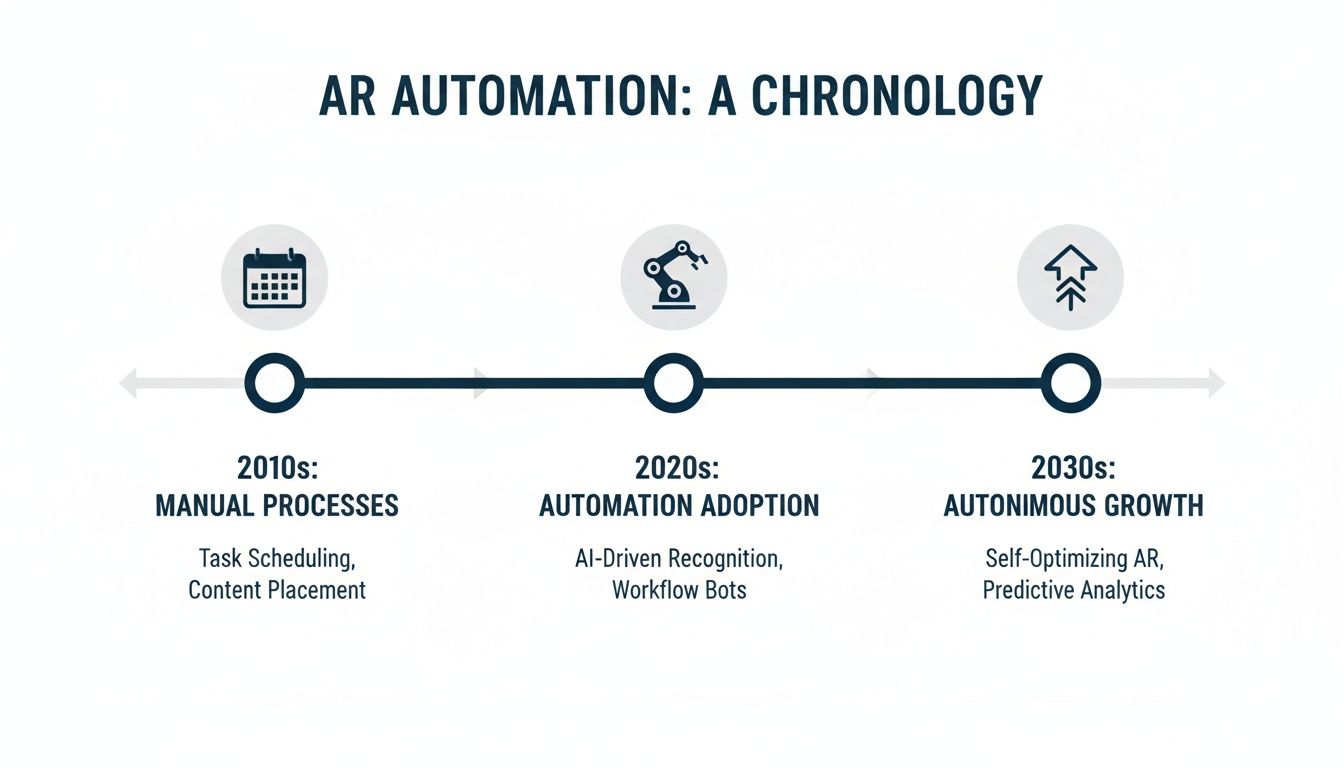
Sending reminders and chasing down payments by hand can feel like a full-time job. It’s boring work that takes up hours you don't have. This is where technology can help. Accounts receivable (AR) automation isn't about some fancy, expensive software; it's about using simple tools to do the repetitive tasks for you.
Think of it like hiring a super-organized assistant who never forgets to follow up and works 24/7. These systems can automatically send friendly reminders when a bill is due soon or is a little late. This simple step can make a huge difference in getting paid faster.
Instead of staring at a list and guessing who owes you money, automation gives you a clear picture of everything. You can see who has paid, who is late, and how much money is coming in. It’s all about working smarter, not harder.
What Does AR Automation Actually Do?
So, what does this look like in the real world? Imagine you run a doctor's office. Before, your office manager spent hours each week printing bills, stuffing envelopes, and making awkward phone calls to patients. It was stressful for her and made things weird with patients.
After they started using a simple AR tool, everything changed. Here’s what the software started doing on its own:
- Sending Friendly Reminders: A week before a bill was due, the system sent a polite email: "Just a friendly reminder that your payment is due next week. You can pay online here."
- Following Up on Late Payments: Three days after a bill was late, another automatic email went out. It was still friendly but a little more direct: "Looks like your bill is now past due. Please click here to pay."
- Getting Help When Needed: If the bill was still unpaid after 15 days, the system told the office manager to make a phone call. The cool part was that by then, most bills were already paid.
The results were amazing. The office had 25% fewer late payments and actually had better relationships with patients because the staff wasn't stuck being the "bad guy." The money talks were handled by a consistent, professional, and automatic process.
Automation takes the emotion out of collecting money. It turns a task you hate into a reliable process that just works, so you can focus on your real job.
The fact that so many businesses are using these tools shows how well they work. The global market for accounts receivable software is expected to reach almost $3.5 billion by 2025. For business owners like you, the benefits are clear: 91% of mid-sized companies that use AR automation have better cash flow. If you're looking for options, check out our guide on the best accounting software for small businesses, which talks about tools with these features.
Finding the Right Automation Tools
You don't need a huge, complicated system to get started. Many of the best accounting programs have these features built right in. When you're looking for a tool, just focus on a few key things that will save you the most time.
The right tool should definitely help you:
- Automate Invoice Reminders: This is the most important one. Look for software that lets you change the timing and words of your follow-up emails. You want the tone to sound like your business—professional but not mean.
- Offer Online Payment Portals: You have to make it super easy for your customers to pay you. A "Pay Now" button on every bill that links to a simple payment page is a must-have today.
- Provide a Clear Dashboard: You need to see your key numbers in one place. How much money is owed to you? Who are your slowest-paying clients? A good dashboard answers these questions instantly.
For our clients here at MyOfficeOps, using these tools means cleaner books and seeing your financial picture in real time, without all the extra work. It’s one of the easiest ways to manage accounts receivable and get your cash in the door faster.
Develop a Professional Collections Process
Let's be honest, nobody likes asking for money. It feels awkward and it's easy to put off. But following up on late payments is a key part of running a healthy business.
The secret is to stop thinking of it as a fight and start treating it as a normal business process.
When you have a clear plan, it takes the emotion out of it. You're not the "bad guy" for asking for the money you've earned; you're just a business owner following your policy. This approach not only helps your cash flow but can also protect your customer relationships by keeping all communication professional.
Automating the simple parts of this process lets you focus on growing your business, not just chasing cash.
Build a Simple Communication Plan
Your plan for late payments shouldn't start with an angry phone call. It should start with gentle, automatic reminders and only get more serious if a bill is still unpaid. A clear plan makes sure every late payment is handled the same professional way.
Here’s a simple timeline that works for most businesses. It’s all about starting soft and getting a little firmer as a bill gets older. This keeps you in control and shows your customers you’re serious about getting paid on time.
Your goal isn't to surprise a client. It's to create a process where the client knows what to expect if they don't pay. Being consistent is the key to a good collections plan.
Below is a sample timeline you can use for your business. It shows a clear path, making sure every step is handled professionally.
Sample AR Collections Timeline
| Days Past Due | Recommended Action | Communication Method | Tone |
|---|---|---|---|
| 1-15 Days | Send a friendly reminder. Assume they just forgot or missed the bill. Include a link to pay online. | Automated Email | Helpful & friendly |
| 16-30 Days | Make a personal phone call. The goal is to see if there's a problem and get a promise for a payment date. | Phone Call | Concerned & professional |
| 31-60 Days | Send a formal notice saying the account is very late and needs to be paid now to avoid other actions. | Formal Email/Letter | Serious & direct |
| 61-90 Days | Send a final demand letter. Clearly state how much they owe and give a final deadline before you take further steps. | Certified Mail/Email | Firm & urgent |
By following a clear timeline, you don't have to guess what to do next. You can treat every client fairly, which is important for keeping good relationships even when payments are late.
Know When to Offer a Payment Plan
Sometimes, a good customer is just having a tough time. If a long-time client who usually pays on time suddenly falls behind, offering a payment plan can be a great idea. It helps them get back on track and shows you care about the relationship.
Before you offer one, call them. Listen to their situation and agree on a payment schedule that works for both of you. Always get the agreement in writing—a simple email confirming the payment amounts and dates is enough. This protects both of you and makes sure there are no misunderstandings.
But be careful about offering payment plans to new clients or those who are always late. In those cases, it’s often just a way to put off not paying. You can spot these patterns early by using tools like an accounts receivable aging report template to see how quickly customers pay.
When to Call in the Professionals
At some point, you have to know when to stop. Chasing a late payment can end up costing you more in time and stress than the bill is worth. It’s probably time to think about a collection agency when:
- The client stops responding to your calls and emails.
- They keep promising to pay but never do.
- The bill is more than 90 days late, and you've tried everything else.
Collection agencies are experts at getting people to pay. They take a cut of what they collect (usually 30-50%), but getting some of your money is better than getting none of it. It's a tough decision, but it's the right final step in a professional AR process.
Answering Your Top Accounts Receivable Questions
Even with a good system, you'll still have questions. Handling AR often comes down to dealing with a few tricky situations. Here are some of the most common questions I get from business owners, with simple answers.
What Is the Most Important AR Metric to Track?
If you only track one thing, make it Days Sales Outstanding (DSO). Don't let the name scare you. It's just the average number of days it takes for your customers to pay you after you send a bill.
A lower number is always better. It means you're getting your cash faster.
Think of it this way: a DSO of 45 means you're waiting, on average, a month and a half to get paid for work you've already done. If you can get that down to 30, you've just freed up 15 days' worth of cash. That’s money you can use for your business instead of letting it sit in someone else's bank account.
Your DSO is a direct measure of your cash flow health. Tracking it every month is the best way to see if your AR process is getting better.
We help our clients build simple dashboards to watch their DSO. It's not about complicated accounting; it's about always knowing where your cash is so you can make smart choices.
How Should I Handle a Good Customer Who Consistently Pays Late?
This is one of the toughest—and most common—problems you'll face. You have a great client you love working with, but their payments are always slow.
The best first step is to have a friendly chat. Don't assume the worst or send an angry email. People get busy, and bills get lost.
Pick up the phone. A simple, relaxed call can work wonders.
Try saying something like, "Hi [Client Name], I'm just calling to check on your recent invoices. I noticed they're a bit behind, and I wanted to make sure everything is okay and that you received them."
This does two important things:
- It lets them explain what’s going on without feeling blamed.
- It shows that you’re paying attention but still care about the relationship.
Maybe they’re short on cash, or maybe their process for paying bills changed. Once you understand the problem, you can work on a solution together. You might offer a temporary payment plan or help them set up automatic payments. That way, you get paid and you keep a great client.
When Is It Time to Give Up and Write Off a Bad Debt?
Writing off a bad debt should be your very last resort. This is what you do only after you've tried everything else.
Before you even think about it, you need to have followed your collections process perfectly. This means you’ve sent multiple emails, made phone calls, and sent formal letters. If a customer has completely disappeared, gone out of business, or ignored you for several months (over 90 days is a good rule of thumb), then it might be time.
Another thing to think about is the size of the bill. Is it for $200 or $20,000? The hard truth is that chasing a small bill might cost you more in time and legal fees than the bill is even worth. In those cases, writing it off is often the smartest business decision.
But don't make this decision alone.
Before you do anything, talk to your accountant. They can tell you how to correctly record the bad debt for tax purposes. There’s a proper way to do this, and getting it right is important for your financial records. Writing off a debt is tough, but sometimes it’s the right final step to clean up your books and move on.
Managing your accounts receivable well isn't just about getting paid—it's about building a strong business. At MyOfficeOps, we help business owners in West Chester, PA, and beyond create simple, powerful systems to improve cash flow and grow. If you’re tired of chasing invoices and want clear financial insights, we’re here to help. Learn more about our services and schedule a discovery call today.