

When your team uses their own cars for work, you need to pay them back. The easiest way to do this is by using the standard mileage rate set by the government.
For 2024, that number is 67 cents per mile. This single number covers everything – gas, insurance, repairs, and the normal wear and tear on their car. It keeps things simple.
Why Mileage Rates Matter for Your Business
Paying your employees back for miles driven is a simple deal between you and your team. Instead of them saving every gas receipt or you guessing the cost of an oil change, you both use one standard rate. It just makes life easier for everyone.
For your business, using the standard mileage rate keeps your books clean. Every payment you make for mileage is a business expense, which helps lower your taxable income. This is a big deal for employees in sales, construction, or healthcare who drive a lot. They get paid back for using their car, and that money is tax-free for them.
A Fair System for Everyone
Using a standard rate makes the process fair. An employee driving a small car gets the same rate as someone in a big truck. This simple rule stops arguments and keeps your system from getting messy.
The best thing about the standard mileage rate is how simple it is. It takes out the guesswork and creates a clear system where everyone knows what to expect.
Offering mileage reimbursement also opens the door to good small business tax deductions. It’s a smart money move that also keeps your team happy.
The Rising Cost of Driving
It's important to know that these rates change. They go up to match the real-world costs of driving. This chart shows how much the IRS mileage rate has gone up over the last few years.
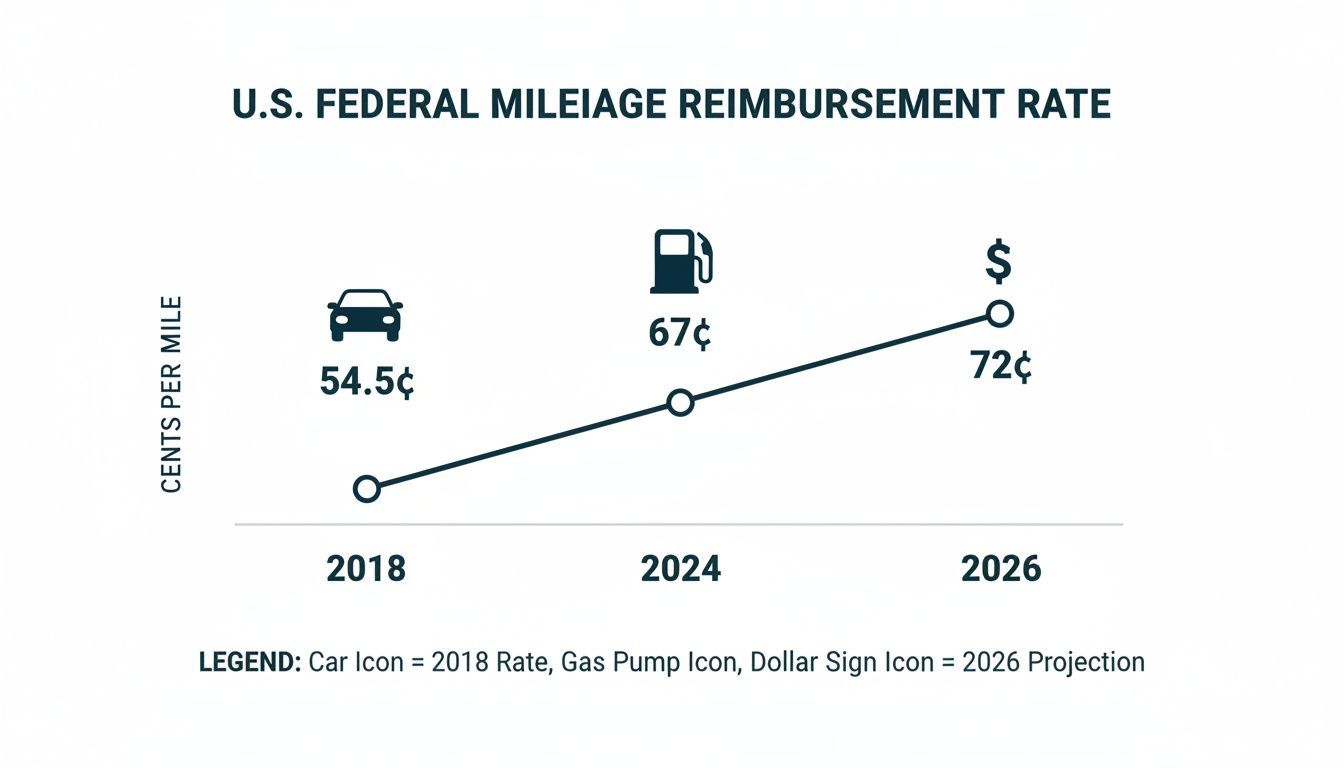
As you can see, the rate is going up because gas and car costs are rising. Here’s a quick look at recent IRS rates to see how it adds up.
Business Mileage Rate Examples
| Year | Rate per Mile (Business) | Reimbursement for 10,000 Miles |
|---|---|---|
| 2021 | 56 cents | $5,600 |
| 2022 | 62.5 cents (mid-year increase) | $6,250 |
| 2023 | 65.5 cents | $6,550 |
| 2024 | 67 cents | $6,700 |
The numbers are clear. The IRS mileage rates have jumped from 58.5 cents per mile in 2022 to 67 cents in 2024. That’s a 14.5% increase in just two years. This trend means bigger tax breaks for businesses and fairer pay for employees.
Choosing Your Reimbursement Method
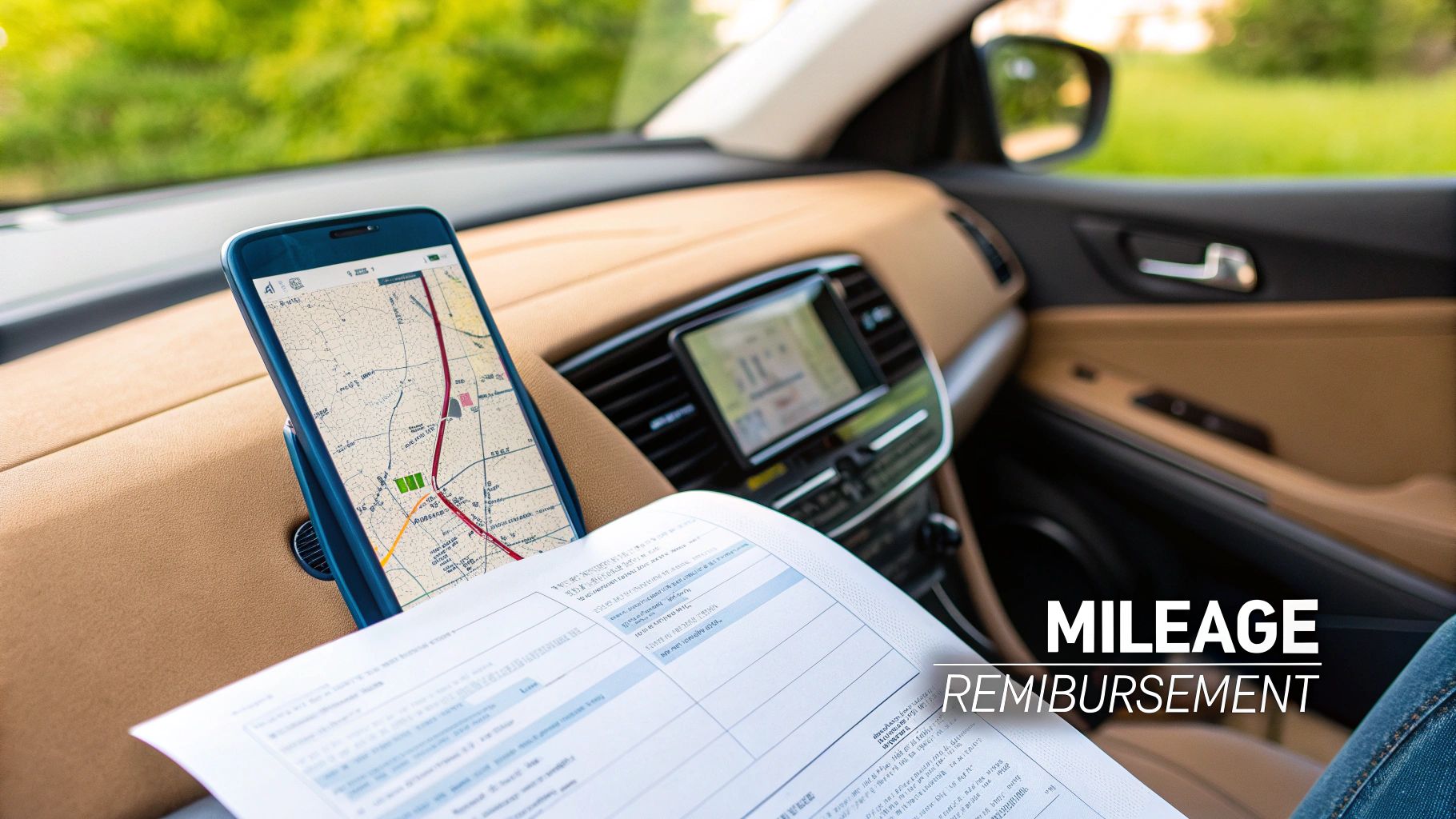
When it comes to paying your team for using their cars, you have two main choices. You can use the simple IRS standard rate, or you can track every single "actual expense."
For most businesses I work with, the standard rate is the way to go. It’s a simple formula: multiply the business miles an employee drives by the current rate, and you’re done. It’s clean, quick, and the paperwork is easy.
The other option, the actual expense method, is a lot more work. It means you have to track and add up every single cost that goes into running a car.
The Standard Rate vs. Actual Expenses
So, what does tracking "actual expenses" mean? It’s a lot more than just gas. You’d need to add up a long list of costs for each employee's car.
- Gas and Oil: The basic running costs.
- Insurance and Registration: The yearly fees to keep the car on the road.
- Repairs and Maintenance: Everything from new tires to fixing a leak.
- Depreciation: This is the hard one—figuring out how much the car’s value has dropped over the year.
As you can imagine, the actual expense method is a big headache. The standard mileage rate for employees is meant to wrap all these costs into one easy number, which is why most businesses use it.
When Does the Actual Expense Method Make Sense?
While the standard rate is usually the best choice, there are times when tracking actual expenses might be worth it. If your team drives vehicles that are very expensive to own and run, this method might give your business a bigger tax deduction.
Think about a contractor whose team uses heavy-duty trucks that use a ton of gas and need expensive repairs. In that case, the real costs could be much higher than what the standard rate covers.
Example: A landscaping company has a crew that drives big work trucks. These trucks get terrible gas mileage and need costly commercial insurance. By tracking the actual costs, the owner found their real expense was closer to 80 cents per mile—much more than the standard rate.
For most businesses, though, the time you save with the standard rate is worth more than any small benefit you might get from tracking every receipt. A good reimbursement process also fits well with your other money systems. If you want to improve how you handle payments, check out our guide on the best payroll software for small business to make the whole process smoother.
Creating a Clear Mileage Reimbursement Policy
Think of your mileage policy as the rulebook for a game. When everyone knows the rules, the game is fair. A good policy does the same thing for your business—it ends confusion, protects your company, and makes sure your team gets paid right and on time.
This doesn't need to be a complicated legal document. A simple, one-page policy is often all you need. The goal is to be super clear so everyone is on the same page.
What to Include in Your Policy
A good policy answers a few basic questions: What is a business trip? How do we track it? When do we get paid? Let's break down what you need to include.
First, your policy has to say what a business trip is. For example, driving from the office to a client’s place is a business trip. So is a trip to the store to pick up supplies for a job.
But the daily drive from an employee’s home to your office is not. The government calls that a personal commute, so you can't pay them back for it. Spelling this out stops any confusion later on.
The most important part of your policy is to be clear. It should leave no room for guessing. An employee should be able to read it and know exactly what to do.
Next, you need to explain how employees should track their miles. Everyone should do it the same way. If one person uses a spreadsheet and another uses a notebook, things get messy.
Pick one official way to do it, whether it’s an app, a shared online log, or a standard form. This makes sure all your records look the same and are easy to handle, which is a huge help at tax time.
The Details That Matter
Your policy also needs to list what info is needed for each trip. To keep your records clean and the government happy, every log entry has to be complete.
- Date: The full date of the trip.
- Start and End Points: The addresses where the drive started and ended.
- Total Miles Driven: The exact number of miles for that trip.
- Purpose of the Trip: A clear business reason, like "Visit Johnson construction project" or "Meeting with ABC Corp."
Finally, tell your team how and when they will get their money. Should they turn in their mileage logs every week or every month? Will the payment be in their next paycheck or paid separately?
Setting a clear schedule makes the process predictable. It shows your team you have an organized system and that you respect the money they spend using their own cars. A good policy builds trust.
How to Keep Accurate Mileage Logs

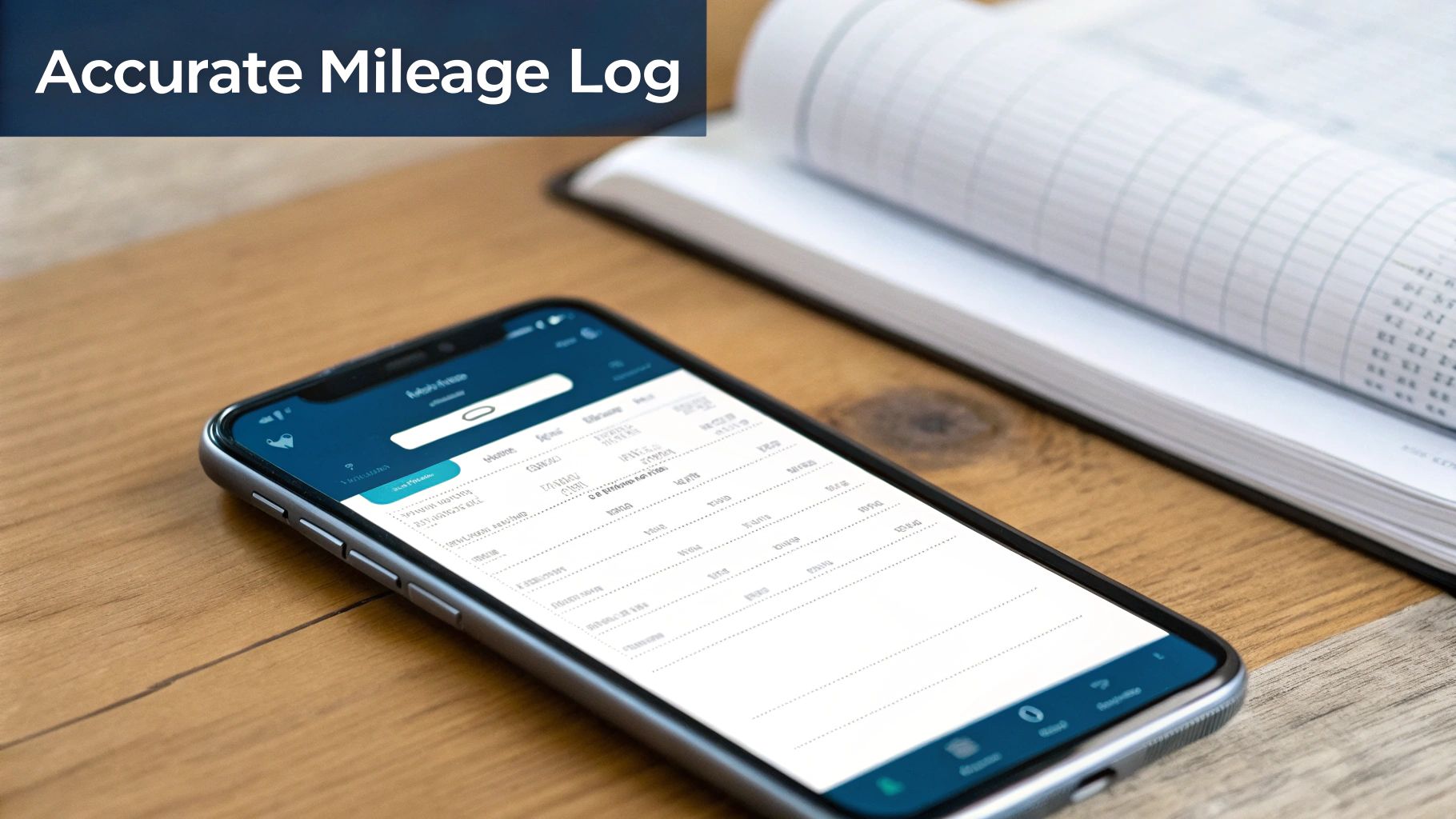
When it comes to taxes, the government wants one thing: proof. If you're going to claim mileage costs, you have to back it up with good records. A proper mileage log is your proof that every mile was for a real business reason.
Think of it like showing your work on a math problem. Just writing the answer isn’t enough; you have to show how you got it. An entry like "client meeting" is too vague and might get you in trouble in an audit.
What you need is a specific reason for the trip. Something like, "Drove to Smith property in Malvern for project bid," is perfect. It’s clear and leaves no doubt the drive was for business.
What Makes a Log "Audit-Proof"
An "audit-proof" log is so clear and complete that it answers an auditor's questions before they even ask them. It's all about being thorough and, most of all, timely.
The government is very strict on this. The main reason mileage deductions get denied in an audit is because people don't keep detailed records at or near the time of the trip. You can find more details on what the IRS requires for vehicle expenses on their official site.
To be safe, every entry in your log must have four key things:
- The date of the trip.
- The total miles driven.
- The destination or where you traveled.
- A specific business purpose for the trip.
This isn’t just good advice—it’s a rule. Guessing your mileage at the end of the year won't work and will almost certainly be rejected by an auditor.
Paper Logs vs. Modern Apps
For years, people used little paper notebooks in their glove compartments. That can work, but it’s easy to forget to write down a trip, make a math mistake, or lose the book. We've all been there.
Today, mileage tracking apps are a much better idea. These apps run on a smartphone and use GPS to automatically log trips as they happen. This saves a lot of time and effort for your team.
Using an app gets rid of human error. You get clean, correct data without anyone having to remember to write down their odometer reading every time they stop the car.
Plus, the data from these apps can often be sent right into your bookkeeping software, making your money management much smoother. For more on this, check out our guide on how to track business expenses effectively.
By using an app for your mileage logs, you get better records and spend less time chasing paperwork. That means more time to focus on what matters: running your business.
Connecting Mileage to Your Payroll and Bookkeeping
Paying for mileage shouldn't be a messy monthly chore. The smart way to handle it is by connecting your mileage tracking to your payroll and accounting systems. This turns a difficult task into a smooth, automatic process.
When you pay the reimbursement through payroll, it shows up as a separate, non-taxable line on an employee’s pay stub. This is a big deal. Because it’s a reimbursement and not a wage, neither you nor your employee has to pay payroll taxes on that money.
This keeps your money records clean, makes sure you’re not overpaying on taxes, and shows your employees exactly what they’re being paid for.
Getting a Clear View of Your Costs
When you link mileage data with your bookkeeping software, like QuickBooks, you get a real-time picture of your company’s travel costs. This information is gold for budgeting and figuring out if your jobs are making money. You stop guessing and start knowing.
Think about a construction company, for example. They can instantly see how much travel money is tied to each project. This helps them bid more accurately on new jobs, protecting their profits from the start.
When your systems are connected, paying for mileage changes from a pain into a source of smart business information. You can finally see the true cost of getting work done.
To really get this working well and make sure your logs are always right, think about implementing robust expense management software. This kind of tool automates tracking and reporting, saving you tons of hours.
Making Smart Business Decisions
Once this data is flowing into your accounting system, you can start making smarter choices. You can see which clients or job sites need the most driving and use that information in your pricing.
This is also very helpful for planning your cash flow. If you know a big project is starting that needs a lot of travel, you can plan for the upcoming reimbursement costs instead of being surprised by them.
In the end, connecting your systems creates one true source for your business finances. If you're looking for help getting these systems working together, see how expert accounting and payroll services can build a smooth financial operation for your company.
A Few Common Questions About Mileage Reimbursement
Let's finish up with quick answers to the questions I hear most from business owners about mileage rates. Getting these details right from the start can save you a lot of trouble.
Is My Drive From Home to the Office Reimbursable?
This is probably the most common question, and the answer is almost always no. The government sees your daily commute from home to your main workplace as a personal expense, like buying lunch. It's not reimbursable or tax-deductible.
But, the moment you leave your office to visit a client, that’s a different story. That trip, and any other travel between job sites during the day, is business travel and can be paid back.
Do I Have to Use the Standard IRS Rate?
You don't, but for most small businesses, it's the smartest and easiest choice. The standard rate is designed to be a simple, no-fuss method. You can choose to pay employees back using the more complicated "actual expense" method if you want.
Keep in mind, if you decide to pay your employees more than the current IRS rate, the government treats that extra amount as taxable income. It's like a bonus, not a reimbursement, and needs to be handled that way in payroll.
How Long Should We Keep Our Mileage Logs?
Hold on to all your mileage logs and any related papers for at least three years after you file the tax return for that year. This is how long the government usually has to start an audit.
Honestly, having detailed, organized records is the best insurance for your business. If your deductions are ever questioned, those clear logs are your best defense. They’re the proof that every mile was for business and every payment was correct.
Managing mileage, payroll, and bookkeeping can feel like a full-time job. At MyOfficeOps, we take that work off your plate so you can get back to what you do best: running your business. Schedule a discovery call with us today and get the financial clarity you need to grow.