
Good bookkeeping is just keeping a record of all the money that comes in and goes out of your business. That's it. Think of it like the dashboard in your car—it tells you how fast you're going, warns you if you're low on gas, and helps you make smart turns. Getting a handle on these small business bookkeeping basics is the first step to being in control of your money.
Why Bookkeeping Is Your Business’s Secret Weapon
A lot of small business owners think bookkeeping is just something you do for tax season. But that’s like only checking your fuel gauge once a year—you’re bound to run into trouble. Your books are a tool you can use every day to make better decisions. It’s the difference between guessing and knowing.
Imagine you run a small coffee shop. You sell a ton of croissants every morning, so you think they're a big money-maker. But your books might tell a different story. After you add up the cost of good butter, flour, and the baker's time, you might find out you're barely making a profit on each one. Meanwhile, that less popular lemon scone actually brings in three times the profit. That’s a secret your sales numbers alone would never tell you.
See the Big Picture Clearly
Without clear records, you're flying blind. A busy contractor might feel like they're working all the time, but without good bookkeeping, they might not realize that kitchen remodels always cost them more in labor and materials than they actually charge. Good books shine a light on these hidden problems before they become big ones. They help you answer important questions:
- Can I afford to hire a new person right now?
- Do I have enough cash to buy that new tool?
- Which of my services are really making me money, and which are just keeping me busy?
Bookkeeping isn't just about recording what happened in the past; it's about drawing a map for the future. It turns confusing numbers into a clear story about your business.
Unfortunately, many people start a business without this map. Studies show that around 60–70% of small business owners don't know much about accounting, which puts them at a disadvantage. This is a big reason so many businesses struggle.
By using your books as a guide, you gain control. You can spot trends, cut costs, and confidently invest in the parts of your business that will actually grow. For a deeper look at setting up a solid financial foundation, check out this comprehensive guide to bookkeeping basics for small business owners. It’s not just about staying out of trouble with the IRS; it’s about building a stronger business.
The Four Core Concepts of Bookkeeping Made Simple
Let's skip the jargon. Good bookkeeping is built on just a few simple ideas. If you can get these four things down, you'll go from feeling stressed about numbers to feeling confident about your finances.
This chart shows how getting your books in order helps your business grow.
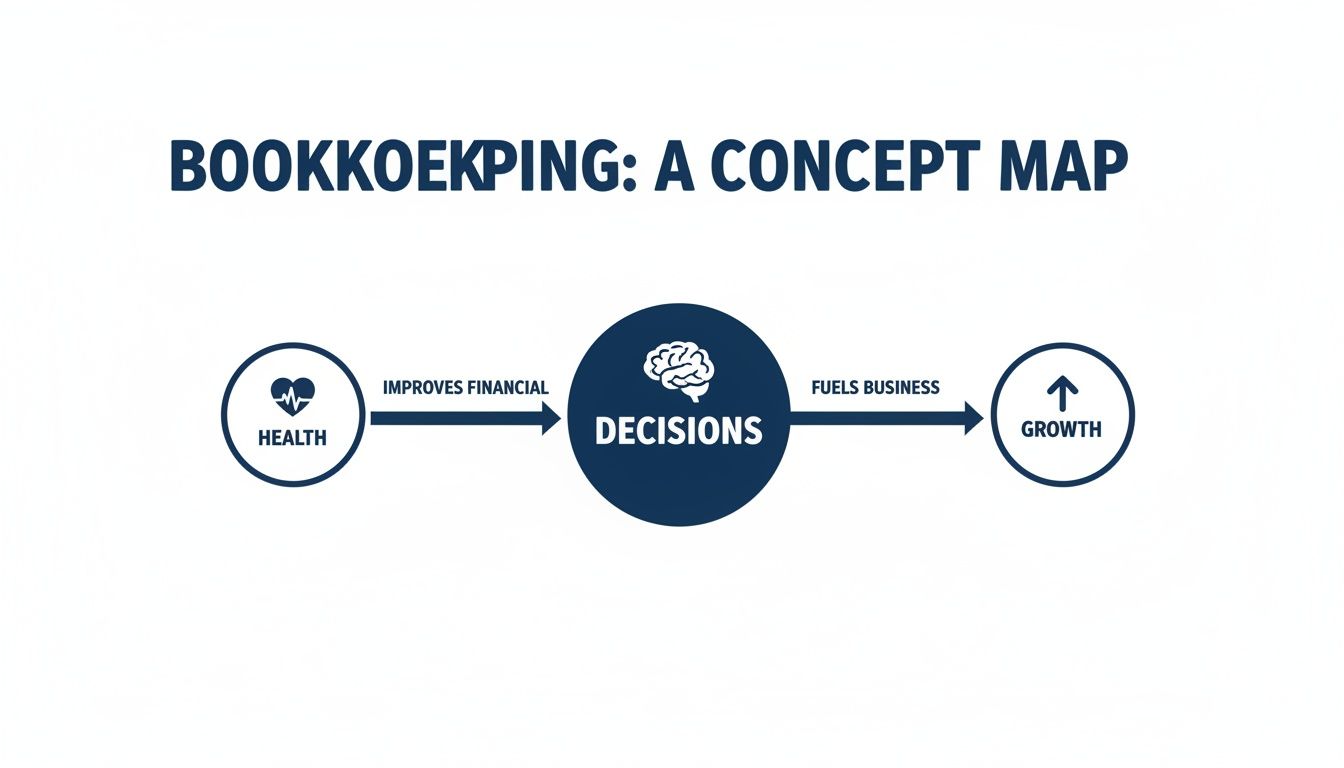
As you can see, understanding your money is what lets you make smart decisions—and that’s what helps you grow.
1. Your Chart of Accounts
Imagine your closet is just one giant, messy pile of clothes. You wouldn't know where your socks or shirts are. The Chart of Accounts is like putting dividers in your drawers.
It’s just a list of all the categories for your money. Instead of "shirts" and "pants," you have categories like:
- Income: Money coming in from sales.
- Expenses: Money you spend on things like rent or supplies.
- Assets: Things your business owns, like a computer or cash in the bank.
- Liabilities: Money your business owes, like a loan.
Setting up these categories is the first step to making sense of where your money is going.
2. Recording Every Transaction
Once your drawers are labeled, you have to actually put your clothes in them. Every time money moves in or out of your business, it’s a transaction, and your job is to put it in the right category.
Let’s say you're a freelance photographer. A client pays you $500 for a photoshoot—that’s a transaction. You record this as income under "Photography Services." A week later, you buy a new camera lens for $1,500—another transaction. You record that as an expense under "Equipment."
This simple habit of recording everything makes sure your financial picture is always complete.
3. Bank Reconciliation
This sounds way more complicated than it is. Reconciliation is just checking your work. At the end of each month, you take your bank statement and compare it to the list of transactions you recorded.
Do they match? Great. If they don't, it means something was missed or typed in wrong. Maybe you forgot to record a small cash purchase, or the bank charged a fee you didn’t notice.
Reconciliation is just making sure the story your books are telling is the exact same story your bank account is telling. It keeps things honest.
This quick check catches small mistakes before they turn into big problems.
4. Reading Your Financial Statements
Finally, all this organizing and recording comes together in your financial statements. Think of these as your business's report card. There are three main reports, and they answer three simple questions.
Here’s what these reports tell you.
What Your Financial Reports Really Tell You
| Report Name | What It Shows You | A Simple Question It Answers |
|---|---|---|
| Profit & Loss (P&L) Statement | Your income minus your expenses over a period of time (like a month or a year). | "Did I make any money?" |
| Balance Sheet | A snapshot of what you own (assets) and what you owe (liabilities) on a single day. | "What is my business worth right now?" |
| Cash Flow Statement | The actual cash moving in and out of your bank account. | "Where did my cash go?" |
These reports turn all your data into something you can actually use. Your P&L, for example, is the final score for how profitable you were. To get a better feel for how it works, you can check out our guide on what is a profit and loss statement.
Learning to read these is where your hard work pays off, giving you the information you need to steer your business in the right direction.
How to Get Started: The First Four Steps
So, you’re ready to get your books in order. Where do you start?
Getting started is often the hardest part, but trust me, setting up a good system isn't as hard as it sounds. By making a few key decisions first, you can build a simple system that works from day one. Let's walk through the first practical steps.

First Big Decision: Cash vs. Accrual Method
Your first choice is deciding when to record your income and expenses. It comes down to two methods: cash or accrual.
Imagine you're a web designer. In May, you finish a project and send your client a $2,000 invoice. The client pays you in June.
- Cash Method: You record the $2,000 in June, when the money actually hits your bank account. It’s simple and based on the cash you have right now.
- Accrual Method: You record the $2,000 back in May, when you earned it. This method gives you a more accurate picture of how your business did that month, even if you don't have the cash yet.
For most new, small businesses, the cash method is easier and works just fine. However, accountants usually prefer the accrual method because it gives a truer picture of your company’s health over time.
Second: Keep Business and Personal Finances Separate
This is the golden rule of bookkeeping. Do not mix your personal grocery money with your business money. It creates a huge, tangled mess.
Before you do anything else, open a separate business bank account and get a business debit card. Run 100% of your business income and expenses through these accounts. No exceptions.
This simple step makes tracking everything way easier, protects your personal money if the business gets in trouble, and makes tax time much less painful. Don't skip this.
Third: Build Your Chart of Accounts
We talked about the Chart of Accounts earlier, but now it's time to actually build one. Don't make it too complicated at the start. For a freelance writer, a basic setup might look like this:
A Simple Chart of Accounts Example
- Income
- Writing Services Income
- Expenses
- Software (Grammarly, etc.)
- Marketing & Website
- Office Supplies
- Bank Fees
- Home Office Internet
Your Chart of Accounts is the blueprint for your financial organization. A good one makes it easy to see where your money is coming from and where it's going.
You can always add more categories later as your business grows. For a deeper dive into setting this up, check out our resource on what is a chart of accounts.
Fourth: Choose the Right Tool for the Job
You could use a spreadsheet, but bookkeeping software is almost always a better choice.
Tools like QuickBooks or Xero are made to make your life easier. They connect to your business bank account, help you sort transactions, send invoices, and create those important financial reports with just a few clicks.
Spending a small amount each month on good software will save you hours of work and prevent expensive mistakes. It’s one of the best first investments you can make in your business.
A Simple Monthly Bookkeeping Checklist
Good bookkeeping isn't one big, stressful task. It’s about creating a simple routine that keeps you on track.
When you break it down into small weekly jobs, it never feels overwhelming. Think of it like tidying your house. It’s much easier to spend 15 minutes cleaning each day than to deal with a huge mess at the end of the month.
Let's build a simple monthly plan that will keep your books clean.
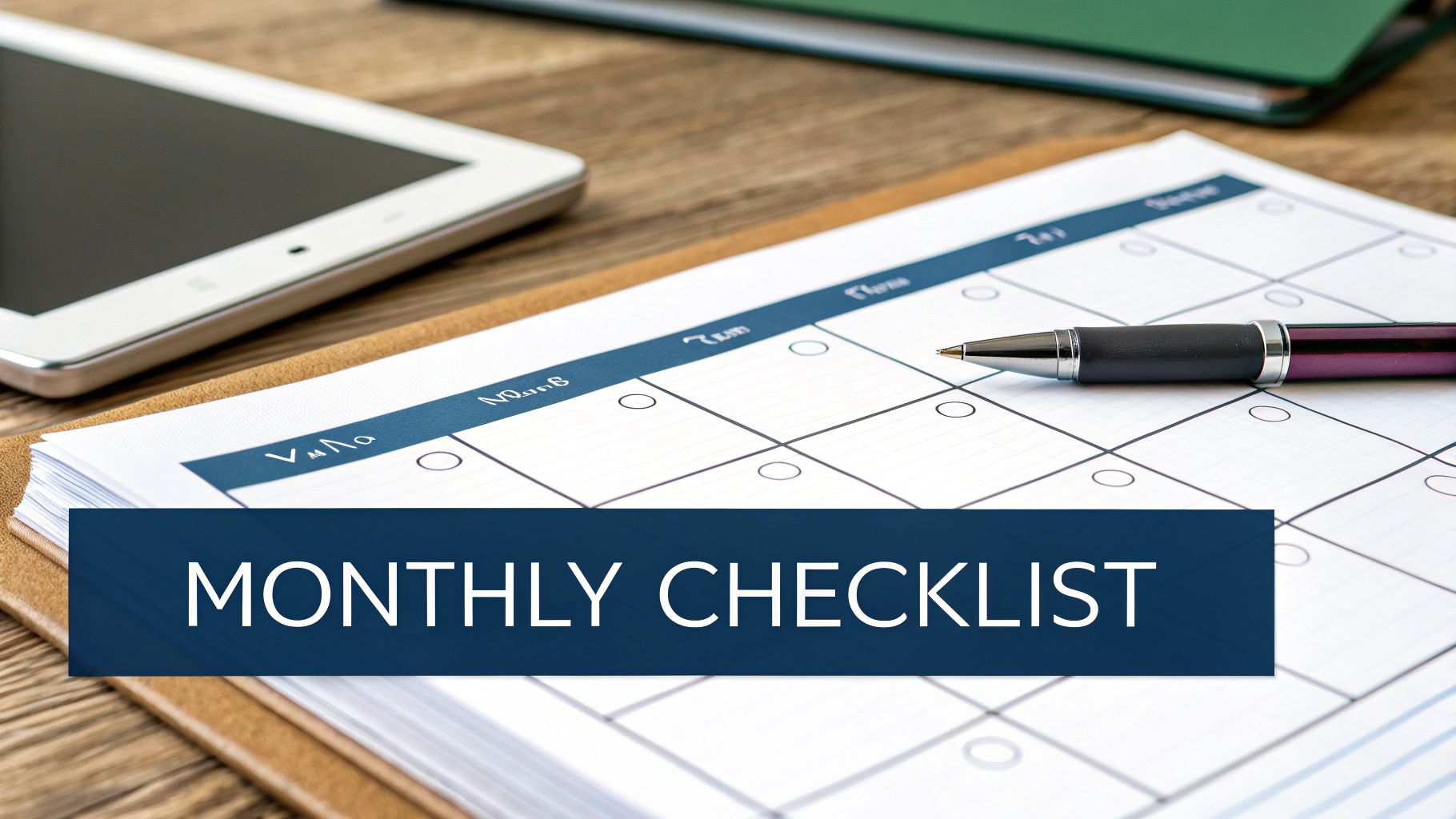
A Four-Week Rhythm
Here’s a simple schedule you can follow every month. By giving one main task to each week, you create a rhythm that keeps things from piling up.
Week 1: Record and Categorize Everything. Go through your business bank and credit card statements. Make sure every single transaction from last month is recorded and put in the right category (like "Software," "Rent," or "Client Payments"). Bookkeeping software helps a lot here, as it often pulls these in for you automatically.
Week 2: Handle Your Invoicing. Time to get paid. Send out any new invoices for work you’ve finished. Just as important, follow up on any unpaid invoices from last month. A friendly email is often all it takes.
Week 3: Reconcile Your Accounts. This is your monthly fact-check. Pull up your bank statement and compare it, line by line, to what you’ve recorded in your books. This process, called reconciliation, confirms your records are 100% accurate and match what the bank says. It’s the best way to catch mistakes.
Week 4: Review Your Reports. Now it's time to see how you did. Run your key financial reports, like the Profit and Loss statement. Ask yourself simple questions: Did I make money last month? What did I spend the most on? This is where you turn numbers into information that helps you make better decisions next month.
This simple, four-week cycle keeps your bookkeeping on track. It breaks a big job into small pieces, giving you a clear view of your business's financial health.
By making this checklist a habit, tax season will feel like just another month—not a mad dash. And you'll always know exactly where your business stands.
Common Bookkeeping Mistakes and How to Avoid Them
Even with the best intentions, it's easy to make mistakes with your books. It happens. But small errors with numbers can grow into big, expensive headaches.
The good news is you can learn from the mistakes others have made. Knowing about these common slip-ups is one of the best ways to keep your records clean from the start.
One of the biggest mistakes I see is mixing personal and business spending. It might seem harmless to use the business card for groceries because you forgot your wallet, but it creates a messy puzzle for later. Come tax time, you'll waste hours trying to separate your morning coffee run from a real client lunch, and you might miss out on tax deductions.
The Little Things That Add Up
It's easy to focus on big payments and forget the small stuff. That leads to another common mistake: not tracking small cash expenses.
Imagine a local baker who buys fresh berries at the farmer's market every week, always paying in cash. It's only $30 here and there. But over a year, that adds up to over $1,500. Without receipts or a record, that's $1,500 in business expenses she can't write off on her taxes. It’s a costly mistake that started because the amounts felt too small to matter.
A simple rule to live by: If you spent it for the business, record it. It doesn’t matter if it was $5 or $5,000. It's all part of your financial story.
"I'll Do It Later" Syndrome
Finally, the most tempting mistake of all: putting off your bookkeeping. Pushing the work to the end of the quarter—or worse, the end of the year—is a recipe for disaster. What feels like a time-saver now will cost you much more in time and stress later.
Here are a few "I'll do it later" traps to avoid:
- Skipping monthly bank reconciliations: This is your best defense against bank errors, fraud, or your own typos. Doing it monthly takes minutes. Trying to do a full year's worth at once can take days of painful work.
- Forgetting to back up your data: If you use software like QuickBooks Online, your data is usually backed up automatically. If you're using spreadsheets, save a copy to a cloud drive like Google Drive regularly. Losing your financial records is a nightmare.
Sticking to a weekly or monthly routine is the cure. Small, steady efforts are what prevent these common mistakes from happening.
Knowing When It’s Time to Ask for Help
Doing your own books is a great way to start. It keeps you close to your numbers and saves money. But as your business grows, you'll reach a point where your time is better spent working with customers, not chasing down receipts.
Knowing when you've hit that point is key. Are you spending more time on paperwork than on talking to clients? Do you feel nervous when making big financial decisions, like whether to lease a new office? These are signs that you might need help.
Key Signs You Need a Hand
Hiring your first employee is a big one. Suddenly, you have to deal with payroll, taxes, and rules that you have to get right. Other common signs include:
- You're always behind on your monthly bookkeeping.
- Your books feel messy, and you’re not sure if they're accurate.
- Tax season has become a huge source of stress.
Think of professional bookkeeping as an investment, not an expense. Good help doesn't just record numbers; they find opportunities and prevent costly mistakes, which can save you money in the long run.
Getting help is becoming more and more common. Surveys now show that as many as 78% of small businesses get outside help with some of their bookkeeping tasks. When your bookkeeping gets too big to handle alone, a service like a QuickBooks Virtual Assistant can provide expert support, making sure your records are always right.
Deciding to get help opens up a few options, from hiring a part-time bookkeeper to working with a firm like ours. Figuring out what kind of support you need is the first step. Check out our guide on bookkeeping services for small businesses to see what might be the right fit for you.
Your Top Bookkeeping Questions, Answered
Let's get straight to it. Here are the answers to the questions we hear most often from business owners trying to get a handle on their finances.
Do I Really Need Bookkeeping Software?
Honestly, yes. You can use a spreadsheet, but it’s like choosing to walk when you have a car. It leads to mistakes, wasted hours, and reports that are a pain to create.
Good software like QuickBooks Online automates the boring stuff, gives you instant reports, and saves you from costly errors. The small monthly fee is one of the best investments you can make in your business.
What’s the Difference Between a Bookkeeper and an Accountant?
This is a great question. Think of it like building a house.
Your bookkeeper is the person on-site every day, building the frame and making sure every piece is in the right place. They are in the details, recording every single transaction—every sale, every expense—to build a solid financial structure.
Your accountant is the architect. They take the solid structure the bookkeeper built and look at the big picture. They use that information to create a tax plan, give advice on big financial decisions, and make sure the whole project is built to last. You need good bookkeeping before an accountant can do their job well.
How Often Should I Update My Books?
The key here is consistency. At the very least, you need to update and check everything once a month. Any less than that and you won't have a clear picture of how your business is doing.
But the most successful business owners I know spend 20-30 minutes each week on their books. This simple habit keeps work from piling up and gives you a real-time look at your business's health. It turns a chore you dread into a quick weekly check-in.
Feeling like you're drowning in spreadsheets and receipts? The team at MyOfficeOps helps business owners build simple, powerful bookkeeping systems that deliver clarity, not confusion. Let's get your books in order so you can get back to what you do best.