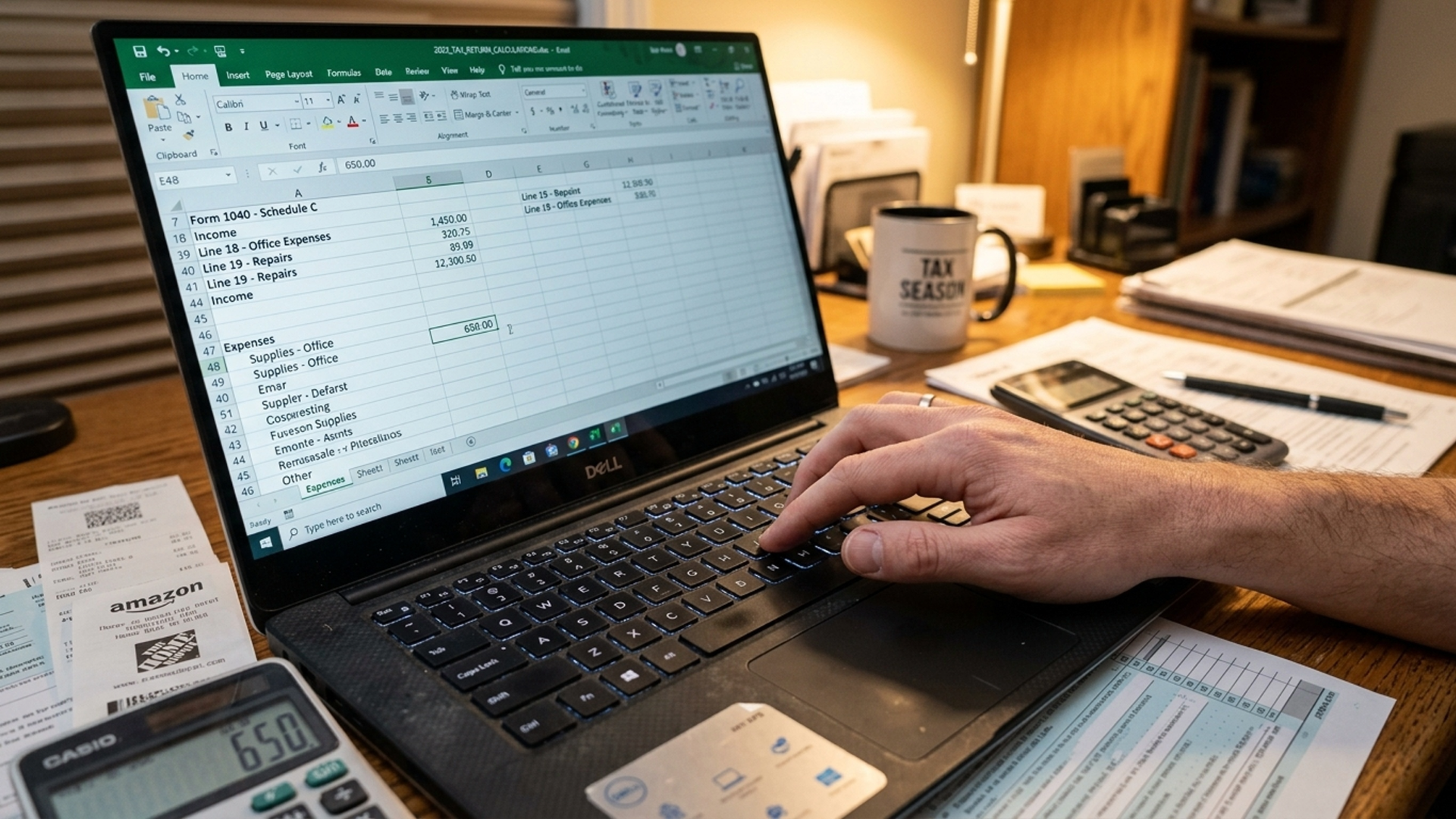

You check your bank balance on a Tuesday and find far less cash than you expected. Nothing obvious went wrong. No major customer disappeared. No large bill surprised you. Usually, the problem is a handful of small things nobody recorded, matched, approved, or reviewed.
A bank fee was missed. A customer paid late. A subscription kept charging after an employee left. A project looked profitable because its costs were sitting in the wrong account. These small gaps make it harder to know what your business can safely spend, hire, or invest.
The accounting best practices below are built around those everyday problems. Each one explains why it matters, shows how it looks in a small business, and ends with a step you can start this week. You don't need a large finance department to use them. You need clear ownership, repeatable routines, and enough discipline to review what the numbers are telling you.
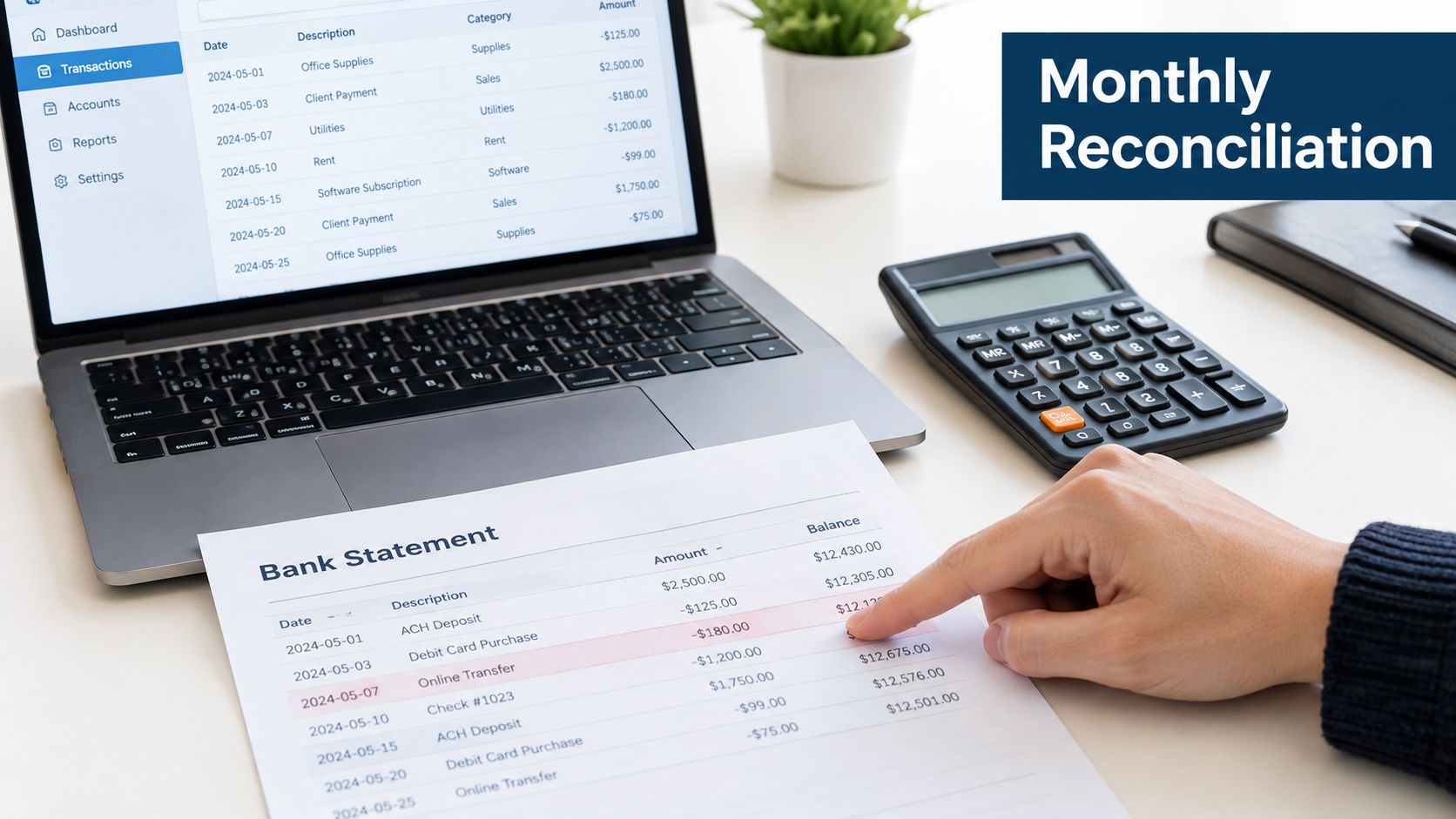
1. Reconcile Your Bank Accounts Every Month
A bank reconciliation compares your accounting records with the bank's statement. You match each transaction in QuickBooks Online, Xero, or another system, then investigate anything that remains unexplained. The result is a cash balance you can trust before you pay bills or make hiring decisions.
A mismatch may come from a check that has not cleared, a missed bank fee, or a typing error. It could also reveal a duplicate payment or an unauthorized charge. Regular reconciliation gives you a practical control against fraud, payment mistakes, and unreliable reports. The Association of Certified Fraud Examiners' small-business fraud guidance recommends repeatable procedures, clear ownership, regular reconciliations, and independent review.
A plumbing company in Chester County found a recurring $89 card charge during its monthly review. A former employee had opened a software subscription and never canceled it. The owner stopped the charge that same week.
Practical rule: Reconcile the latest completed month before older periods. Recent transactions are easier to identify and explain.
Make the routine hard to skip
Choose a fixed day, such as the 5th of the month. Bank feeds can import transactions, but they do not replace review. Check every line, record why an item does not match, and follow up within a week.
Use this balance sheet reconciliation guide for a fuller process. If your business has merchant cash advance obligations, automating MCA payment tracking can help you monitor withdrawals against your records.
Put a recurring reconciliation appointment on your calendar this week and protect the time. A café owner, for example, can review the prior month's deposits, card fees, and supplier payments before approving new spending. Treat the appointment like payroll, because small unexplained entries become harder to resolve as time passes.
2. Split Up Money Tasks So No One Person Controls Everything
A small contractor let one employee create vendors, approve invoices, send payments, record transactions, and review the bank account. The arrangement saved time until a questionable vendor charge appeared. No second person had checked the setup, so the error took longer to find.
Separation of duties means dividing money tasks among different people. The person entering bills should not approve the payment. Someone else, such as the owner, manager, or outside bookkeeper, should review bank activity. In a four-person healthcare clinic, staff followed a rule that the employee entering a vendor bill could not release its payment. The clinic later found a fake vendor.
The same control applies to system access. Remove old logins when employees leave, and give each person only the access their role requires. Shared administrator passwords make it harder to identify who changed a vendor, invoice, or payment.
Keep the control proportional
You do not need three full-time accountants. Write the responsibilities on one page: who enters bills, who approves them, who sends payments, and who reviews the bank. Set approval limits in a tool such as Bill.com so larger payments require another person's approval.
Two-person review can mean an owner checks the bank statement every Friday.
Documented authorization, separate approval and payment responsibilities, and independent review of unusual transactions are standard small-business control practices. Apply the same idea to payroll and bill-pay access. A café owner, for example, can enter supplier bills, ask a manager to approve them, and review the weekly payment list before funds leave the account.
Start this week by listing everyone with access to your bank, payroll, accounting, and bill-pay systems. Remove access that no longer matches each person's job, then schedule a recurring review.

3. Use Accrual Accounting So Your Numbers Match Reality
Cash accounting records income when money arrives and expenses when money leaves. Accrual accounting records income when you earn it and expenses when you use them, even when the cash moves later.
That difference can change how you read the business. Suppose you finish a $20,000 kitchen remodel in March but receive payment in May. Accrual accounting shows the revenue in March, when you completed the work. It also records costs in the period connected to that job.
A commercial contractor in Philadelphia switched to accrual reporting and discovered that one job was losing money. Cash-basis reports had hidden the problem because the client paid late while the costs had already been incurred.
Accrual accounting also helps spread costs fairly. A consulting firm paid for a $12,000 annual software subscription upfront. Recording the whole amount in one month made that month look unusually bad. Recording it as a monthly expense gave the firm a clearer view of recurring profitability.
Choose the method with advice
Accrual reporting usually gives owners, lenders, buyers, and investors a better operating picture. It also brings more work. You need to track unpaid invoices, unpaid bills, prepaid costs, and payroll owed.
Ask your CPA or bookkeeper which method fits your tax situation before changing it. Changing accounting methods can affect taxes and reporting.
The approved bookkeeping guide on true-ups explains why adjustments may be needed when recorded activity catches up with the underlying business activity.
This week, compare one month of cash-basis results with an accrual-style view. Look specifically at unpaid customer invoices, unpaid bills, and prepaid insurance. The differences will show you where your reports need better timing.
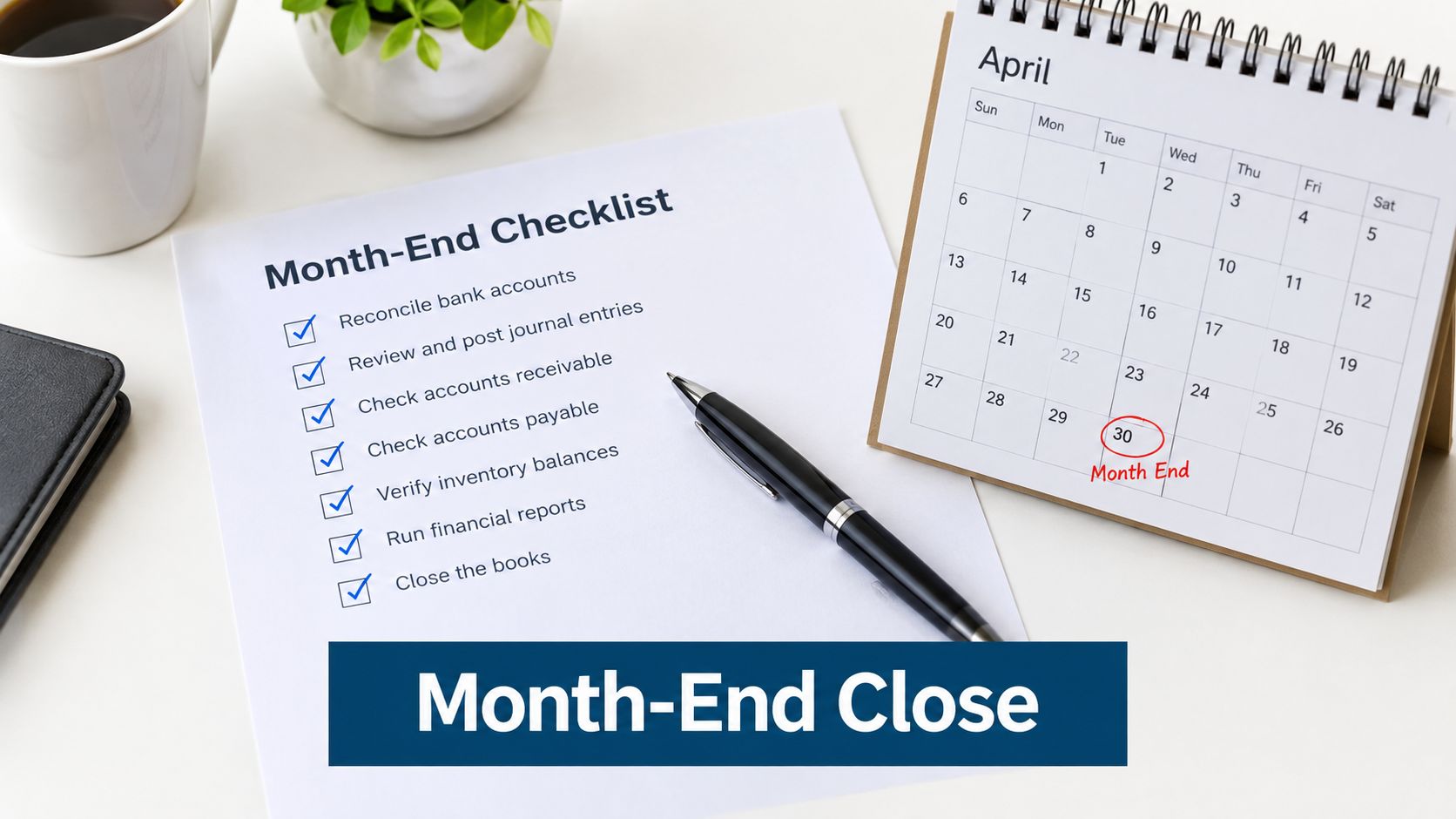
4. Run the Same Month-End Close Checklist Every Time
A month-end close is the set of steps you complete after the month ends to make the books accurate and final. It might include bank reconciliations, payroll review, accrual entries, accounts receivable review, accounts payable review, and financial statements.
The value comes from doing the same work in the same order. Without a checklist, teams rely on memory. One month they remember to review payroll. The next month they forget. That inconsistency creates reports nobody fully trusts.
A three-location dental practice wrote down its recurring close tasks and assigned each one to a person. Its close moved from three weeks to seven business days, and the owner received financial statements before the 10th of each month.
A marketing agency added a “review payroll before close” step after an overpayment went unnoticed for two months. The new step gives the manager a clear place to catch payroll problems.
Build the first version simply
Start with a spreadsheet. List every recurring task, the person responsible, the due date, and the evidence that proves it was completed. Later, you can move the process into accounting software or a task tool.
A useful close checklist may include:
- Reconcile cash accounts: Match bank and credit-card activity to the statements.
- Review receivables: Identify overdue invoices and confirm expected payment dates.
- Check payroll: Compare the payroll report with the accounting entry.
- Lock the period: Prevent accidental changes after the close is complete.
Track how long each close takes. Ask what slowed the team down, then update the checklist. This turns the close into a process that improves instead of a monthly scramble.
5. Keep a Clean Chart of Accounts
Your chart of accounts is the list of categories used to sort transactions. Common categories include Rent, Payroll, Software, Office Supplies, and Client Revenue.
A clean chart makes your profit-and-loss statement useful. A messy chart forces you to guess what each number means. If one employee uses “Software,” another uses “Subscriptions,” and a third uses “Miscellaneous,” your technology costs become hard to track.
A home renovation company in Downingtown had separate accounts for Materials, Supplies, and Job Costs. The owner couldn't tell whether project materials or office spending was driving changes in margins. Combining the categories into Job Materials and Office Supplies made the reports easier to understand.
Classification matters because the wrong account can hide a real business problem. WorldCom's early-2000s accounting scandal included recording ordinary operating costs as long-term capital investments. That kind of misclassification helped inflate reported profits by billions of dollars and remains a clear warning about putting transactions in the wrong place.
Give every account a clear job
Review your chart of accounts once a year. Remove categories nobody uses, and write one sentence explaining what belongs in each remaining account. Match categories to tax-return lines where practical, but don't create a new account for every unusual purchase.
If you can't explain what belongs in an account, your team won't use it consistently.
This week, open your profit-and-loss statement and look for catch-all categories. Choose one, review its transactions, and move items into clearer accounts. Don't rebuild the entire chart at once. A small cleanup can make the next management review much more useful.
6. Track Accounts Receivable and Chase Late Payments on a Schedule
Accounts receivable is money customers owe you for work you've already completed. An aging report sorts unpaid invoices by how long they've been outstanding. It helps you see which invoices are current and which ones need attention.
Receivables aren't just a bookkeeping task. They are part of your cash-flow operating system. Recent U.S. small-business data found that 56% of surveyed small businesses were owed money from unpaid invoices, with an average of $17,500 per affected business. The same report found that 47% had at least some invoices more than 30 days overdue. Businesses with heavier overdue-invoice exposure reported cash-flow problems at a 50% rate, compared with 34% among businesses with fewer overdue invoices. These figures come from QuickBooks' small-business late-payments report.
A professional services firm had a client that owed $18,000 for three months. After that experience, the firm required a 30% deposit on new projects. Its overdue balances nearly disappeared.
Make collections part of the calendar
Run the aging report every Monday. Create a short call list and assign each follow-up to a person. A polite reminder before an invoice becomes seriously overdue is usually easier than a confrontation months later.
Use clear terms on contracts and invoices. Offer card or ACH payments where appropriate. For agencies, consultants, contractors, and healthcare practices, also review whether deposits, milestones, or recurring billing would fit the work better than one final invoice.
This week, take your oldest five invoices and write down the next action, owner, and expected payment date. Don't remove a bad debt from the books without owner review. First decide whether the customer still owes the money, whether the invoice needs correction, or whether collection action makes sense.
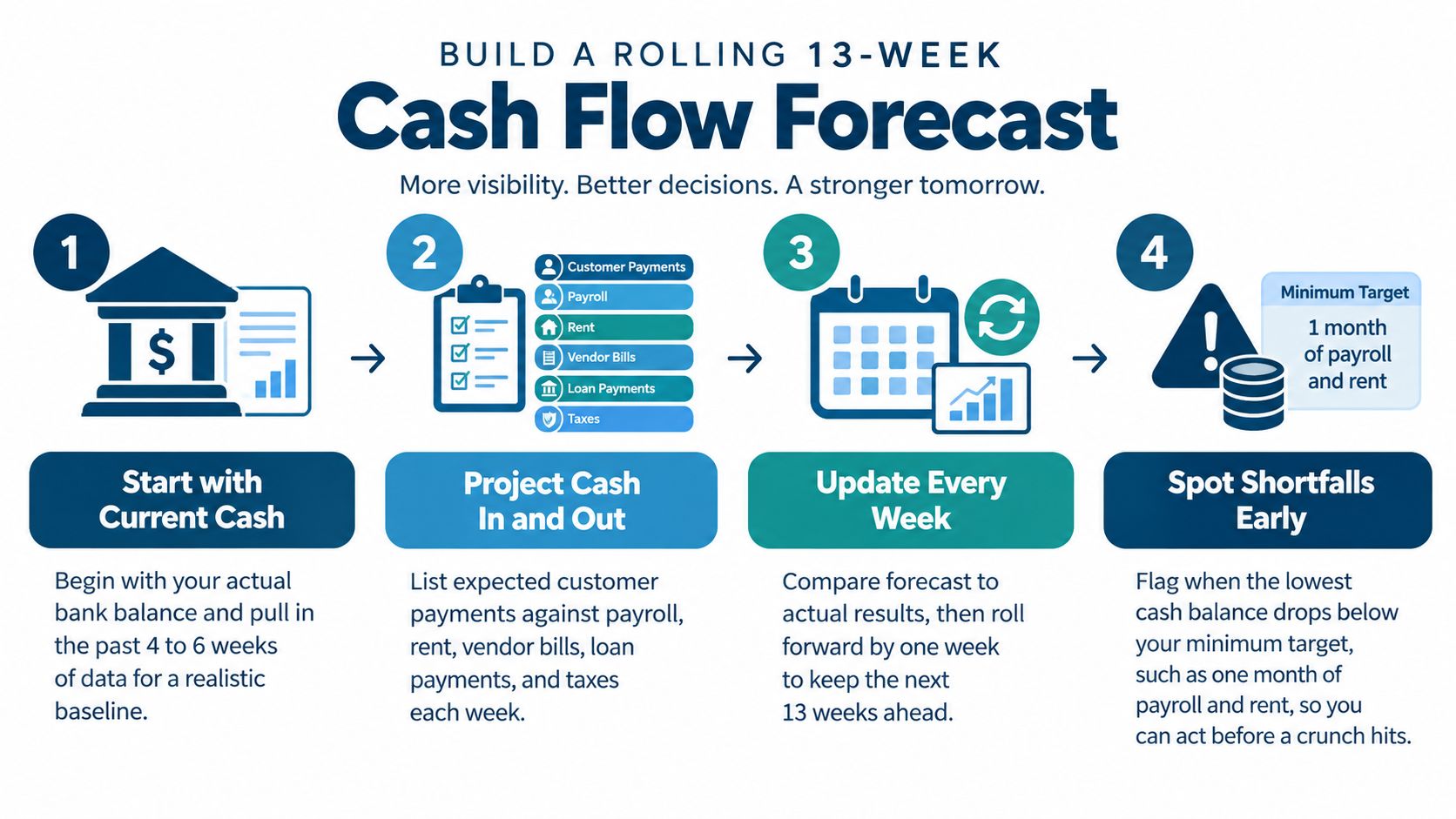
7. Build a Rolling 13-Week Cash Flow Forecast
A cash flow forecast shows when money is expected to enter and leave the business. A rolling 13-week forecast lays out those movements week by week for roughly the next three months. Start with the current bank balance, add likely customer payments, and subtract payroll, rent, vendor bills, loan payments, and taxes.
This is different from a profit report. The U.S. Small Business Administration guidance shared by the FDIC explains that a cash flow statement tracks the timing of customer payments and business payments, including payroll. A company can record revenue today and still lack enough cash for next week's obligations.
A residential roofing company in Chester County used a rolling forecast and saw that a large insurance payment would arrive two weeks after payroll. The owner arranged a short-term credit line in advance instead of waiting for a crisis.
A Philadelphia IT consulting firm used its forecast to delay a $30,000 office lease signing until a major client renewal arrived. The decision became a timing choice rather than a panic decision.
Update it with actual results
Each week, replace estimates with what happened, then add a new future week. Use conservative payment dates for customers who often pay late. Include a “what if” line for a major customer paying late or leaving.
Set a minimum cash target based on your essential obligations. The right target depends on your business, so don't copy another company's number.
Use these cash flow forecasting techniques to make the file practical rather than theoretical. This week, build the first version from recent bank balances and known bills. Even an imperfect forecast is better than making decisions from yesterday's balance alone.
8. Reconcile Payroll to Your Books Every Pay Cycle
Payroll reconciliation means checking that your payroll provider's report matches your accounting records. Compare gross wages, employee taxes, employer taxes, benefits, and net pay. If you use Gusto, ADP, or another payroll service, the accounting system may receive a journal entry automatically, but you still need to review it.
A medical practice with 22 employees found that payroll entries had been posted to the wrong expense account for six months. Fixing the error changed reported labor cost by roughly 9% and gave the owner a more accurate view of clinic profitability.
A general contractor caught a former crew member still receiving pay for two weeks. The reconciliation happened before the next payroll run, so the company avoided another payment.
Check the same documents every time
Compare the payroll summary with the journal entry after every pay cycle. Match tax deposits to the business's Form 941 filings, and keep written approval for pay-rate changes. Check that terminated employees are removed and that benefits are posted to the correct accounts.
Payroll is a good place for controlled automation. ACCA research found that 57% of small and midsize enterprises were implementing or trialing new technology, while 84% of Big Four and mid-tier accounting firms were doing so. The research also found that 85% of respondents believed digital transformation would improve personal productivity, and 70% believed AI could increase time for business-critical work. See ACCA's technology research.
Automation should reduce rekeying, not remove review. Use this payroll reconciliation report guide to define what gets checked and who signs off. You can also review guidance on payroll tax liabilities.
9. Compare Actual Results to Budget and Track KPIs Monthly
A budget is your plan for income and spending. Budget-versus-actual analysis puts real results beside that plan and explains the difference, called a variance.
A small architecture firm used a monthly review to find that one senior designer was doing too many unbilled hours. The problem wasn't obvious from total revenue alone. The firm changed project scoping and pricing after seeing where the time went.
A commercial cleaning company found its supplies were running 18% over budget because a supplier had raised prices. Updating the budget stopped the owner from assuming that the old margin was still achievable.
Your dashboard doesn't need dozens of measures. Start with the few numbers you can calculate reliably from your accounting system. A healthcare clinic in West Chester tracks patient visits per provider, collections per visit, and days in accounts receivable. When collections per visit fell for two months, the clinic found a billing-code error.
Make the review lead to a decision
Choose your top expense categories first. Set a written rule for which variances require an explanation, such as anything over 10% or $1,000. Review the full budget quarterly and update the forecast for the rest of the year.
ACCA research on organizations already using AI found that data analysis and reporting led accounting applications at 33%, followed by financial planning and analysis at 31%, and invoice and payment processing at 28%. The ACCA smart alliance report also describes applications in reconciliations, fraud detection, risk management, and compliance reporting.
Use a 30-minute monthly meeting. End with one written action, such as changing a price, following up with a customer, or reviewing a vendor contract. Numbers matter most when someone acts on them.
10. Track Job Costs and Work-in-Progress Schedules
Job costing shows what each project actually costs in labor, materials, subcontractors, and overhead. You compare those costs with the original bid. A work-in-progress schedule, often called a WIP schedule, shows what has been billed, what has been earned, and whether each open job is ahead or behind its budget.
Without job costing, you can win more work while losing money on every project. With it, you can see which jobs need a change order, a billing correction, or a management decision before the problem reaches payroll.
A Delaware County remodeling company found that bathroom jobs produced a 28% margin while basement finishing jobs averaged only 6%. Once the owner saw the difference, the company raised basement bids by about 15% and stopped accepting that work at prices that didn't cover the risk.
A general contractor using WIP schedules found a $45,000 underbilling on a commercial job before year-end. Correcting the billing kept cash moving and avoided a shortfall when payroll came due.
Capture costs while the work is fresh
Create a cost code for each project and each major cost type before the first invoice. Have crew leads submit time and materials weekly, not at the end of the job. Update the percentage complete at least monthly, then compare it with actual costs.
ASC 606 uses a five-step process for revenue from customer contracts: identify the contract, identify the promised goods or services, determine the transaction price, allocate that price, and recognize revenue when the obligations are satisfied. The SEC's explanation of ASC 606 is especially relevant when one agreement includes several deliverables, such as implementation plus ongoing support.
This week, choose one open job and compare its bid, costs, billing, and completion status. Write down the largest difference. That single review often shows where your estimating or project tracking needs attention.
Top 10 Accounting Best Practices Comparison
| Item | 🔄 Implementation Complexity | ⚡ Resource Requirements | ⭐ Expected Outcomes | 📊 Ideal Use Cases | 💡 Key Advantage / Tip |
|---|---|---|---|---|---|
| Reconcile Your Bank Accounts Every Month | 🔄🔄 (routine monthly task) | ⚡⚡ (staff time; bank statements or feeds) | ⭐⭐⭐⭐ (accurate cash position; early error/fraud detection) | Small–medium businesses, any with bank accounts | 💡Catches errors fast, pick a fixed day and use bank feeds but review every line |
| Split Up Money Tasks So No One Person Controls Everything | 🔄🔄🔄 (policy + role setup) | ⚡⚡ (multiple staff or owner reviewer; access controls) | ⭐⭐⭐⭐ (strong internal controls; lower fraud risk) | Medium+ firms, regulated industries, lenders/auditors | 💡Define roles and approval limits; remove old logins promptly |
| Use Accrual Accounting So Your Numbers Match Reality | 🔄🔄🔄 (accounting method change; month-end routines) | ⚡⚡⚡ (bookkeeper/CPA, adjusted processes) | ⭐⭐⭐⭐ (true period profitability; lender expectation) | Businesses seeking funding, contracts, or accurate margins | 💡Consult CPA before switching; maintain monthly accrual entries |
| Run the Same Month-End Close Checklist Every Time | 🔄🔄 (process creation then repeatable) | ⚡⚡ (time to perform; task owners) | ⭐⭐⭐⭐ (faster, predictable closes; reliable reports) | Multi-location firms, growing teams, owners needing timely statements | 💡Document tasks, assign owners, track close days and lock prior periods |
| Keep a Clean Chart of Accounts | 🔄🔄 (design and periodic review) | ⚡⚡ (initial cleanup; annual maintenance) | ⭐⭐⭐ (clearer reports; easier budgeting/tax prep) | All businesses that want meaningful P&L and comparisons | 💡Limit accounts, add one-line descriptions, review yearly |
| Track Accounts Receivable and Chase Late Payments on a Schedule | 🔄🔄 (ongoing collections process) | ⚡⚡⚡ (weekly follow-up; invoicing tools/automation) | ⭐⭐⭐⭐ (improved cash flow; lower bad debt) | Service firms, B2B sellers, firms with Net terms | 💡Run aging weekly, automate reminders, offer online payments |
| Build a Rolling 13-Week Cash Flow Forecast | 🔄🔄🔄 (model setup; weekly updates) | ⚡⚡⚡ (weekly effort; spreadsheet or tool) | ⭐⭐⭐⭐ (early warning of shortfalls; better planning) | Seasonal or uneven-revenue businesses, planning for liquidity | 💡Update weekly with conservative dates and set minimum cash target |
| Reconcile Payroll to Your Books Every Pay Cycle | 🔄🔄 (recurring cycle work) | ⚡⚡ (payroll provider + GL comparison each cycle) | ⭐⭐⭐⭐ (accurate labor costs; avoids payroll tax issues) | Any employer with payroll, especially >1 employee | 💡Match payroll summaries to journal entries every cycle; track rate changes |
| Compare Actual Results to Budget and Track KPIs Monthly | 🔄🔄🔄 (budget build + monthly review) | ⚡⚡⚡ (reporting tools, data gathering, meetings) | ⭐⭐⭐⭐ (earlier variance detection; actionable decisions) | Growing firms, multi-department operations, investor-facing businesses | 💡Start with top 10 categories and 5–10 KPIs; require notes for >10% variances |
| Track Job Costs and Work-in-Progress Schedules | 🔄🔄🔄🔄 (job-level coding and WIP routines) | ⚡⚡⚡ (field tracking, software, regular updates) | ⭐⭐⭐⭐ (true job profitability; prevents underbilling) | Contractors, builders, project-based businesses | 💡Use cost codes, collect time/materials weekly, update percent complete monthly |
Start With One Habit This Week
Don't try to fix all ten practices this month. Pick the one causing the most pain and repeat it until it becomes normal. For many owners, that means bank reconciliation or cash-flow forecasting. For a contractor, it may be job costing. For a professional services firm, accounts receivable and unbilled time may deserve attention first.
Give the habit a clear owner and a fixed time. “Review the books soon” won't change anything. “The owner reviews the bank reconciliation every fifth business day” gives someone a real responsibility. “The office manager updates the cash forecast every Monday morning” creates a routine people can follow.
Start with the smallest useful version. A cash forecast can begin as a spreadsheet. A close checklist can begin as a shared document. A separation-of-duties policy can fit on one page. You can improve the system after you learn where it breaks.
Good accounting best practices also include record retention. The IRS generally says businesses should keep tax records for three years after filing, but employment-tax records should generally be kept for at least four years after the tax becomes due or is paid, whichever is later. Other situations, such as property basis, losses, or refund claims, can require longer retention. The IRS recordkeeping guidance explains that electronic records are acceptable when they accurately reproduce the original information and remain accessible.
The purpose isn't to create paperwork for its own sake. It's to make the business easier to understand and harder to damage through an unnoticed error. Clean records help you answer a lender, tax preparer, buyer, employee, or customer without searching through scattered files.
If you'd rather hand the routine work to a team, MyOfficeOps is a bookkeeping and advisory firm in West Chester, PA. It supports small and midsize businesses with bookkeeping, payroll integration, forecasting, KPI dashboards, and financial reporting. Its work is designed to give owners clear information for decisions about pricing, hiring, cash flow, and profitability.
Choose one routine today. Put it on the calendar, name the person responsible, and decide what “complete” means. After 30 days, review what improved and add the next practice.
MyOfficeOps helps small and midsize businesses with bookkeeping, bank reconciliations, payroll integration, cash-flow forecasting, financial reporting, and KPI dashboards. Visit MyOfficeOps to discuss a practical accounting routine for your business and get clearer numbers for your next decision.