
Most small businesses spend between $1,000 and $5,000 a year on accounting, and 77% spend more than $1,000 annually on accounting-adjacent costs. The bill climbs fast once you add payroll, more transactions, multiple entities, or cleanup work.
You're probably looking at a stack of costs, not one neat invoice. There's bookkeeping, tax prep, software, and sometimes a mess you didn't mean to create. That's why people get surprised, they budget for “an accountant,” then discover the actual spend depends on how much work your books create and how much help you want every month.
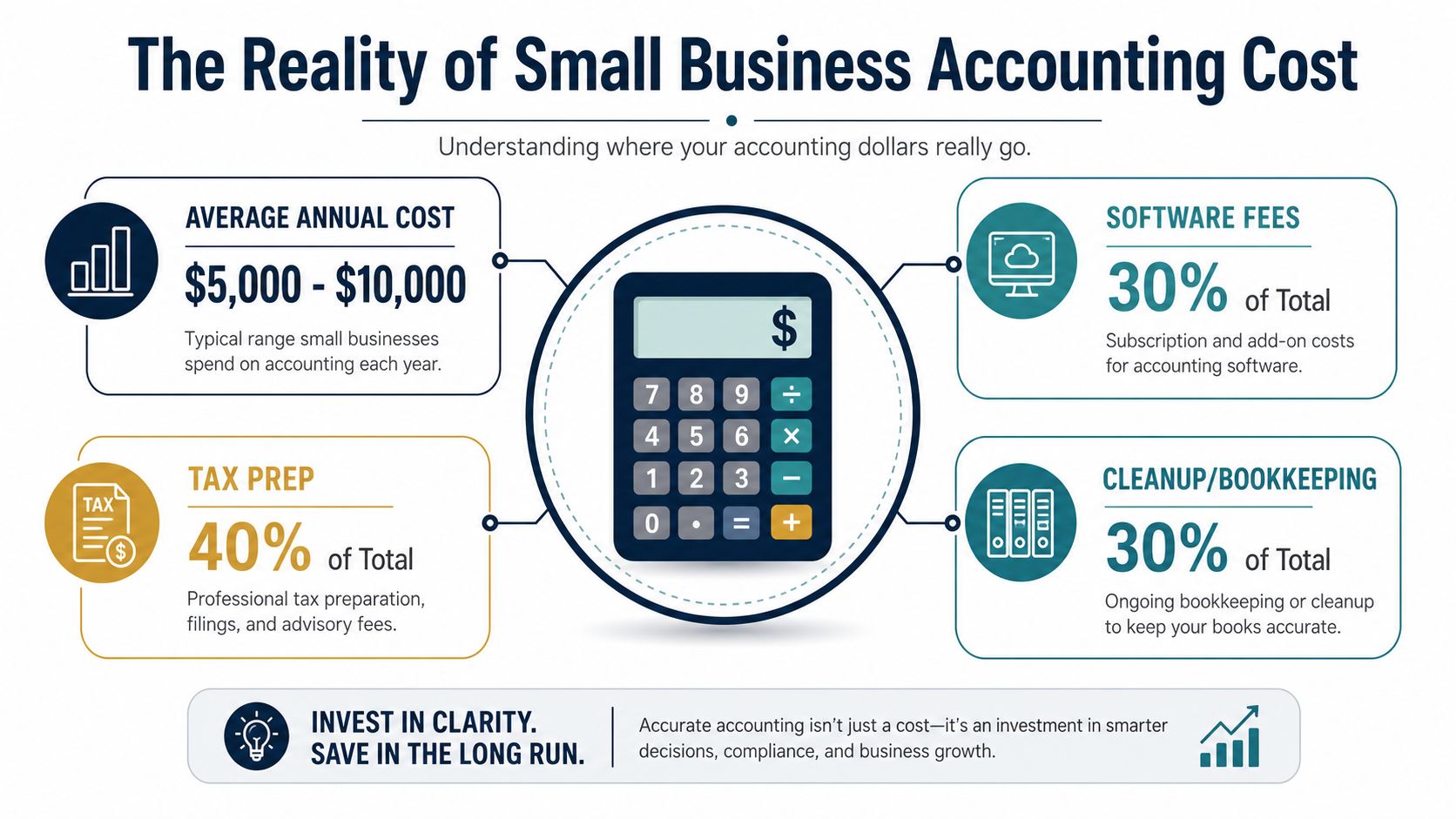
The Reality of Small Business Accounting Cost
A lot of owners get their first accounting bill and feel blindsided. They thought they were buying tax filing, then the invoice shows software, cleanup, and a few hours of review. That's the actual shape of small business accounting cost, it's usually a bundle, not a single line item.
A useful baseline comes from a widely cited SCORE poll. 23% of owners spent $1,000 or less per year, 31% spent $1,000 to $5,000, 18% spent $5,000 to $10,000, 12% spent $10,000 to $20,000, and 16% spent $20,000 or more on accounting-adjacent costs, according to the SCORE-based accounting cost breakdown. That means the most common spending band was $1,000 to $5,000 a year, and most firms were already beyond a token tax-return fee.
Compliance costs are not the same as decision support
A tax return gets you compliant. Clean monthly books let you run the business. Those are different jobs, and they cost different money.
Practical rule: if your books only get attention at tax time, you're usually buying cleanup, not accounting.
That distinction matters because the cost rises with complexity. A solo operator with simple deposits can stay near the low end. A company with payroll, multiple entities, or a lot of transactions starts paying for review time, reconciliations, and more back-and-forth with the accountant.
The best way to think about the bill is this, you're paying for the amount of labor your records create and the level of confidence you want from the numbers. If the books are clean all year, the work is lighter. If they're a mess in March, the price goes up fast.
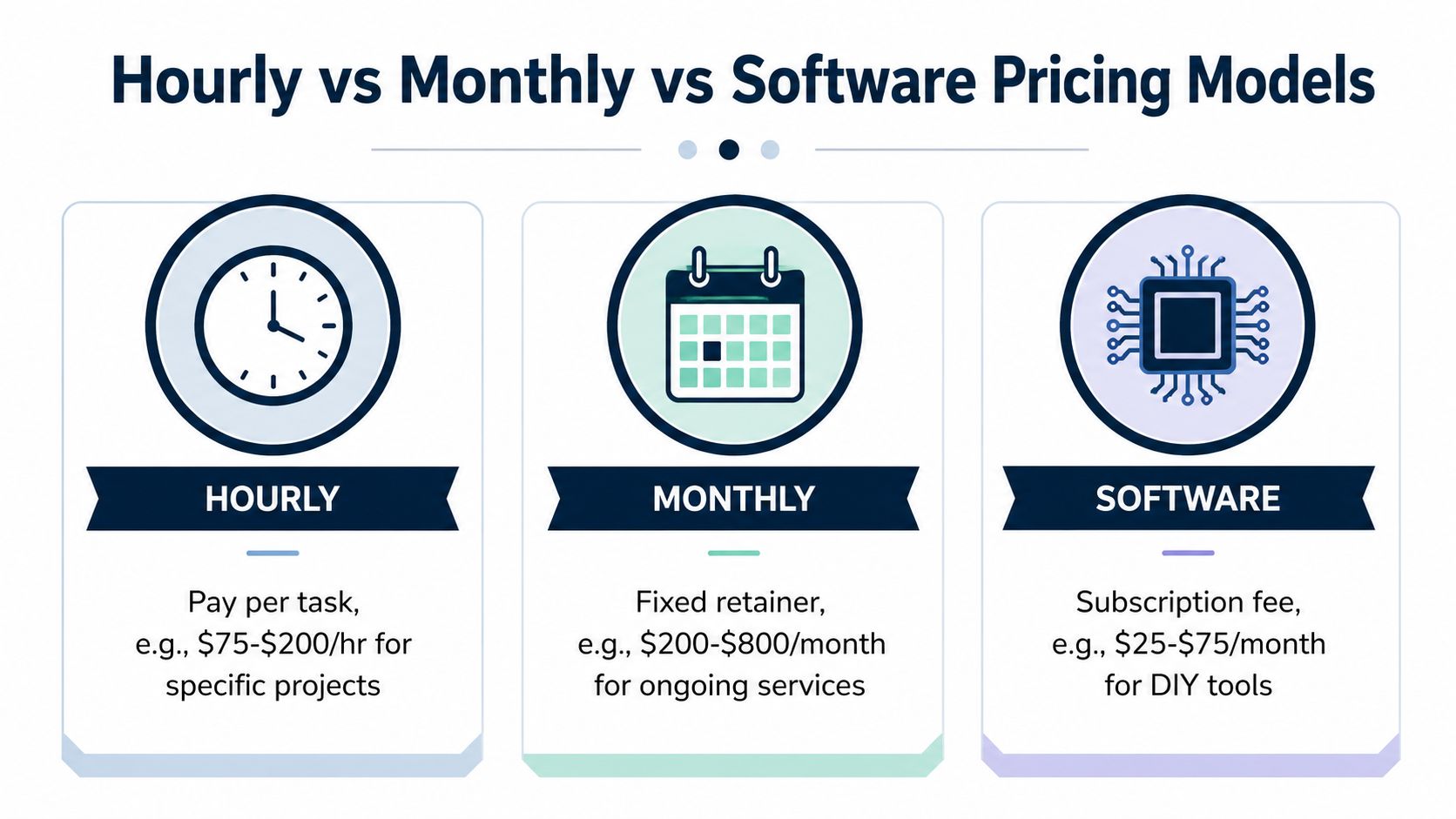
Hourly vs Monthly vs Software Pricing Models
Accounting firms do not charge the same way, and the pricing model matters as much as the rate. Hourly billing fits cleanup and one-off fixes. Monthly retainers fit ongoing support. Software-only works when you are willing to do the work yourself.
Hourly rates are standard for project work and catch-up work. Depending on expertise and market, accountant and CPA rates often run around $150 to $400+ per hour, according to hourly CPA pricing. Use that model when the job is narrow, like correcting old books, untangling a filing issue, or reviewing a one-time transaction problem.
Monthly retainers make more sense when the business needs steady support. Basic bookkeeping often sits around $200 to $2,500 per month, and many firms recommend spending about 0.5% to 3% of revenue on accounting, based on small-business accounting cost guidance. That spread is wide because scope drives the bill. Add payroll, multiple entities, inventory, or job costing, and you move up fast.
Software-only is the cheapest option on paper. The U.S. Chamber cites software costs of $7 to $300 per month, with base plans around $50 monthly, and Capterra says 47% of surveyed buyers budgeted less than $210 per month, according to the U.S. Chamber software pricing overview. Software handles transaction capture and basic reporting. It does not replace a monthly close, payroll review, or real advisory support.
If you are comparing platforms, start with how to choose accounting software. That keeps the software bill separate from the service bill, which is where owners make expensive mistakes.
What each model really buys you
Hourly billing gives you flexibility, but the bill can swing without warning. If the books are messy, if the tax issue is ugly, or if the accountant has to keep chasing missing records, the hours stack up quickly. It is a good fit for defined work. It is a poor fit for ongoing oversight.
Monthly retainers buy predictability and steadier help. That is why growing firms keep moving toward them once payroll starts, state filings multiply, or the close process becomes too messy to handle casually. You pay for a cleaner cadence, fewer surprises, and someone who is already inside the books every month.
Software-only keeps the cash outlay low, but it shifts the labor onto your team. If you have a strong internal finance person, that can work for a while. If the owner is still doing the books after dinner, the cheap option usually becomes the expensive one through lost time, missed reconciliations, and cleanup later.
Cost Breakdown by Service Level
A business owner usually feels the cost jump first in the work, not the invoice. The books start simple, then payroll lands, multi-state filings show up, or job costing becomes part of the monthly close. At that point, the price moves up because the accountant is doing review, correction, and reporting instead of basic entry.
| Service Level | Typical Monthly Cost | Key Deliverables |
|---|---|---|
| Basic bookkeeping | $200 to $800 | Transaction entry, bank reconciliations, basic monthly reports |
| Ongoing accounting support | $800 to $2,500 | Bookkeeping, reconciliations, payroll integration, monthly financial statements |
| Full-service accounting | $1,500 to $3,000+ | Clean close, payroll, review work, multi-state support, more detailed reporting |
| Fractional CFO support | $2,500 to $5,000+ | Forecasting, KPI tracking, cash flow guidance, management advice |
That spread lines up with cost guidance from Exact, which separates basic bookkeeping from controller-style support and advisory work. The cost does not rise because firms feel like charging more. It rises when the work requires judgment, review, and tighter monthly reporting.
If you want a practical estimate before you start calling firms, read how much does it cost to outsource accounting. That gives you a cleaner benchmark for comparing quotes against the work you need.
What pushes you into the next tier
Payroll is the first obvious jump. Once an accountant has to handle payroll entries, tax filings, and the monthly checks around them, the file stops being simple bookkeeping. Multi-state activity does the same thing because each state adds compliance work and more chances for errors.
Inventory, job costing, and a real month-end close also push costs higher. Those jobs take more reconciliations and more review time, especially if the records are coming in late or in different formats. A contractor tracking jobs has a very different accounting load than a solo consultant with a few clean deposits each week.
That is why Senki analysis of manual categorization costs matters to owners who still want to keep part of the work in-house. Manual categorization is cheap only if someone has the time to do it correctly, every week, without creating cleanup later.
Use how to create a business budget before you hire. It helps you decide whether you can afford bookkeeping now or whether the business has already crossed into monthly support and advisory work.
Bottom line: buy the smallest service that keeps the books clean, then move up as soon as payroll, multi-state filing, job costing, or reporting starts consuming your time.
The Hidden Cost of DIY Accounting
DIY accounting looks cheap until you count the hours and cleanup. A lot of owners think software is the whole answer. It isn't. Software records data, but someone still has to categorize, reconcile, and fix mistakes.
Manual work is expensive. Goldman Sachs data cited in a Forbes Council article puts manual bill processing at about $22 per bill, compared with about $6.90 with automation, and for 1,000 invoices a month that gap works out to roughly $15,100 per month and $181,200 per year before late fees, according to the Forbes Council discussion of manual accounting cost. That is not a bookkeeping nuisance. That is real overhead.
The other hidden cost is cleanup. When records are messy, the accountant spends more billable time fixing what should have been done right the first time. One pricing guide also notes that organized records and software use reduce cleanup time, which is exactly why clean books are cheaper books, according to Slateridge's accounting cost guide.
When DIY makes sense, and when it stops making sense
DIY is fine if the business is tiny, the transaction volume is low, and the owner keeps up with the books every week. It becomes a bad deal when tax season turns into a year-end rescue mission.
That's the point where Senki's analysis of manual categorization costs is worth reading. Manual categorization sounds harmless until you realize it steals time from sales, operations, and cash collection.
Clean books are cheaper than cleanup. Every time.
My blunt advice is this. Use software to capture data, but do not fool yourself into thinking software equals accounting. If the books matter to payroll, lending, taxes, or owner decisions, the numbers need human review.
How to Budget for Accounting Based on Revenue
The easiest way to budget is to use revenue as the starting point, then adjust for complexity. A common benchmark is 0.5% to 3% of revenue on accounting, according to small-business pricing guidance. That range is wide on purpose because a simple service business and a multi-location company do not need the same amount of help.
For a business doing $100K in revenue, that implies about $500 to $3,000 in annual accounting spend. At $500K, it becomes $2,500 to $15,000. At $1M, it becomes $5,000 to $30,000, using the same benchmark and the revenue examples shown in the revenue-based budget chart.

Use complexity to move inside the range
Simple revenue does not always mean simple accounting. Payroll, job costing, inventory, and multi-state filings all push you toward the higher end of the range because they add review work and risk.
A contractor with uneven cash flow needs tighter reporting than a solo consultant. A professional service firm with staff, reimbursements, and recurring retainers needs more support than a one-person shop. The percentage benchmark is the starting point, not the finish line.
If you want to assign expenses cleanly during the year, a guide to employee expense cards can help. That kind of structure reduces manual cleanup later, which keeps accounting spend from drifting upward.
Regional Pricing and Philadelphia Market Context
Local pricing matters because local rules matter. In Greater Philadelphia, you are not just paying for bookkeeping. You are paying for someone who understands state, local, and wage-tax issues that can trip up a business fast if nobody is watching.
That is why experienced advisors in the area usually cost more than a generic remote provider who has never dealt with your market. A firm that knows West Chester, Philadelphia, and the surrounding counties can spot issues earlier, and that shows up in cleaner reporting and fewer nasty surprises. The value is not just compliance, it is better decisions.
Why local knowledge changes the bill
A local accountant is often better at spotting problems before they turn into expensive fixes. They know the questions to ask about local registration, payroll, and filing patterns. That saves time, and time is what you are paying for.
It also affects business value. Clean books, timely close work, and good local compliance make a company easier to manage and easier to sell. A buyer does not want to untangle year-end chaos.
The right local provider should understand the difference between routine bookkeeping and the heavier work of advisory. If they can explain how their service affects cash flow, reporting, and owner decisions, you're talking to the right kind of firm.
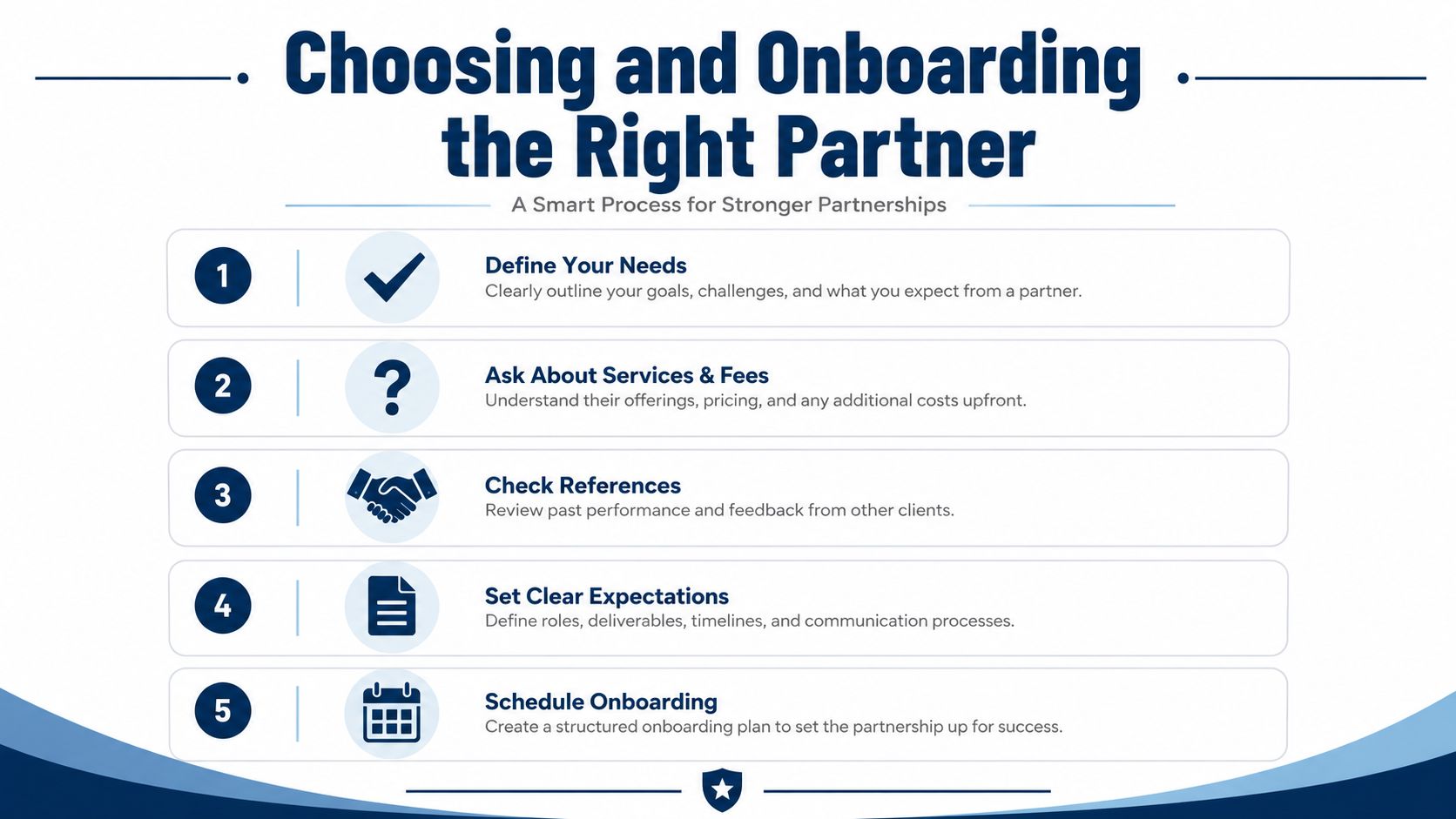
Choosing and Onboarding the Right Partner
Start with scope, not price. If you don't know what you need, you'll compare quotes that are not comparable. Ask what gets done every month, what counts as extra, and who does the work.
Before you sign, check three things. First, their tech stack. Second, their communication style. Third, whether they have handled businesses like yours. If you run payroll, inventory, or multiple entities, say that early.
For tax-side support, the IRS business tax help guide is a useful reference point when you want to understand what a provider should be able to handle. Use it to sanity-check the basics before you hand over the books.
A simple onboarding checklist
- Define your needs. List bookkeeping, payroll, reporting, and tax support separately so you know what you're buying.
- Ask about services and fees. Get clear on monthly work, cleanup charges, and out-of-scope billing.
- Check references. Ask for clients with similar size and complexity.
- Set expectations. Decide who sends documents, when reports are due, and how fast replies should come back.
- Schedule onboarding. Move bank access, software access, and document handoff into a set timeline.
A clean start saves money later. Most bad accounting relationships begin with vague scope and sloppy handoff.
If you want a provider that handles bookkeeping, reporting, payroll integration, and CFO-level advisory in one place, MyOfficeOps is built for that kind of support. It's a practical next step if you want clean books, clear reports, and a team that can help you make better decisions instead of just filing forms.
If your accounting bill keeps surprising you, stop guessing and get it mapped out properly. Visit MyOfficeOps to talk through your books, your payroll, and the next cost bracket your business is headed toward.