You know this moment if you run a small business.
A customer paid you last week. Payroll is coming up. A vendor bill is sitting in your inbox. You want to know one simple thing: can you afford to hire, buy equipment, or take on one more project without hurting cash flow?
But your numbers are scattered. Some are in a spreadsheet. Some are in your bank app. Some are in old emails. A few receipts are still riding around in your truck or stuffed in a desk drawer. You have data, but you don't have answers.
That's when bookkeeping for small business software stops sounding like “back office stuff” and starts sounding like oxygen. The point isn't to collect numbers for tax season. The point is to know what's going on in your business while you still have time to do something about it.
That Moment You Realize Spreadsheets Are Not Enough
A lot of owners start the same way. They build a simple spreadsheet, swear they'll update it every Friday, and tell themselves they've got it under control.
That works for a while.
Then life happens. You get busy. You send invoices from one app, pay bills from your bank portal, run payroll somewhere else, and try to remember which card paid for what. By the time you sit down to “catch up,” you're looking at weeks or months of missing pieces.

What the mess usually looks like
It's rarely one big disaster. It's usually a pile of small problems:
- Missing transactions: You know money moved, but you're not sure how to label it.
- Unsent or untracked invoices: Work got done, but nobody followed up on payment.
- No clean profit picture: Revenue looks decent, but you can't tell what you kept.
- Tax-time panic: Instead of reviewing clean books, you're rebuilding the year from scratch.
A contractor might be asking, “Did that job make money, or did labor eat it alive?” A healthcare practice owner might be wondering whether payroll is creeping up too fast. A consultant might be looking at a full sales pipeline but still feeling short on cash.
Those are not tax questions. Those are operating questions.
Spreadsheets can store numbers. They don't give you a dependable financial memory.
The real cost of winging it
The biggest problem with manual bookkeeping isn't just the time. It's the delay.
If your books are two months behind, your decisions are two months behind. You might feel busy and productive while the business drifts off course. That's how owners end up surprised by low cash, surprise tax bills, or jobs that looked profitable but weren't.
Software fixes part of that. It gives you one place to track money coming in, money going out, and what those numbers mean. But software is only the start. You still need a system that turns activity into clear, usable answers.
What Bookkeeping Software Actually Does For You
Think of bookkeeping software like your truck or car dashboard.
You don't need to know how every part of the engine works. You just need clear gauges that tell you speed, fuel, temperature, and warning lights before something expensive breaks. Good bookkeeping software does the same thing for your business. It turns a pile of transactions into signals you can use.

It replaces scattered records with one system
When owners ask about bookkeeping for small business software, they often think they're buying a digital filing cabinet. That's too small a view.
You're really buying a financial control panel. The software pulls together sales, expenses, bank activity, invoices, bills, and payroll-related entries so you can stop guessing. Tools in this category now cover invoicing, payroll, and cash-flow visibility, and commercial accounting software for small businesses typically ranges from $15 to $60 per month, according to Business News Daily's accounting software guide.
That's why this kind of software is now standard, not a luxury.
It gives you checks and balances
People hear “double-entry accounting” and tune out. Fair enough. It sounds like something you'd rather avoid.
In plain English, it means every transaction has two sides. If money leaves your bank to pay rent, the system records both the bank movement and the expense. That built-in balance helps catch mistakes and keeps the books from turning into a random list of money events.
Simple rule: If your system can't show where money came from, where it went, and what category it belongs in, you don't have bookkeeping. You have notes.
What this looks like in real life
Here's what software helps you answer faster:
| Question from the owner | What the software should show |
|---|---|
| Did we make money last month? | Profit and Loss report |
| Are we tight on cash or just busy? | Cash position and recent outflows |
| Who still owes us money? | Open invoices and aging |
| What are we spending too much on? | Expense categories and trends |
QuickBooks, Xero, FreshBooks, and similar tools all try to solve this problem in their own way. The label matters less than the outcome. You need a system that keeps your numbers current enough to help you decide, not just record history after the fact.
The Three Core Features Your Business Cannot Ignore
A lot of software demos show flashy dashboards and neat little charts. Fine. But small business owners don't need pretty. They need useful.
If you strip the sales pitch away, three features matter most.
Bank feeds that kill manual entry
This is the first thing I'd look at. If the software can't pull in bank and card activity cleanly, keep shopping.
The biggest efficiency gain from modern bookkeeping software comes from bank-feed automation. Tools that import bank activity directly reduce manual data entry, cut errors, and make a weekly review rhythm possible, as explained in Xero's small business bookkeeping guide.
That matters because typing transactions by hand is a bad use of your time. It's also where dumb mistakes happen. A missed zero, the wrong category, a duplicate entry. Those mistakes don't stay small. They show up later in bad reports.
A good bank feed setup should do three things:
- Import transactions automatically: Your accounts should flow in without you downloading files every week.
- Apply rules to routine items: Rent, software subscriptions, fuel, and recurring charges shouldn't need fresh decisions every time.
- Flag exceptions: Odd or unfamiliar transactions should stop for review, not slide through unnoticed.
Invoicing that helps you get paid
A lot of owners think of bookkeeping software as an expense tracker. That's only half the job. It should also help you collect revenue.
If you send invoices from the same system where you track receivables, you get a cleaner picture of who owes you money and what's overdue. That's especially useful for service firms, trades, and healthcare businesses with recurring billing or project-based work.
What I'd want to see:
- Clear invoice status: Sent, viewed, paid, overdue.
- Customer history: You should be able to spot slow payers fast.
- Simple payment tracking: When money comes in, it should connect back to the invoice without a mess.
If your invoicing lives in one tool and your bookkeeping lives in another with no clean connection, you end up playing detective.
Reporting that tells you the truth
Software justifies its cost here.
You need reports that answer basic business questions without requiring an accounting degree. Start with three:
- Profit and Loss tells you whether the business is making money.
- Balance Sheet shows what you own, what you owe, and what's left.
- Cash flow view helps you see why “profitable” and “cash-rich” are not the same thing.
For a construction company, reporting should help separate busy jobs from profitable jobs. For a medical practice, it should make overhead and labor costs easier to spot. For a professional services firm, it should show whether client work is supporting growth or just creating activity.
The right reports don't just close the books. They help you run the business.
Software Alone vs Working With a Bookkeeping Partner
This is the decision most owners are trying to make.
Not “Which app has nicer buttons?” The fundamental question is whether software alone is enough. Sometimes it is. Often it isn't.
When software alone can work
If your business is still simple, software may be enough for now.
That usually means you have a low transaction count, one entity, straightforward billing, and enough personal discipline to review things every single week. You're not trying to do job costing, handle multiple owners, untangle messy reimbursements, or build serious monthly reporting.
Software alone can be a fit if:
- Your books are current: You're not already behind.
- Your setup is clean: Bank accounts, cards, and categories are organized.
- You'll review the data: Not “someday.” Weekly.
For early-stage owners, this can be a practical starting point.
Where DIY usually breaks down
DIY bookkeeping falls apart when the business gets more complicated than the owner's available time.
You start missing reviews. Payroll entries don't line up. Loan payments get recorded wrong. Transfers look like expenses. Owners draw money without tracking it cleanly. Then month-end reports stop being trustworthy.
QuickBooks reports that 71% of small business owners use accounting software, and the same 71% also rely on accountants or bookkeeping professionals, which tells you something important. Software and expert support often go together, not one instead of the other. That comes from QuickBooks' small business financial literacy statistics.
Software records the motion. A bookkeeper explains the meaning.
A straight comparison
| If you choose | What you gain | What you risk |
|---|---|---|
| Software alone | Lower direct cost, hands-on control, faster to start | Your time gets eaten up, errors can sit unnoticed, reports may look clean but still be wrong |
| Software plus a partner | Oversight, cleaner month-end close, better reporting, more time back | You spend more than pure DIY and need to share financial access responsibly |
For a lot of businesses, the middle path is the smart one. Use software for the workflow. Use a partner for cleanup, review, monthly close, and interpretation.
If you want a better feel for what that model looks like, this guide to outsourced bookkeeping for small business breaks down where owners usually hand things off and where they stay involved.
My take
If you're in construction, healthcare, or professional services, software alone usually stops being enough sooner than you think. Those businesses have too many moving parts. Billing gets weird. Payroll matters more. Reporting needs to be cleaner because one wrong decision can affect hiring, pricing, or cash.
That's where a firm like MyOfficeOps fits. Not as a replacement for software, but as the layer that keeps the system accurate and useful.
Connecting Your Software to Payroll and Other Tools
Bookkeeping software gets stronger when it stops working alone.
The best setup is not a bunch of disconnected apps where you export a file from one place, upload it somewhere else, and hope nothing breaks. The best setup is an ecosystem. Your bookkeeping system sits in the middle, and the other tools feed it clean information.
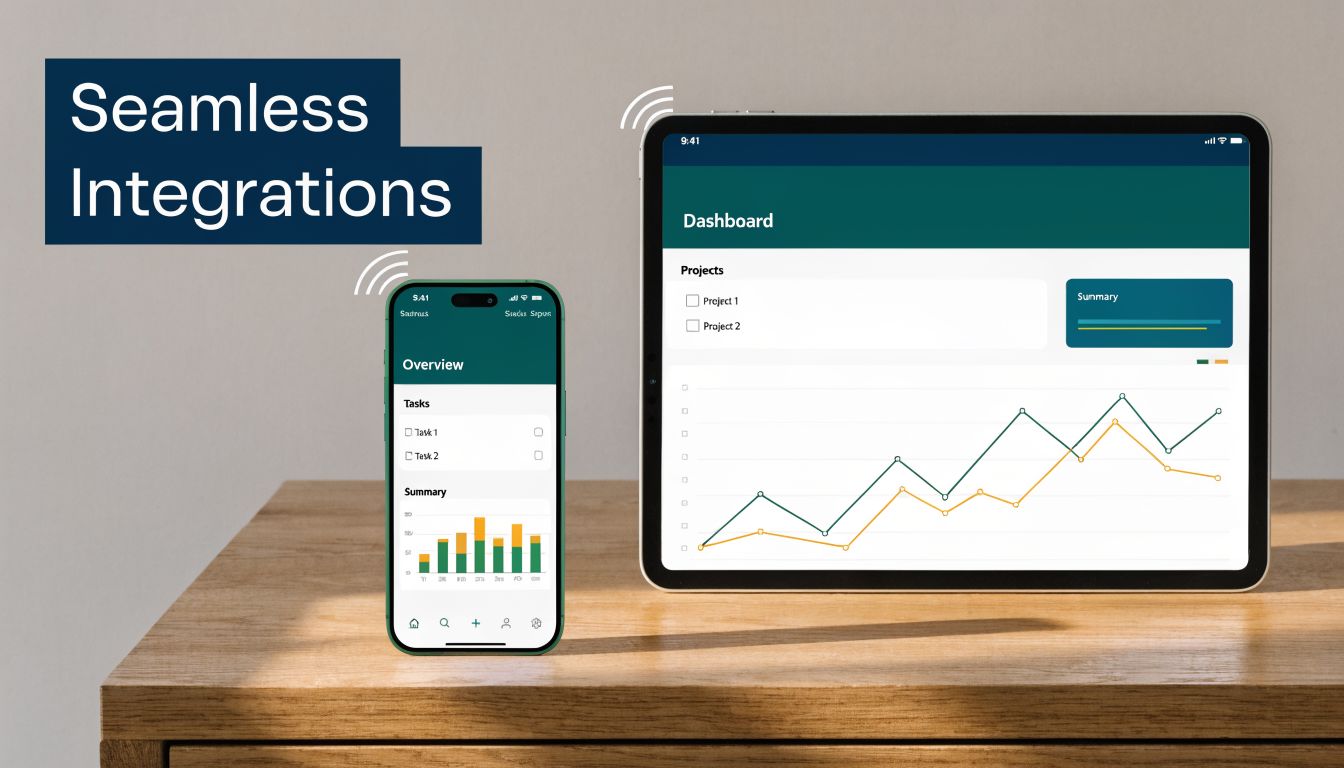
Payroll should not live on an island
Payroll is one of the biggest expenses for many small businesses. If payroll sits off to the side with no connection to your books, your reports will always lag behind reality.
When payroll and bookkeeping talk to each other, labor cost, taxes, and liabilities land where they belong. That gives you a much clearer view of margins and overhead. It also reduces duplicate work.
A simple example: if you run a clinic, you want wages, payroll taxes, and related costs reflected cleanly so you can see whether staffing levels still make sense. If you run a service business, payroll integration helps you spot whether revenue is keeping up with labor.
For owners setting that up, this small business payroll setup guide is a useful starting point.
Integrations matter more as complexity grows
A lot of software comparisons obsess over basic features and skip the harder questions. Growing businesses often need things like job costing, progress billing, and multi-entity reporting. That's where integrations matter, as noted in Mercury's bookkeeping software guide for startups and small businesses.
Here's what that means in plain terms:
- Construction firms may need project or job costing tools tied back to the books.
- Professional services firms may want time tracking or practice management systems feeding billing data.
- Retail or e-commerce businesses often need sales platforms to sync cleanly with accounting.
If your team has to enter the same number twice, your system is poorly connected.
What to check before you commit
Don't just ask, “Does it integrate?” Ask better questions:
- What data syncs? Basic contact sync isn't enough.
- How often does it update? Lag creates bad decisions.
- Who reviews exceptions? Every sync has edge cases.
- Will this still work when we grow? Today's shortcut can become next year's cleanup project.
A decent tool stack saves labor. A sloppy one creates hidden bookkeeping work every week.
Making the Right Choice for Your Philadelphia Business
Philadelphia-area owners deal with the same bookkeeping headaches as everyone else, but the pressure feels different when margins are tight, hiring is competitive, and cash flow has to support real operating decisions.
That's why I wouldn't choose software based on price alone.
Free is cheap until it isn't
A lot of owners start with free or low-cost tools because it feels responsible. Sometimes that's fine in the early days. But plenty of businesses outgrow those systems and then pay for it later through cleanup, migration, training, and lost visibility.
The bigger issue isn't the monthly software bill. It's the cost of building your books on a setup that can't support the way your business runs. The U.S. Chamber's guide to free accounting tools makes that tradeoff clear. Low-cost software may work early on, but growing complexity pushes owners toward stronger reporting and more scalable systems.
What Philly owners should prioritize
If you're in Greater Philadelphia or West Chester, I'd keep the decision simple. Pick software based on operational fit, not hype.
Look for this:
- Construction: Can it handle project-based workflows and give you useful job-level reporting?
- Healthcare: Can it support cleaner payroll visibility and dependable monthly reporting?
- Professional services: Can it show which clients, teams, or service lines are profitable?
If you're still comparing options, Booksmate's accounting software comparison is a helpful round-up because it puts common platforms side by side in a way owners can skim quickly.
My recommendation
Choose software with room to grow. Then decide whether you need a partner to keep it clean and turn the numbers into decisions.
That second step matters more than people think. A Philly contractor doesn't just need categorized transactions. They need to know whether jobs are producing cash. A medical practice needs reporting it can trust before making staffing decisions. A law firm or agency needs books that support pricing, owner pay, and planning.
If you're sorting through those choices, this guide on how to choose accounting software gives a practical way to narrow the field without overthinking it.
Your Next Step Toward Financial Clarity
The goal isn't to “get accounting software.”
The goal is to stop running your business with half the picture.
Good bookkeeping for small business software helps you organize the flow of money. It gives you cleaner records, faster reporting, and fewer ugly surprises. But if the books still aren't reviewed properly, if the reports don't match reality, or if nobody helps you interpret the numbers, you're still left doing too much guesswork.
So before you choose a tool, ask a better question. Are you just trying to survive tax season, or are you trying to build a business that gives you reliable cash flow, better margins, and cleaner decisions?
Start there.
If your business is still simple and you're disciplined, software may be enough for now. If your books are behind, your reporting is muddy, or your industry has more moving parts, software plus expert support is usually the smarter move. That's especially true when payroll, project profitability, or multi-system workflows are involved.
Financial clarity is what matters. Software is just one part of how you get it.
If you're a Philadelphia-area business owner who wants cleaner books, better reporting, and clearer decisions, MyOfficeOps is worth a conversation. A short discovery call can help you figure out whether you need better software, a stronger bookkeeping process, or ongoing support to turn your numbers into something useful.